Operation Epic Fury
“Howard, everything you know about investing came from other people. Benjamin Graham taught you the margin of safety. Buffett taught you quality. Charlie Munger taught you mental models from multiple disciplines. John Kenneth Galbraith taught you the psychology of financial manias. You read thousands of books, memos, case studies and annual reports over fifty years. Every input was someone else’s thinking…” — Claude’s point is subtle but powerful: If human investing wisdom is accumulated synthesis, then generative AI is not conceptually alien. It is a faster synthesiser. The real distinction may not be originality. It may be judgment under uncertainty. Check out Howard Marks’s AI Hurtles Ahead, February 26.
“Most people think they lack motivation when what they really lack is clarity.” — James Clear.
“If you look at today, you’re not going to make any money. If you try and look ahead and what might change and how investors might perceive something ahead.” — Stan Druckenmiller in MS’s Hard Lessons. Must watch. He talks about the gift being partly innate, but mentorship is almost equally necessary (Drelles taught him to look forward; Soros taught him sizing). He says technical analysis is about 20% as effective as when he started because everyone uses it now. Same with price versus news. The edges disappeared when the crowd learned them.
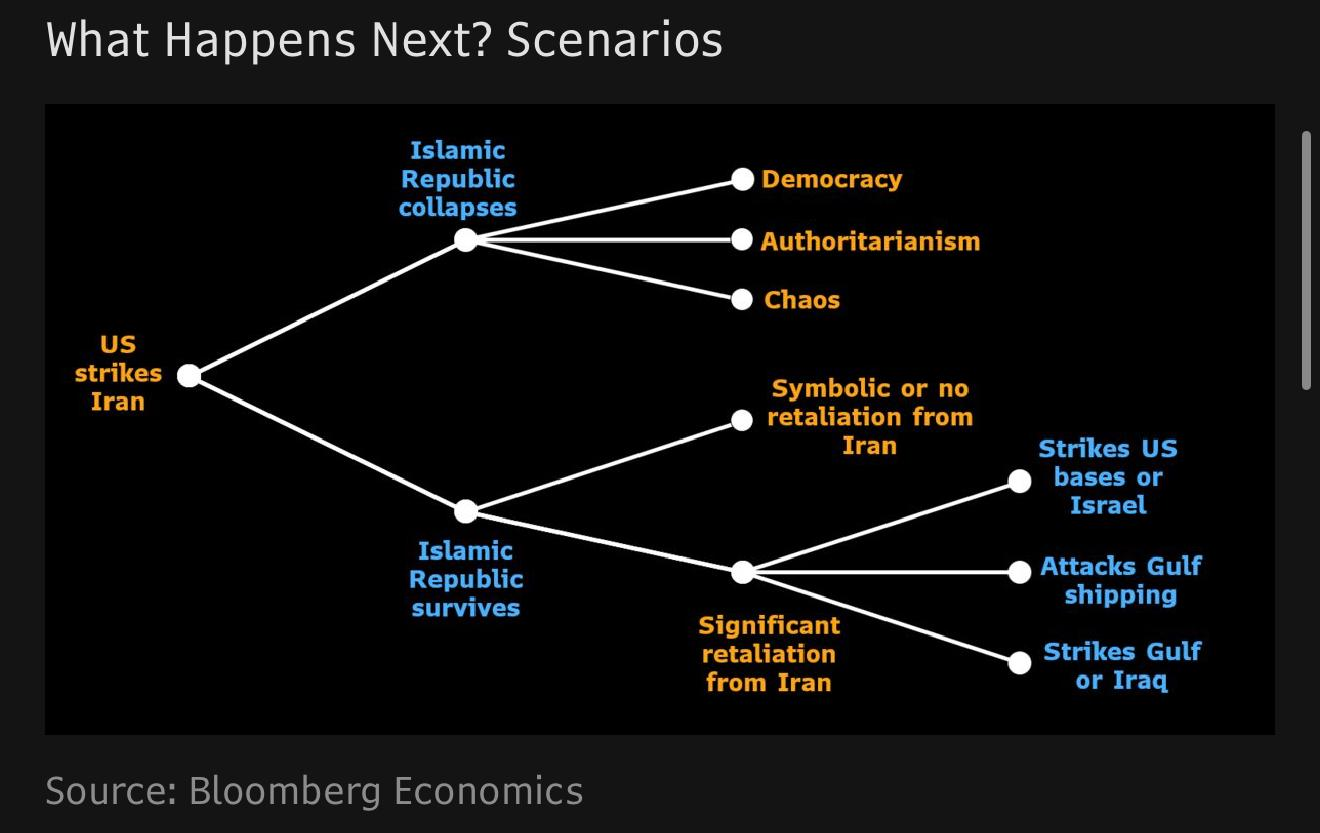
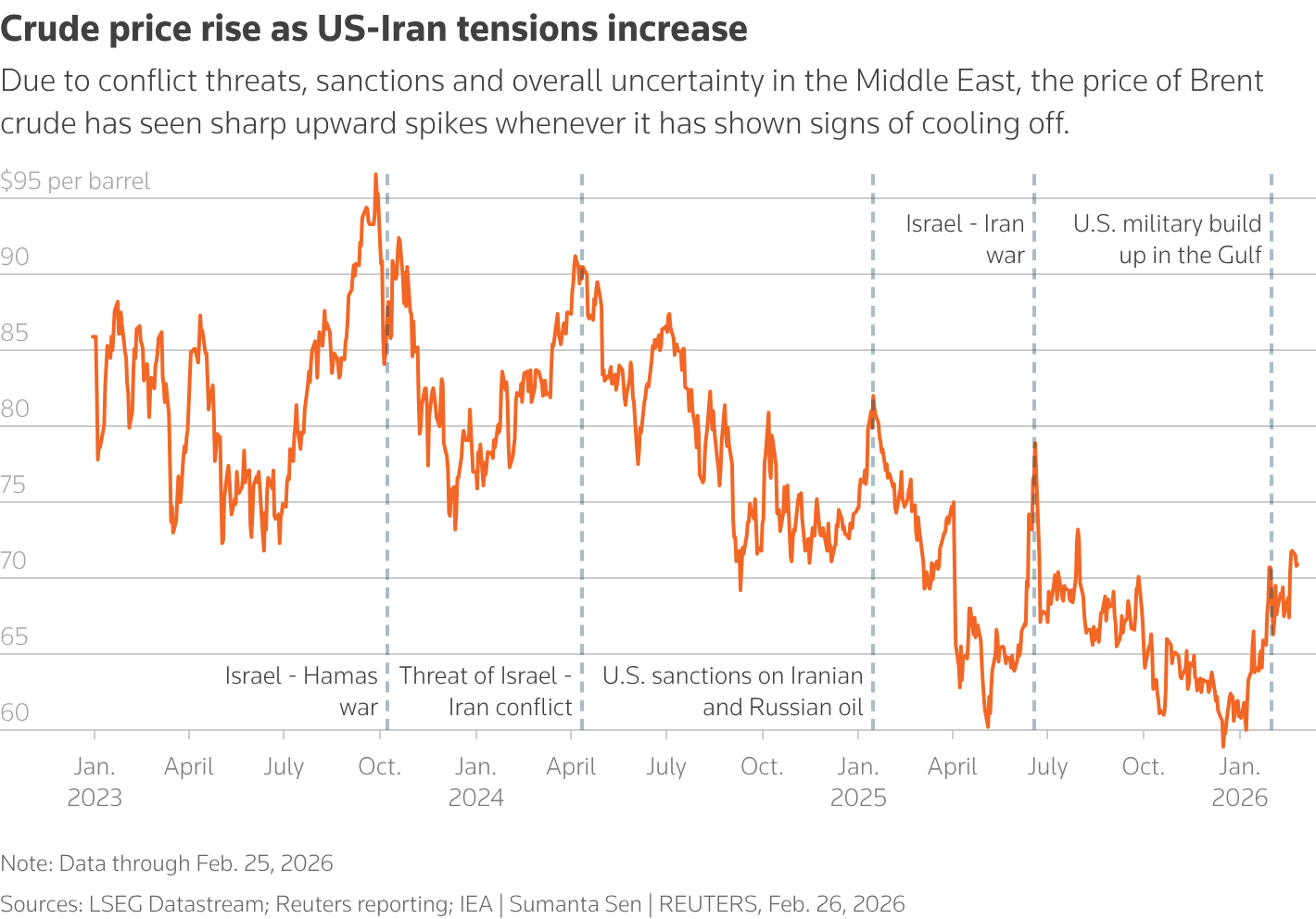
Geopolitics has shifted from tension to rupture. The death of Ayatollah Khamenei following the U.S.–Israel assault marks a structural break in the region’s power balance, and oil prices already spiked higher in Sunday shadow markets as traders rushed to price escalation risk. Gold remains bid, the dollar and Treasuries are back in focus, and crude is once again the real-time barometer of conflict. With retaliation scenarios ranging from symbolic restraint to strikes on Gulf assets, traditional correlations are wobbling and the old risk-on versus risk-off playbook looks increasingly unreliable.
What is the plan this week?
Operation Epic Fury dominated my reading this weekend. The question is not whether strikes happened. The question is whether markets treat this as another non-event or the start of something structurally different. Oil jumped in Sunday shadow markets before most desks were open. Hormuz is not theoretical. One-fifth of global oil flows through that strip of water. Leadership decapitation does not mean regime collapse. It often means escalation risk rises before it stabilises. OPEC+ meets today, expecting a modest 137,000 bpd hike for April, a decision made before Khamenei. The gap between the supply plan and the geopolitical reality is where oil trades this week.
New month. PMI reset. ISM manufacturing Monday, services Wednesday. If they hold in expansion despite tariffs and war risk, US resilience is intact. If they crack, rate cuts accelerate. EURUSD near 1.18 is not random. Payrolls on Friday confirm the tone. Early estimate is 60,000 versus recent trend of 130,000+. Soft print reprices June cut toward 80%. Strong print hardens the stagflation case with hot PPI, strong jobs, and tariff costs embedded. The market has already priced in the soft landing. A strong surprise may be the bigger move.
China’s Two Sessions begin on Wednesday. The 15th Five-Year Plan formalises what we know: resilience is the strategy, not just growth. The PBOC cut the FX RRR to zero last Thursday, a permissioning move, not a panic move. If escalation triggers VAR shocks, crowded short USDCNH after nine months of appreciation becomes vulnerable to a sharp squeeze. South Korea has a full data week. KOSPI strong, KRW weak, rates not pricing cuts. That triangle does not feel stable, and it means opportunity. Bank Negara Thursday, likely unchanged, but tone matters with ringgit strength and semiconductor exposure.
UK Tuesday: Reeves delivers the Spring Statement. DMO may cut Gilt issuance significantly. Japan is facing new supply on JGBs, too. Sterling was the weakest G10 currency in February, and selling pressure remains unexhausted. Europe is otherwise quiet. Swiss inflation is hovering near zero. Lowflation gravity is still alive.
I vibe-coded a multipage interactive family website last week from zero experience. In the same week, Trump banned Anthropic from all federal agencies while OpenAI raised $110 billion, anchored by Amazon’s $50 billion. The AI industry is being reshaped along political-loyalty lines, not just by capability. When a low-computer-science-experience person on garden leave can build what used to require a dev team, that reprises labour faster than any policy paper suggests.
What Did I Learn Last Week?
Feb 23: OPEC+ signalled supply hikes. Germany IFO firmer than expected.
Feb 24: US consumer confidence beat at 91.2. White House moved tariffs toward 15%. AMD and Meta announced a $60B GPU deal.
Feb 25: Nvidia beat and sold off. Positioning fatigue. DOE crude +16m vs +1m expected.
Feb 26: PBOC cut FX RRR to 0%. The 7-year auction stopped. Yields below 4%.
Feb 27: PPI hot, but bonds rallied anyway. Flight to safety, winning. German CPI soft. Trump banned Anthropic from federal agencies. OpenAI raised $110B.
Feb 27: IAEA cannot verify Iran’s uranium stockpile. Enough material for roughly ten weapons.
Feb 28: Khamenei confirmed dead. Oil spiked in shadow markets.
What To Look Out For Next Week
Mon Mar 2: US ISM Manufacturing (exp. 52.3) — first clean read on activity post tariff shock. German Chancellor Merz begins a trip to Washington, expected to include a meeting with Trump. Watch for tariff negotiation signals. South Korea trade data.
Tue Mar 3: Eurozone flash CPI — inflation tone ahead of payroll week, key for the ECB March 19 meeting. UK Chancellor Reeves delivers the Spring Statement, including the fiscal outlook and potential reduction in Gilt issuance. US vehicle sales. A total lunar eclipse is visible across Asia and the Americas.
Wed Mar 4: China’s Two Sessions open. 15th Five-Year Plan expected. China’s official and RatingDog PMIs land. US ISM Services, ADP employment, and the Fed’s Beige Book — growth pulse day. Australia Q4 GDP. Switzerland CPI. South Korea’s industrial production. Potential Ukraine–Russia talks under US mediation.
Thu Mar 5: Bank Negara Malaysia rate decision (expected hold at 2.75%) — key regional watch for rates and ringgit positioning. Philippines and Thailand CPI. ECB publishes accounts of its last meeting. Apple hosts product events in New York, London, and Shanghai. Singapore retail sales.
Fri Mar 6: US February Non-Farm Payrolls (early estimate 60,000 versus 130,000+ trend) — the week’s binary event. South Korea CPI and current account. Taiwan CPI. Sovereign rating reviews for France, Romania, and Ukraine. Treasury Secretary Bessent gave a keynote at Stanford’s SIEPR summit. Multiple Fed speakers at a monetary policy forum in New York, with ECB’s Schnabel giving a keynote — a cross-Atlantic policy signal.
All week: Earnings: Broadcom and Marvell Technology are the AI semiconductor read after Nvidia’s sell-the-news reaction. Sea Ltd, JD, and Bilibili for the Asia consumer and tech read. Costco, Target, and Kroger for the US consumer. CrowdStrike and MongoDB for software. Adidas, Bayer, and Merck round out the list for Europe.
Beyond Next Week
Hormuz is the flash point. The Strait has reemerged as the most dangerous U.S.–Iran confrontation zone, with escalating military deployments and Tehran’s temporary live-fire closure underscoring how quickly tensions can spill into global markets. Roughly one-fifth of the world’s crude and a quarter of LNG transit the 21-mile-wide chokepoint, making even partial disruption a systemic risk. The latest U.S. naval surge — including carrier strike groups and intensified surveillance — is the largest since 2003, while Iran has signalled it could respond “decisively” to further pressure.
Iran’s succession crisis. With Ayatollah Ali Khamenei now dead following the February 28 assault, Iran’s opaque power structure moves from theory to real-time stress test. Ultimate authority had long rested with the Supreme Leader. Still, security organs such as the IRGC, senior clerics, and elected institutions all shape economic and strategic decisions, making succession inherently complex. Analysts warn the transition could prove volatile, with risks of internal repression, protests, economic strain and more aggressive regional or cyber activity as factions consolidate power.
China’s Two Sessions. In Beijing, the National People’s Congress will set this year’s growth, inflation and fiscal targets, with policymakers expected to reinforce a “proactive” stance to support consumption and investment. In Tokyo, 10-year and 30-year JGB auctions will test demand after January’s yield surge unsettled global bond markets.
Oil fundamentals vs geopolitics. U.S.–Iran tensions are keeping oil traders on edge as OPEC+ reviews output plans. Crude is up 17% this year to its highest since July. The IEA sees a near 4m bpd surplus in 2026, with most new supply coming from the “American quintet” outside OPEC+. Geopolitics is driving prices higher, but fundamentals may cap the upside.
Regimes
Flight to safety over inflation. Bonds rallied, gold levitated even as PPI came in hot. Market fears growth risk more than price risk. Dollar structurally weakening but vulnerable to geopolitical spikes. DXY stalled at 98. Administration wants it weaker. Hormuz disruption creates a reflexive dollar bid. new
AI is replacing labour and software in real time. Hyperscaler capex continues regardless of equity sentiment. Political alignment now matters as much as model capability. new
Shifts (if → then)
Iran escalation hits Gulf infrastructure → Risk-off flips from bonds to the dollar. Short USDCNH and long duration both get hit. Correlated unwind. new
Hot NFP Friday → Stagflation narrative hardens. June cut repriced from 63% back toward 40%. Yield curve steepens, dollar catches bid. new
Two Sessions deliver a stimulus surprise (deficit target: 4%+ GDP) → Resets China’s growth narrative. Commodities, AUD, and EM Asia are higher. Short USDCNH accelerates instead of squeezing. new
Tails
Hormuz closure sustained. $150 oil for weeks. Central banks face an impossible choice between growth and inflation. Everything correlates. new
OPEC+ discipline fractures. Supply framework that supported crude for two years. Oil moves in either direction. new
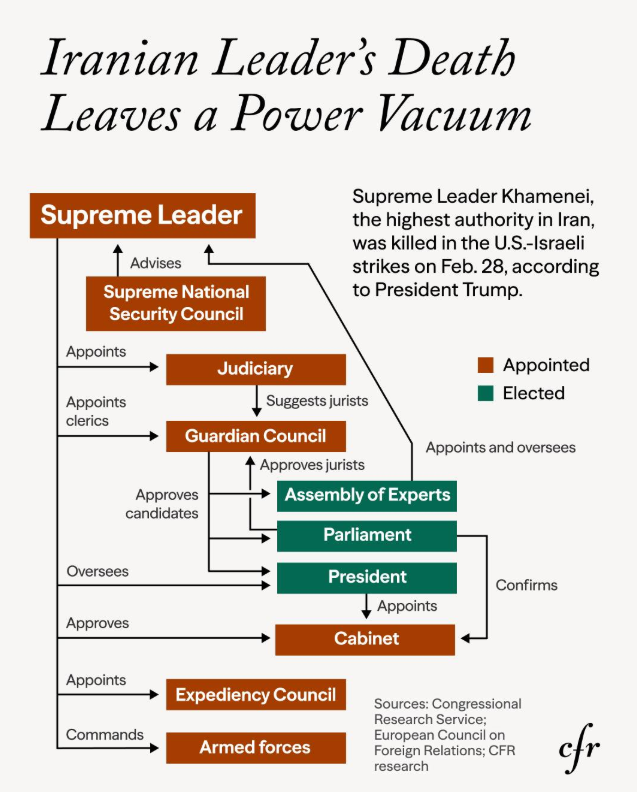
Iranian Leader’s Death Leaves a Power Vacuum. With Khamenei confirmed dead, the succession question moves from academic to operational. The IRGC, the Assembly of Experts, senior clerics and elected institutions all have overlapping claims on power. This chart maps the structure that is now under real-time stress. Leadership decapitation does not mean regime collapse. It means the vacuum itself becomes the risk.
The full edition includes 40+ curated charts and infographics with commentary.
For the complete visual edition, email hoelon at lengleng dot com
Best,
Hoelon