Permanent Damage
“This war will separate the haves from the have-nots. And it will be permanent.” — Overheard at a Singapore fund managers’ roundtable last week. They meant rich versus poor. I think the deeper divide is energy. Spain nearly doubled its wind and solar capacity since 2019 and cut gas imports by EUR 13.6 billion. Its electricity price is now a quarter of Italy’s. Same continent, same war, completely different exposure. LNG spot prices are up 80%. Shipping rates up 600%. The EU has paid an extra EUR 6 billion in fossil fuel imports in 20 days. Pakistan avoided blackouts by installing Chinese solar panels after the last crisis. India is rationing LNG. The sun does not care about the Strait of Hormuz.
“The guerrilla wins if he does not lose. The conventional army loses if it does not win.” — Henry Kissinger. In 1973, Kissinger shuttled between Cairo, Damascus, and Jerusalem until both sides accepted terms. There is no equivalent figure in Washington today. No one with the credibility or the mandate. Trump wants a deal but has no interlocutor in Tehran. The IRGC does not negotiate with people who bombed South Pars. Iran does not need to win.
“Blessed are the young, for they shall inherit the national debt.” — Herbert Hoover. US national debt crossed $39 trillion on March 20. It is growing at $7.2 billion a day. It has nearly doubled since Trump first promised to erase it. Last week, the 10Y Treasury yield hit 4.37%, highest since July. UK gilts topped 5% for the first time since 2008. German Bunds retook 3%. All 2026 Fed rate cut expectations have been erased. The market now prices three ECB hikes and 88 bp of tightening from the BOE. The war has not just blown up the Middle East. It has blown up every fiscal projection written before February 28.
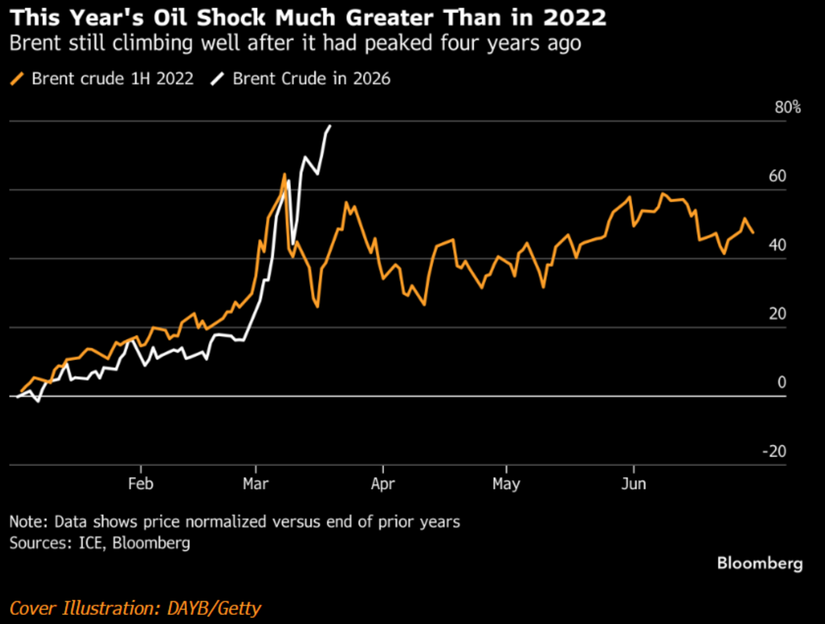
By this point in 2022, Brent had already peaked and was falling. In 2026, it is still climbing. The normalised chart makes the divergence stark. Four years ago, the market priced in a supply disruption and priced it out within weeks. This time, there is no alternative supply route to price in.
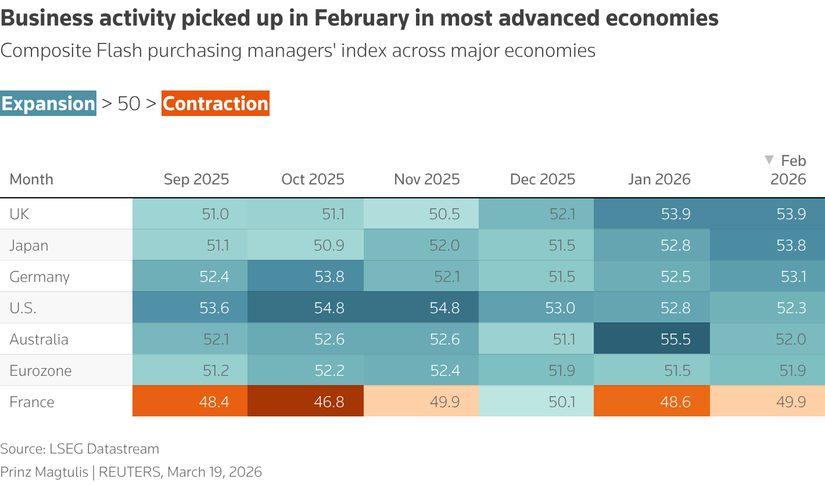
February PMIs were mostly in expansion. The US composite at 51.6. Eurozone at 50.2. Japan at 52.0. Australia at 51.3. Tuesday’s March flash readings are the first to capture the war period. If either the US or eurozone breaks below 50, recession pricing begins. These are the most important data prints of the week.
What is the plan this week?
At the time of writing, the world is waiting for Trump’s 48-hour deadline to reopen the Strait of Hormuz or have its power plants bombed. We are looking at the targets of retaliation. If Ray Dalio is correct, the war will be won by achieving ultimate control of the Strait of Hormuz, which could lead to a Suez Canal moment for the US. How we trade until then is a totally different set of answers.
South Pars changed the category of this war. It went from a disruption to permanent damage. Qatar’s 3-5 year force majeure on 17% of its LNG exports means the scar outlasts any ceasefire. The bond market understood this before equities did. And the supply destruction is truly hurting the core. If more infrastructure gets bombed, the consequences will not be reversible, whatever Bessent says about 50 days of high prices buying 50 years without a nuclear Iran.
The rate repricing is the most violent since 2022. In three weeks, the Fed went from two cuts priced to a 40% chance of a hike. The ECB went from a 55% chance of a cut to three hikes priced. The BOE went from two cuts to 88bp of tightening. And unlike 2022, central banks are starting from restrictive territory. There is no room for error.
Gold crashing during a war while bonds sell off simultaneously. There is nowhere to hide except cash and energy. This is the signature of an inflation shock overpowering all other forces. Gold down ~10% in a week. S&P below the 200 DMA. All stocks hanging just around major support lines. Fragility or opportunity.
February PMI is still looking rosy, but stagflation looms. The global yield curves have flipped, and central banks are pricing in an oil price gap adjustment across everything. A few CPI releases, including Japan, which is dealing with the energy crunch, weak yen, fiscal pressures and Takaichi managing the fallout from the Trump White House meeting. USDJPY intervention levels were debated, and arguably no longer the same level just above here. Some Fed and ECB speakers throughout the week, but all will follow the cue from energy prices, given the developments in the war.
The plan this week. If we get boots on the ground, equities and gold crash through the support lines, and it becomes tradeable. The OECD interim outlook on Thursday is the first institutional growth revision since the war. If they cut 2026 global growth below 2.5%, sovereign downgrades follow. PMIs on Tuesday are the recession litmus test. The week will still be choppy and filled with trading opportunities, and headline bombs and liquidity traps are lurking out there.
What Did I Learn Last Week?
Mar 16: RBA hiked 25bp to 4.10%, split 5-4, first back-to-back hike since mid-2023. China Jan-Feb data beat: IP +6.3%, retail sales +2.8%, FAI +1.8%. Empire manufacturing collapsed to -0.2. Nvidia GTC: $1 trillion revenue opportunity through 2027. Axios: three Trump admin sources say instability could continue until September.
Mar 17: Germany ZEW expectations collapsed to -0.5 vs +39.2 expected. Sharpest sentiment reversal since the pandemic. LyondellBasell: ~30% of global PE capacity affected by Middle East disruption. Lululemon beat Q4.
Mar 18: Fed held at 3.50-3.75%, 11-1, Miran dissented for a cut. Powell: “We discussed a rate hike as the next move.” Seven members see no cuts this year. PPI hot: +0.7% m/m vs +0.3%. BOJ held. BOC held, removed “appropriate” language. Brazil cut to 14.75%. Israel struck Iran’s South Pars. Micron blowout: revenue up 196% y/y. Quadruple data day delivered on every front.
Mar 19: ECB held. Lagarde: “Major shock is unfolding.” BOE held 9-0, first without dissent in 4.5 years. SNB held at 0.00%. Iran retaliated: hit Ras Laffan, two Kuwaiti refineries. Brent $119 intraday. QatarEnergy declared force majeure on 17% of LNG exports for 3-5 years. UK 10Y gilt topped 5% for first time since 2008. Alibaba profit collapsed 67% on AI capex. Tencent plans to double AI spending. FedEx beat and raised. New home sales collapsed to 587K. Takaichi met Trump in Washington. Eid al-Fitr. Malaysia CPI.
Mar 20: S&P -1.5% to 6,506.6, down 6.8% from peak. Fourth straight weekly decline. Russell 2000 in correction. Brent $112.19. Gold crashed to $4,567, worst week since Feb 1983. Bond market fully erased 2026 easing expectations. DXY above 100. Quadruple witching amplified the sell-off. CBS: US preparing for ground operations in Iran. IEA: 6 months to restore Gulf flows.
What To Look Out For Next Week
Mon Mar 23: Eurozone consumer confidence, the first post-war EU sentiment indicator. Singapore CPI. CERAWeek opens in Houston through Mar 27 with Brent at $112 and Gulf infrastructure under attack. China Development Forum in Beijing.
Tue Mar 24: PMI day. The most important data prints of the week. Eurozone, UK, Japan, US manufacturing and services flash readings, the first activity indicators capturing the war period. If either the US or eurozone breaks below 50, recession pricing begins. Japan CPI after BOJ held but Takata dissented for 1.0%. Denmark snap election with Greenland in focus. Hungary and Chile rate decisions. Boao Forum opens. Anthropic in court. Mexico first-half March CPI.
Wed Mar 25: Australia CPI, massive after two straight RBA hikes. UK CPI, February data when fuel pressures were easing. January was 3.0% y/y. March will be different but the February baseline matters for BOE’s “ready to act” stance. Germany IFO business climate. Lagarde speaks at “ECB and Its Watchers” conference. Fed’s Miran at Digital Asset Summit. BOJ January minutes. US Q4 GDP likely revised down.
Thu Mar 26: G7 foreign ministers meet in France through Mar 27. Iran top of agenda. The diplomatic heavyweight day. OECD interim economic outlook, the first major institutional growth revision since the war. If they cut 2026 global growth below 2.5%, sovereign downgrades follow. Mexico, Norway, South Africa rate decisions. Four Fed speakers. WTO ministerial opens.
Fri Mar 27: China industrial profits, the first corporate profitability read since oil spiked. US UMich consumer sentiment, the first print that fully captures the war period. Spain CPI. Sovereign ratings: Italy, Spain, Morocco, Oman.
All week: Earnings: BYD, Xiaomi, Meituan, PetroChina, CNOOC, Sinopec (China energy and tech under war and AI pressure), Ping An, China Life, H&M, Hapag-Lloyd (shipping in a war zone), Cintas, Paychex, Dollarama.
Beyond Next Week
Xi-Trump summit postponed. Trump delayed the Beijing meeting to stay in Washington for the war. No new date. Both sides say it will happen. If rescheduled for April, Beijing’s leverage as Iran’s primary oil customer makes it the most consequential bilateral meeting of the year.
Q2 begins Apr 1. Corporate guidance season and every company has to address the oil shock. First wave of Q1 earnings starts mid-April.
US data deluge late March: Consumer confidence (Mar 31), personal income and PCE deflator (Mar 28). The first post-war consumer spending reads.
RBA meeting Apr 1. If March CPI (due this week) prints hot, a third consecutive hike becomes the base case. No G10 central bank has hiked three times in a row since the Fed in 2023.
OPEC+ meeting Apr 3. The cartel has to decide whether to release spare capacity or let prices run. Saudi Arabia’s leverage has never been higher and its infrastructure has never been more vulnerable.
Regimes
Structural damage replaces stagflation as the dominant regime. Last week it was sticky inflation vs slowing growth. This week South Pars was hit, Qatar declared force majeure on 17% of LNG for 3-5 years, and the IEA called it the greatest threat to global energy in history. The damage is now permanent regardless of ceasefire timing. El-Erian frames it as the shift from disruption to structural damage. He is right. Bond market erased all 2026 Fed easing expectations. Gold down 10% in a week. Nowhere to hide except cash and energy. changed
Rate repricing is the fastest since 2022. Fed went from two cuts priced to 40% chance of a hike. ECB from 55% chance of a cut to three hikes priced. BOE from two cuts to 88bp of tightening. All in three weeks. Unlike 2022, central banks are starting from restrictive territory. RBA already hiking. BOE and ECB likely next. The easing cycle is not paused. It is dead. new
Dollar bid but conflicted. DXY above 100 on war premium and rate repricing. The administration still wants a weaker dollar. But every rate hike priced abroad is matched or exceeded by US repricing. Structural weakness thesis intact but cannot express until the war deescalates. held
Credit stress continues. JPMorgan marked down private credit software loans. Morgan Stanley capped redemptions. US banks breaking uptrend lines and underperforming S&P. Regional banks in correction. The oil shock is compounding the AI disruption already hitting software credit. held
Shifts (if → then)
Boots on the ground in Iran → Equities and gold crash through support lines. S&P already at 200 DMA. Becomes tradeable on the break. new
PMIs break below 50 on Tuesday → Recession pricing begins. The first hard activity data of the war period. If US or eurozone composite drops below 50, the stagflation narrative upgrades to recession. new
OECD cuts 2026 global growth below 2.5% on Thursday → Sovereign downgrades follow. First major institutional revision since the war. new
BOE or ECB hikes in April → Rate repricing accelerates. RBA was the leading indicator. BOE has 80% chance of April move priced. Lagarde speaks Wednesday and has to say more than “not in a good place.” new
War finds off-ramp → Oil retreats, rate cut hopes snap back. But Qatar’s force majeure, South Pars damage, and supply chain disruption (fertiliser, helium, PE capacity) do not reverse. Credit damage does not reverse. Carried forward, probability declining each week. carried
Gulf sovereigns pull back US investments → Financial pressure on Washington to negotiate. Qatar’s force majeure is already a form of this. Italy, Spain sovereign ratings reviewed Friday. carried
Tails
Hormuz closed through April. $150 oil. Everything correlates. Equities, credit, and rates reprice simultaneously. Gulf desalination plants become targets. Water scarcity compounds energy scarcity. Closer each week. carried
South Pars-style attacks on Saudi infrastructure. If Aramco facilities or Yanbu pipeline get hit, the war enters a different category again. Saudi Arabia’s leverage and vulnerability are both at all-time highs. new
Private credit contagion. Gating spreads beyond the big three. CLO machine stalls. Regional banks already in correction. Active watch. carried
Houthis enter the war. Bab al-Mandab closes alongside Hormuz. Two chokepoints shut simultaneously. Saudi oil rerouted via Red Sea at risk. carried
Russia provides Iran targeting intelligence on US warships. Direct US-Russia confrontation. War scope expands beyond the Gulf. carried
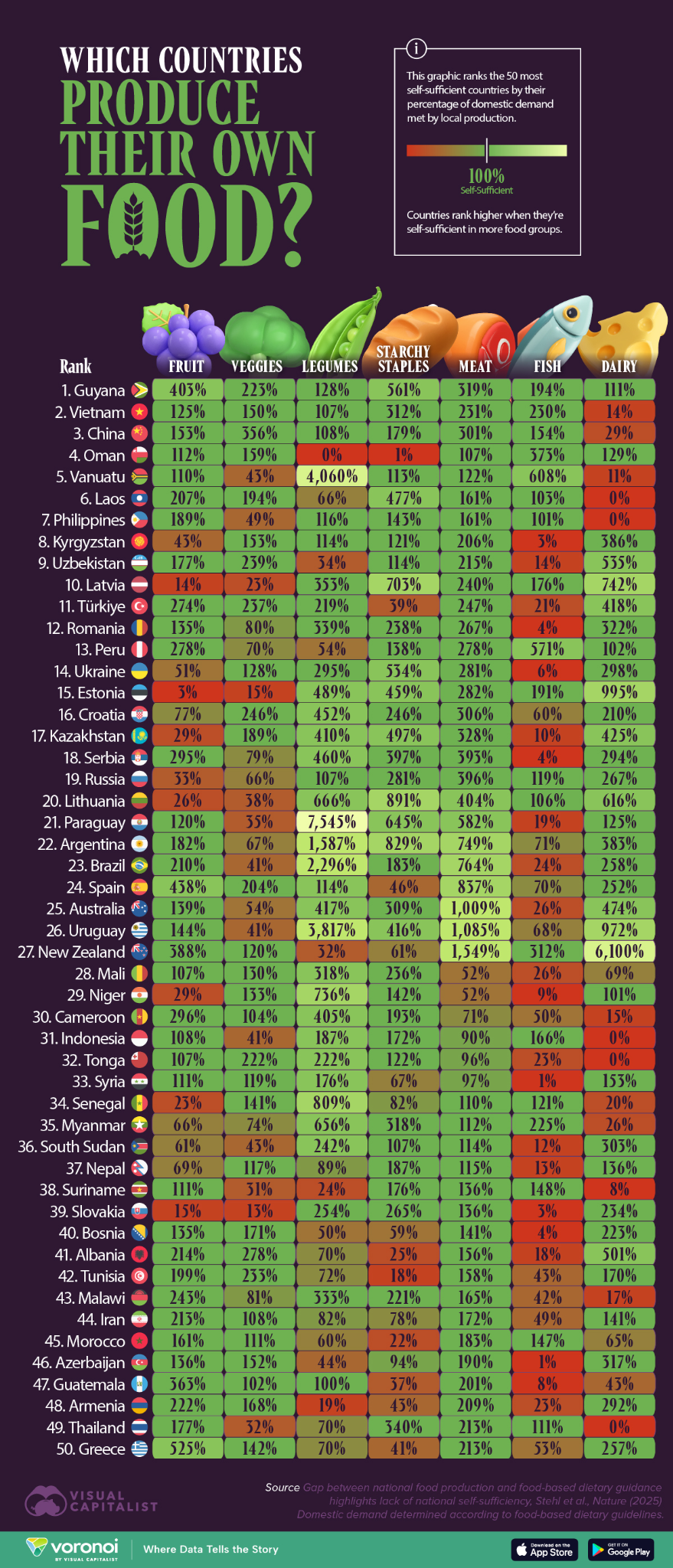
Out of 186 countries studied, exactly one can feed itself across all seven food groups: Guyana. Population 900,000. Vietnam and China manage six out of seven. Everyone else falls short somewhere. European countries cannot grow enough fruit and vegetables. Asian countries struggle with dairy. The Gulf states import 77% of their rice, 89% of their corn, 95% of their soybeans, and 91% of their vegetable oils. All of it transits Hormuz. Eight African countries ranked in the top 50, outperforming most of Europe. For those of you still reading and worrying about your portfolio, the real question this week is simpler. Can your country feed itself if the ships stop coming?
The full edition includes 40+ curated charts and infographics with commentary.
For the complete visual edition, email hoelon at lengleng dot com
Best,
Hoelon