Fragile Truce
“The skunk at the party, and it could happen in 2026 … would be inflation slowly going up, as opposed to slowly going down. There is no ‘tipping point’, it just may mean it could take more straws on the camel’s back to get there. High asset prices, which certainly feel good in the short run, create additional risk if anything goes wrong. Some of the larger risks are much like tectonic plates, always moving and periodically causing earthquakes and volcanoes when they crash into each other.” — Jamie Dimon, addressing shareholders last week. Inflation is not dead. Rates still matter. Markets are priced for calm. The system is not.
“Everything should be made as simple as possible, but not simpler.” — Albert Einstein.
“People will find new ways to believe that the good times can last forever. They will dress up hope as certainty.” — Howard Marks on April 9, What’s Going on in Private Credit? He also said, “First the innovator, then the imitator, then the idiot.” By the time everyone understands the trade… the trade is over.
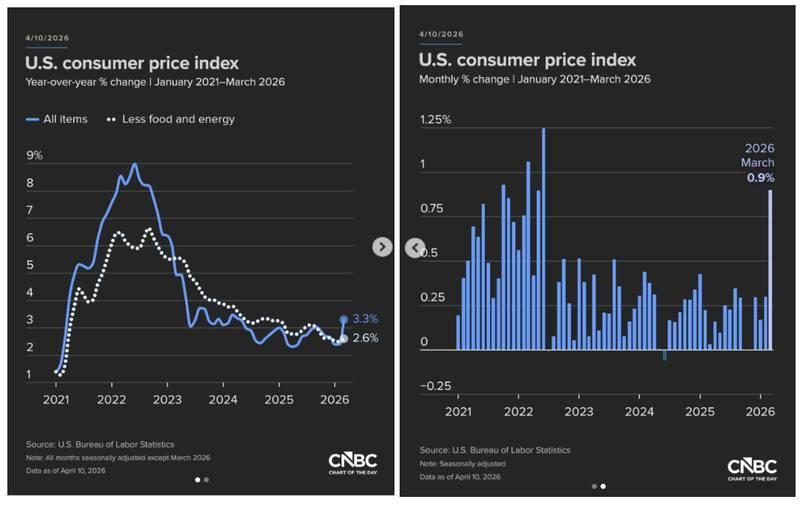
March CPI came in at 0.9% month-on-month, the hottest since June 2022, driven by a 10.9% surge in energy costs. The annual rate jumped to 3.3% from 2.4% in February. But underlying inflation was relatively tame, core held at 0.2%. The war is doing what wars do to price indices: distorting the headline while the underlying economy tells a different story. The physical pain is at the pump, not yet in the basket.
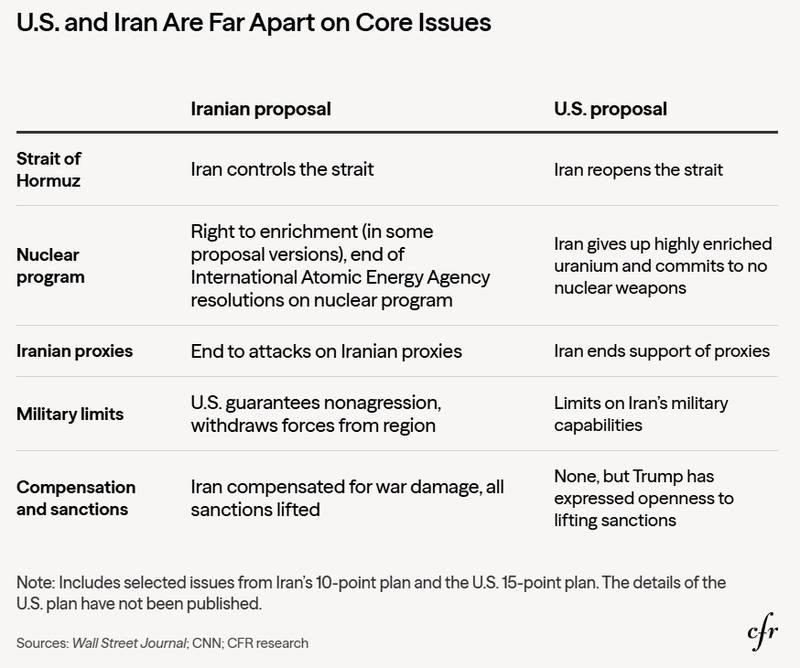
The CFR comparison of Iranian and American negotiating positions reveals how far apart the two sides remain on every core issue. From Hormuz control to nuclear enrichment to sanctions relief to military withdrawal. Iran’s ten-point plan has been described as “verging on the absurd” by CFR’s own analysts. The platforms are designed to start talks, not serve as the basis of a final agreement. That is the nature of ceasefire diplomacy: the positions are opening bids, not red lines.
What is the plan this week?
The Islamabad talks ended without agreement. Vance and the Iranian delegation have already left. The ceasefire holds, imperfectly, but the two-week window that was supposed to produce an off-ramp produced only a communiqué. Tankers heading for the strait U-turned when talks stalled. Hormuz is open to 15 ships a day, not 130. Markets do not care. The S&P rallied 3.6% last week, Nasdaq 4.7%, EM FX had its best week since 2018. The pattern is familiar now: drama over the weekend, threats on Monday, a walk-back by Tuesday close. Everyone is trading the U-turn. The risk is the one time it doesn’t come. UMich at 47.6 versus 51.5 expected tells you the consumer is not buying the same story the S&P is.
The stagflation transmission is large and moving fast. Oil above $100 feeds into rates, rates compress margins, margins hit profits, profits reprice multiples. That is the sequence. PPI on Tuesday is the next test. Airfares, portfolio management fees, healthcare all feed directly into core PCE, and ISM prices-paid at 78.3 suggests the read will not be comfortable. Friday’s CPI came in hot at 0.9% month-on-month but core was tame at 0.2%. The relief rally that followed was the market grabbing at any excuse to believe the benign path. Bank earnings dominate all week. Goldman on Monday, JPMorgan and Citi on Tuesday, BofA and Morgan Stanley on Wednesday. Watch loan loss provisions and forward guidance, not the headline beats. Beige Book on Wednesday is the real-time read on war damage to Main Street.
Europe is quieter but consequential. ECB pricing has pared from three hikes to two. The US two-year premium over Germany has compressed from 138 basis points pre-war to 123 and the direction is clear. The bigger story is Hungary. If Orban loses today, and polls say he will, the EU funding unlock for Budapest reshapes Central European spreads within weeks. IMF Spring Meetings run all week. Georgieva called this the gloomiest time since she took the job. Peru votes today with 35 candidates and a likely June runoff.
Singapore on Tuesday is the hometown event. MAS is expected to deliver a slope steepening and a midpoint recentring, a double-barrel tightening not attempted since 2022. Malaysia CPI on Friday is expected to jump to 2.8% from 1.4%. BNM is more likely to hike than look through. China GDP on Thursday at consensus 5.0% matters less than the March activity detail. But the bigger China story is trade data on Tuesday, exports expected to collapse from +21.8% to +8.6% as the front-running cliff arrives, and the NYT report that Chinese intelligence has been assisting Iran’s air defence network. If confirmed, that poisons the Xi-Trump summit before it starts. TSMC on Thursday is the AI capex canary. If Q2 guidance softens, the repricing of what AI means for markets accelerates at a moment when Anthropic’s Mythos has forced Wall Street into emergency meetings over what autonomous AI exploitation means for systemic risk.
Six weeks of war, two weeks of ceasefire, and a market trading as though the worst is behind it. Maybe it is. But the pattern markets are relying on, escalate then retreat, threaten then negotiate, was built on tariffs, not a shooting war. The domestic pressure is building in ways that do not have a Monday morning U-turn. War protests are growing. The First Lady’s public silence has become its own story. The Epstein files are back in the news cycle. Approval ratings are sliding. Oil derivatives are already up 5 to 6% on the Islamabad failure. Monday’s gap risk is not hypothetical, it is here. The plan this week: watch PPI Tuesday for the stagflation read, short USDSGD through MAS, use bank provisions as the first corporate scorecard on war damage. Size down for the binary.
What Did I Learn Last Week?
Mon Apr 7: Easter Monday, Europe/HK/Australia closed. Hormuz deadline expired Sunday night, no deal. Iran rejected 15-point proposal. Trump: “Iran can be taken out in one night.” ISM services 54.0 vs 54.9e, softening. Samsung Q1 op profit 57.2T won vs 39.3T won, a blowout.
Tue Apr 8: Sentix crashed -19.2 vs -8.0e, 12-month low. Kharg Island struck again. GDPNow cut Q1 to 1.3%. Williams: policy “well positioned to wait and see.” Trump: “A whole civilization will die tonight”, then suspended operations within 90 minutes. Intel +20% on Terafab. Japan wages +3.3% vs 2.5%e, feeds BOJ April hike.
Wed Apr 9: RBI held 5.25%, RBNZ held 2.25%, both looking through first-round oil. Iran demanded crypto tolls for Hormuz. Delta beat but flagged $2B fuel cost increase. Meta debuted Muse Spark. FOMC minutes showed no urgency to move.
Thu Apr 10: GDP final revised to 0.5% from 0.7%. China PPI +0.5%, first positive in 42 months. Hormuz open to max 15 ships/day vs peacetime 130-140. Anthropic Mythos exceeded human capabilities at exploiting software vulnerabilities—Wall Street called an emergency meeting. Claims 219K vs 210Ke.
Fri Apr 11: CPI +0.9% m/m in line, core +0.2% tame. The feared upside surprise did not fire. UMich 47.6 vs 51.5e, huge miss. BOK held 2.5%. Canada jobs +14.1K, unemployment 6.7%. BlackRock Q1.
All week: S&P +3.6%, Nasdaq +4.7%. Brent back below $100. JPM EM FX index +2%, best since March 2018. The gap between headline relief and physical reality is the week’s defining feature.
What To Look Out For Next Week
Mon Apr 14: Goldman Sachs Q1, expected to report records, the benchmark for investment banking fees and trading revenue in a war-driven volatility regime. Fastenal Q1 (industrial bellwether). IMF/World Bank Spring Meetings begin, run all week — World Economic Outlook and Global Financial Stability Report released Tuesday, no one expecting good news. G7 and G20 finance ministers meet. India CPI (consensus 3.4%). US existing home sales.
Tue Apr 15: THE day. PPI (BE +1.0% m/m) — airfares, portfolio management fees, healthcare components feed directly into core PCE. ISM prices-paid at 78.3 last month suggests upside risk. A hot print reverses the brief dovish repricing from the ceasefire. JPMorgan Q1 ($5.44e, $49.2B revenue, options imply 4% move, resistance $310-315). Citigroup, Wells Fargo, JNJ, BlackRock. China March trade (exports +8.6%e vs +21.8% prior — the front-running cliff). Singapore MAS monetary policy + Q1 GDP advance estimate — Bloomberg Economics expects slope steepening AND midpoint recentring, double-barrel for the first time since 2022. SGDNEER already at top of band. If MAS delivers, Asia’s inflation hawks are not done.
Wed Apr 16: BofA, Morgan Stanley, PNC, M&T, US Bancorp — the second wave fills out the credit picture, watch loan loss provisions and CRE commentary. Beige Book — the real-time anecdotal read on war damage to Main Street, likely the most market-relevant Fed release given the gap between surveys and hard data. Empire State (BE 3.0), first April read on regional factory conditions post-ceasefire. Eurozone industrial production. France CPI final.
Thu Apr 17: China Q1 GDP (5.0-5.1%e vs Q4 4.5%) plus March retail sales and industrial production. The GDP number matters less than the activity detail — if IP holds but retail softens, the consumption downgrade story accelerates. TSMC Q1 ($3.27e +54%, options imply 6% move) — Q2 guidance is the AI capex canary. Netflix Q1 (may raise guidance). PepsiCo Q1 (war-driven input cost pressure on margins). Eurozone HICP final 2.5%. UK Feb GDP (+0.2%e, the last pre-war reading). Australia employment. Philly Fed (BE 14.3). US IP (BE +0.1%).
Fri Apr 18: Malaysia CPI (2.8%e from 1.4%, sharpest jump in years — BNM more likely to hike than look through). Sovereign ratings: Turkey (Moody’s), Belgium (S&P), Jordan (Fitch). Hungary election result digest. AmEx Q1. Eurozone trade balance.
All week: Six of the top eight US banks report Mon-Wed. S&P 500 Q1 earnings estimated +14% but the war clouds every forward guide. IMF meetings set the tone for EM borrowing costs — Georgieva expects war to trigger up to $50B in Fund support requests. Islamabad ceasefire talks over the weekend are Monday’s biggest binary. Peru election Sunday, 35 candidates, likely June runoff.
Beyond Next Week
April 27-30: Central bank mega week. FOMC, BOJ, ECB, BOE in four days. BOJ 25bp hike widely expected. If BOJ and ECB both hike, most coordinated tightening since 2022.
May 5: RBA decision. Futures pricing ∼65% chance of third consecutive hike.
May 14-15: Xi-Trump summit in Beijing. Trade, Taiwan, Iran, rare earths. The NYT China-Iran intelligence report makes this meeting more combustible than it was a week ago.
Late May: OPEC+ ministerial. Physical crude at records, Hormuz still impaired. Signalling problem: any quota increase validates supply as binding constraint.
Q3/Q4: The financing problem nobody is pricing. $10 trillion in US treasury refinancing, $2 trillion deficit, $2 trillion in corporate debt rolling, and Gulf states needing capital at home for reconstruction and defence. The funding squeeze arrives in autumn.
Regimes
Fragile truce, growth cracking. Islamabad ended without agreement. Vance has left. GDP revised to 0.5%, UMich cratered to 47.6, physical oil at records even as futures fell. Market pricing resolution, economy pricing war damage. Oil derivatives already up 5 to 6% on the failure. changed
Rate repricing: direction unclear, stagflation complicates everything. Ceasefire triggered a dovish repricing, Fed now priced as most dovish of the majors, cut odds ~33%. But ISM prices-paid at 78.3 and PPI Tuesday could flip it in a session. Not dovish or hawkish. Confused. held
Dollar bid fading but dollar bears have been here before. DXY gapped through 99.18-99.51, 5d MA below 20d MA for first time since Feb 18. EM FX best week since 2018. Structural short thesis looks right. But dollar bears have been trapped repeatedly in this war, every escalation snapping the dollar back. Islamabad failure is exactly that kind of headline. Directionally lower, not yet a regime change. held
Credit stress still waiting for a trigger. Six of the top eight US banks report Monday to Wednesday. Watch loan loss provisions and CRE commentary. held
Shifts (if → then)
Islamabad failure escalates, ceasefire collapses → Oil back above $110, Hormuz reverts to full blockade. Monday gap risk already materialising in derivatives. new
PPI surprises hot Tuesday → Dovish repricing reverses, dollar bounces, duration sells. ISM prices-paid at 78.3 says upside risk is real. new
MAS double-barrel delivers → SGD strengthens, signals Asia’s hawkish response to imported inflation is not done. new
Bank earnings reveal war credit damage → Loan provisions spike, CRE stress surfaces, forward guidance darkens. Trading revenue may mask the loan book. carried
China-Iran intelligence confirmed ahead of Xi-Trump → Summit agenda poisons. Decoupling accelerates. Rare earth restrictions back on the table. new
Russia-Ukraine breakthrough → EUR rallies, European risk premium compresses. new
Tails
Hormuz closed through Q2. $150+ oil. Islamabad failure makes this more likely, not less. Oil derivatives already moving. carried, probability rising
Ceasefire collapses within two weeks, full military escalation resumes. Vance left empty-handed. The pattern of extending deadlines may have reached its limit. changed, upgraded
Mythos-class AI exploits financial infrastructure. Anthropic’s model exceeded human capabilities in exploiting software vulnerabilities. Wall Street emergency meetings already happened. TSMC Thursday is the capex read. new
Sudden permanent peace deal. Oil crashes 20-30%, entire rate structure reprices. S&P tracing the exact 200-day MA recovery from Liberation Day. But the catalyst is a shooting war, not tariffs. carried, probability uncertain
Private credit contagion. Bank earnings this week are the first real corporate test. carried
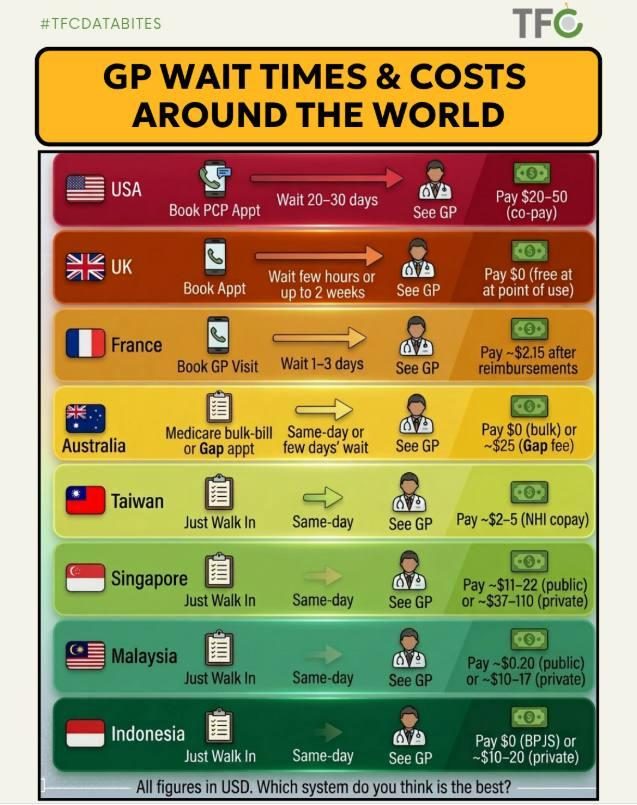
The global GP system is a trade-off game — speed, cost, or depth, you rarely get all three. The U.S. looks the most broken on access, where even a basic appointment can take 20–30 days and the real cost is hidden in hefty insurance premiums or $200+ out-of-pocket visits. The UK solves for equity with free care, but demand creates a “scramble” just to get seen, with waits ranging from same-day luck to weeks. At the other end, places like Taiwan and Singapore optimise for speed and affordability — walk in, same-day treatment — but often at the cost of shorter, less in-depth consultations. Australia sits in the middle, gradually shifting away from fully subsidised care as bulk billing fades. China isn’t in the chart, but it’s an interesting hybrid — large public hospitals dominate, where you can usually get same-day access (especially with digital booking apps), but quality varies widely by tier. Top-tier hospitals in major cities are crowded and fast-paced, similar to Taiwan’s high-throughput model, while lower-tier facilities are cheaper but less trusted, pushing many patients to “doctor shop” across the system.
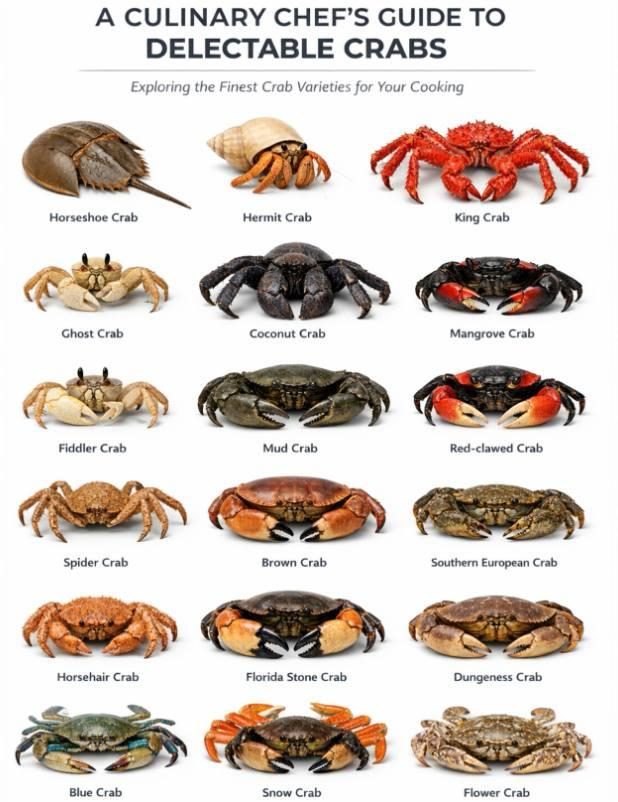
A culinary guide to crabs feels like a palate cleanser… until you follow the supply chain. Hormuz disruption is choking off Gulf exports of blue swimming and mud crabs to Asia — prices in the UAE and Oman have risen by ∼30% since February. Even your chilli crab is now geopolitics.
The full edition includes 40+ curated charts and infographics with commentary.
For the complete visual edition, email hoelon at lengleng dot com
Best,
Hoelon