The Simple Idea
Personal views and market commentary. Not investment advice. Not associated with any employer or firm.
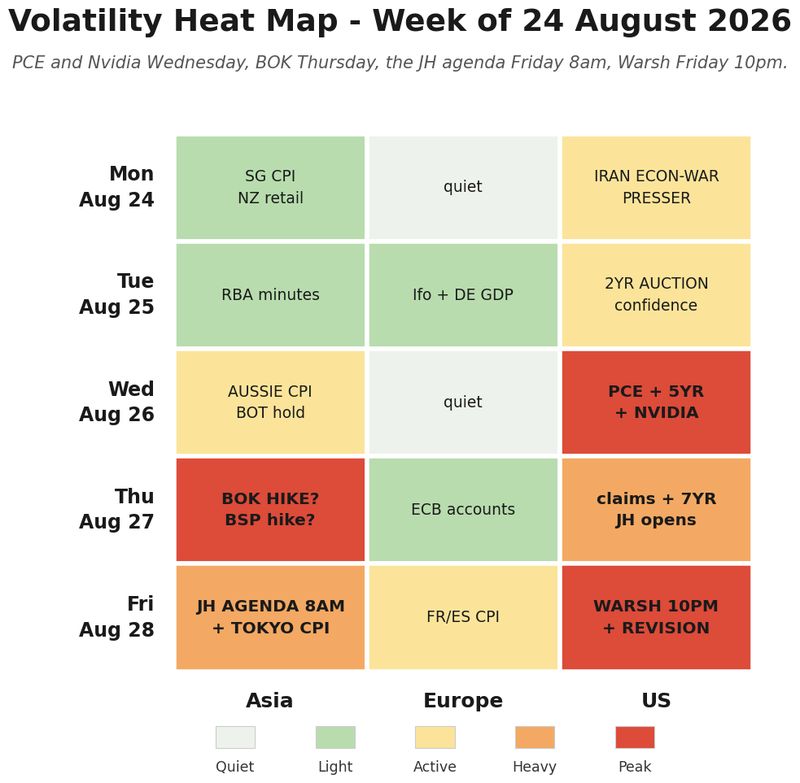
Volatility heat map for the week ahead , sessions as we trade them from here. PCE and Nvidia land Wednesday, the BOK's hike call comes Thursday, the full Jackson Hole programme drops at 8am our Friday, and the chair speaks at 10pm that night with the benchmark payrolls revision in the same hour. The Treasury sells $183 billion of 2s, 5s and 7s along the way. The S&P sits at 7,674 after Thursday's 700-point Dow slide, and gold at 4,603 is asking the question the whole letter is about.
"Pretend, please, that I'm on the ballot. Just come and vote. It's so important." — Donald Trump, campaigning in South Carolina for Darline Graham ahead of Tuesday's Senate runoff. A president at a record-low net approval of -25 just made himself the ballot question in every race he touches. The same week, a senator's jab at the aide who filters the president's information drew four days of White House fury and insults that even allies concede amplified the story. A White House with a single setting converts every criticism into a referendum and every referendum into a loyalty test. Credibility spent on small fights is unavailable for the large ones, and the large ones, the Fed's independence and the bond market's patience, are on this week's calendar.
"What the Treasury Secretary will learn is that the Treasury markets are far more powerful than he is, and they're ultimately going to set the course." — Lacy Hunt, in the interview that marked the surrender of the bond market's last great bull. After nearly four decades as the most disciplined deflationist in the business, Hoisington has cut its Treasury duration from around 21 years to under one. His confession is the part to remember: "It took me a long time to realize that the interpretation I made in the earlier period was not correct." The new world: equilibrium inflation of 3.5 to 4.5% and an interest expense so large the fiscal problem is "now intractable". On the buybacks: trivial in size, wrong in message, and "the market may insist that they continue it." On the new chair: "Words are not enough. They have to be confirmed by action... the clock is ticking."
"Take a simple idea and take it seriously." — Charlie Munger. The simple idea this August: the market has begun pricing the deterioration of the dollar's credibility, the debasement trade is back, and the rest of this letter takes it seriously.
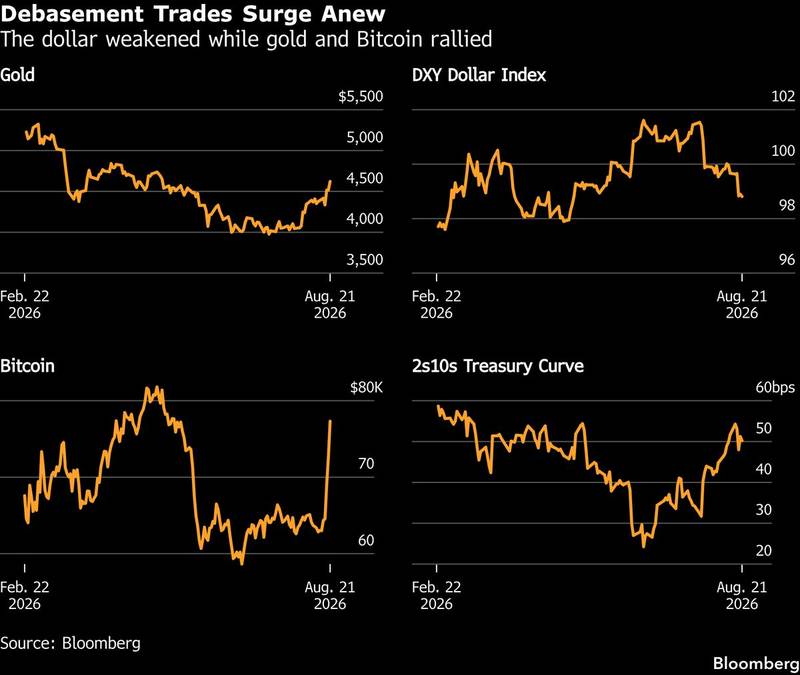
The chart of the week, in four panels. Gold breaking up through 4,600, bitcoin up 22% in a week to 77,000, the dollar index down through its 200-day to 98.80, and the 2s10s steepening back toward 50 basis points. Each panel alone has a local explanation, a White House crypto meeting, a buyback announcement, month-end flows. Together they are one trade with one name, and the trigger was the Treasury stepping into its own bond market. The world is still very long dollars; if the unwind has genuinely started, this is what the first week of a flywheel looks like. The caveat is also the entry discipline: everyone now sees this chart, and crowded new trades get violent shakeouts before they trend. Source: Bloomberg.
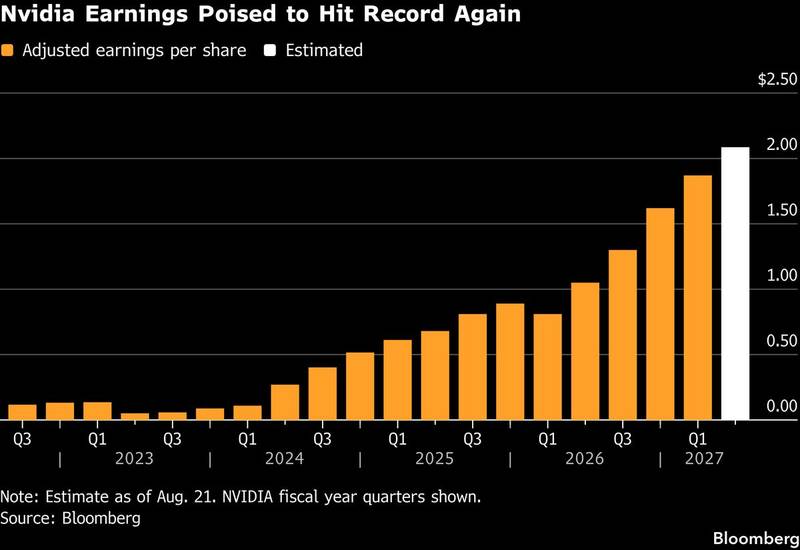
The other peak of the week, drawn as a staircase. Nvidia walks into Wednesday expected to print roughly $92 billion of quarterly revenue, up 96.9% on the year, with earnings nearly doubling and the options market pricing only a 5.4% move. The staircase has never missed, and that is precisely the problem: 89% of retail client positioning is long, the implied move is the calmest all year, and the questions that matter are no longer about the quarter. They are about the $500 billion coalition, the $105 billion Ohio campus for OpenAI, and turning compute into an "investable asset class". The put-writer-in-chief reports its own mark-to-market, into a tape that just remembered what selling feels like. Source: Bloomberg.
What is the plan this week?
We got a lot of breakouts last week. Higher long-end yields took the headlines, the 10-year testing 4.75% and the 20-year auction tailing badly enough that the Treasury doubled its buyback operation within hours. But the more important thing was the correlations breaking: yields up, stocks down, the dollar down through its 200-day, and the precious metals up hard. That combination has one name, and the debasement trade is back with the Treasury itself as the catalyst. The national debt crossed $40 trillion the same week, the last great bond bull cut his duration to under a year, and even the survey desks report conviction in Treasuries beating stocks at a four-year low. When bonds stop hedging equities and the dollar ignores its own rate advantage, this is no longer a reaction to one quarter's data. The market is charging the US government more to borrow and trusting its currency less, and those two prices move together.
The administration, in my humble opinion, is running out of options and knows it. The war shifts from military to financial: Monday brings the promised press conference on the "most crushing economic operation ever", with the UAE already halting Iran transactions and oil still trading at the highs anyway, Brent closing the week at 94 and WTI at 87, both up more than fifty percent on the year, gasoline and diesel higher still at the pump. The second front opened at home, the Canada deal collapsing into Carney's "you're at war when you get attacked" and counter-tariffs for September 8. Economic warfare is inflationary on both fronts, and the Fed gets to price it the same week its chair debuts at Jackson Hole.
PCE on Wednesday is less deterministic than usual, core seen at 0.2% and 3.3% with portfolio-management fees more than half the monthly gain, the rally taxing itself into the Fed's gauge again, and the GDP price index at 6.2% the sleeper in Wednesday's second estimate. The focus gravitates to Jackson Hole and toward month-end, where dollar-buying flows were strong in previous months. The chair speaks at 10pm our Friday; the house view is that he frames his reforms rather than reassures, reaffirming 2% while refusing guidance, and if markets do not get the reassurance they crave, the speech accelerates the very selloff it was meant to calm. Nine of eighteen June dots wanted a hike this year, and the minutes flew under the radar only because the data went soft afterwards. In the same hour the benchmark payrolls revision, consensus +156k against the prior -911k, could retroactively rewrite the whole soft-labour story an hour after he leaves the podium.
The bond market remains the referee. The Treasury sells $183 billion of 2s, 5s and 7s this week while its expanded buybacks absorb the long end, selling the belly to buy the wings, and last week's tailed 20-year showed what happens when that posture meets real supply. A sloppy 2-year on Tuesday would be new information, because the front end has been the safe part. Meanwhile Asia tightens into a Fed that cannot decide what it is: the BOK likely hikes Thursday with the won up 10% on the month, the Philippines may follow, Australia's trimmed mean holds at 3.6%, and Tokyo CPI on Friday strengthens the BOJ's October case.
The plan this week is to stay short USD and look for a strategy to avoid the sharp short squeezes that headlines will deliver, because month-end dollar buying has been strong in previous months and the world is still positioned long. The flywheel of flows looks like it has started for a much larger move in FX. Crosses stay on but the won leg gets trimmed before the BOK, gamma stays owned through Wednesday and Friday, and nothing gets harvested into the speech. Stay nimble.
What did I learn last week?
Mon Aug 17: China's 3pm data disappointed across the board, retail sales 0.6% against 1.5 expected, the stimulus-reflex floor tested as feared. Canada CPI ran hot at 3.0%. Empire smashed at 20.6. Anthropic's leaked quarter, revenue near $11.5 billion, reset every AI model on the street.
Tue Aug 18: Trump paused the Canada tariffs claiming a deal. Housing starts missed and the 10-year tested 4.75%, the highest since January 2025. The UAE halted all Iran transactions, diesel cracks hit records, and OpenAI's widening losses leaked the same day Home Depot called housing frozen.
Wed Aug 19: The hawkish minutes: risks skewed upside, many saying higher rates would likely be necessary. The 20-year auction tailed at 5.204%, and within hours the Treasury doubled its buybacks. Trump declared economic war on Iran. UK CPI hit 2.9% as scripted. Target beat and raised.
Thu Aug 20: Japan's CPI printed 1.9%, the year's high, with core at 1.8. Claims stayed low at 206k. Walmart beat the quarter but guided Q3 below with US same-store sales the lowest in six years, the CFO seeing consumers stretched thin on gas. Deere called the ag-cycle bottom; Bessent confirmed buybacks could exceed $4 billion.
Fri Aug 21: US flash manufacturing missed at 53.2 while Germany's hit its best since May 2022. The Canada talks collapsed overnight and Carney answered with counter-tariffs for September 8: "You're at war when you get attacked." The Dow had already shed 700 Thursday; the week closed risk-off.
All week: The S&P fell 1.4% and the Nasdaq 2.1% in the first real down week of the run. The debt crossed $40 trillion. Gold rose to 4,603, bitcoin jumped 22% to 77,200 after the White House crypto meeting, the DXY closed at 98.80 below its 200-day, and the 10-year ended at 4.74%. The debasement trade, left for dead in the spring, came back to life with the Treasury as its sponsor.
What to look out for next week?
Mon Aug 24: Bessent's press conference on the Iran economic operation, the week's headline wildcard for oil. Singapore CPI expected to jump to 2.7% from 1.9 as war-priced utilities land. New Zealand retail sales, Mexico GDP, Taiwan unemployment. Zelenskyy addresses Ukraine's Independence Day.
Tue Aug 25: The $69 billion 2-year auction opens the belly-supply week. US consumer confidence seen slipping to 90, new home sales soft, Case-Shiller showing AI money reigniting San Francisco bidding wars. Germany's Ifo and final GDP, RBA and Riksbank minutes, Hungary's decision. Scotiabank and BMO open Canadian bank earnings into the trade war. South Carolina holds the runoff for the late Senator Graham's seat, the race the president put himself on.
Wed Aug 26: The first peak. Core PCE expected at 0.2% and 3.3%, portfolio fees more than half the monthly gain; the GDP second estimate with its 6.2% price index; durable goods; the $70 billion 5-year auction. Australia's CPI eases to 3.6% with fuel adding 30bps as rebates unwind, Thailand holds at 1.00%. Then Nvidia after the close: $92 billion expected, the coalition and the Ohio campus on the call, options pricing just 5.4%. Salesforce and CrowdStrike report the memory-cost squeeze.
Thu Aug 27: The BOK's close call: a back-to-back hike is slightly favoured with the won up 10% on the month and Seoul housing hot; the Philippines may hike with inflation above target. Claims near 208k, the $44 billion 7-year auction, Kansas City Fed, China industrial profits, ECB accounts. Dollar Tree and Dollar General report on the rural consumer after the SNAP changes. Jackson Hole opens in Wyoming.
Fri Aug 28: The full Jackson Hole programme drops at 8am our time, the first tell of whether the speeches will bite. Then the second peak at 10pm: the chair's first keynote, with the benchmark payrolls revision (+156k consensus against -911k prior) and Schnabel in the same session. Tokyo CPI in our morning is the BOJ's last box before October. France and Spain print hot HICP on fuel, Germany jobs, Canada's GDP rebound near 2.8%, India industrial production, UMich final with its vulnerable-cohorts warning. Ratings reviews for France, Portugal and Nigeria; Iceland votes on EU talks Saturday. BYD reports. Do not carry event risk into the weekend the economic war just made livelier.
Beyond next week
Sep 1 / Sep 5: Euro-area flash CPI, then US payrolls, the last major print before the September FOMC and the first test of the benchmark revision's new baseline.
Sep 8: Canada's counter-tariffs on $20 billion of US goods take effect; the trade war's first structured round.
Sep 10 / 16 / 17: ECB (hike near-fully priced), FOMC, BOE. The BOJ's October hike is the house base case behind them.
Late Sept: Anthropic's IPO filing, prepared for as soon as this month's end, the largest listing since SpaceX and the test of the massive and final fundraisings.
Oct: The Treasury's expanded buybacks run to early November; the refunding then shows whether the put grows again.
Nov: US midterms, eleven weeks out, the clock under every policy in this letter.
Regimes
The bond market changed the subject, week two. The subject now has a sponsor. The 20-year tailed, the Treasury doubled its buybacks within hours, and the last great bond bull sold forty years of duration. Weak data no longer buys duration rallies; now official buying does not either. Steepeners and gold remain the expression, and this week's $183 billion of belly supply is the cleanest test yet. held, week 2
The dollar's credibility repricing. The crosses regime grows up. The dollar leg has broken properly, DXY through the 200-day with gold and bitcoin confirming. Honesty on the legs: the short-won leg was run over, up 10% on the month into a hiking BOK, and it gets trimmed, not defended. The world is still very long dollars; the discipline is surviving the month-end squeezes that punctuate every genuine downtrend. changed, week 12
The AI fracture, week eight: the tourists arrive. Junk investors are buying investment-grade data-centre debt at 7%-plus yields, $410 billion borrowed this year, a trillion a year projected from 2027. Anthropic's leaked $11.5 billion quarter against OpenAI's $12.3 billion loss splits the lab story in two. Nvidia Wednesday is not an earnings print; it is the underwriter's investor day. held, week 8
Inflation rotating: two inflations now, and the Fed must choose its data. Diesel up 70% in Europe, US gasoline up 60% and breaking records, Spain at 4.5%, food still arriving via El Nino. Yet core PCE momentum is fading on the house measures. Headline energy against fading core lets both camps at Jackson Hole claim the data; the resolution comes from the barrel, not the Fed. held, week 5
The war goes financial. Strikes wind down and the crushing economic operation begins, secondary sanctions aimed at anyone providing a lifeline, while Canada becomes the second front with counter-tariffs from September 8. Economic weapons are inflationary for the wielder too, which is why the food-and-fuel leg above refuses to fade on schedule. new, week 1
Shifts (if then)
Last week's shifts mostly fired: the minutes read hawkish, China's 3pm data missed, Walmart guided down on a stretched consumer, and the 20-year tailed, in Washington rather than Tokyo. The board resets for the two peaks.
Warsh reaffirms 2% but refuses guidance u2192 the house base case, and the dangerous one: a market craving reassurance gets a framework lecture instead, and the long-end selloff accelerates with the chair's blessing implied. The 10-year through 4.80% opens the run at 5%. new
Core PCE prints 0.3% or higher u2192 the three-month annualised pace clears 3.5%, the hike case revives the night before Jackson Hole, and the crowded short-dollar trade meets its squeeze. This is the week's bad branch; size for it, do not argue with it. new
Nvidia beats but the coalition questions wobble u2192 a sell-the-news print at 89% long positioning, with the implied move at just 5.4% the cheapest it has been into any earnings this year. The AI complex's credit, not its earnings, is what the answers move. new
The benchmark revision comes in large and positive u2192 the -911k prior becomes +156k or better, the soft-labour narrative is retroactively rewritten an hour after the chair speaks, and the front end whipsaws into the weekend. The most underpriced event of the week. new
The BOK hikes with hawkish guidance u2192 the won extends its 10% month and the crosses' funding leg bleeds further; trim before Thursday, re-enter when the BOK pause is priced. The view stays, the sizing respects the tape. new
A belly auction tails, the 2-year especially u2192 the safe part of the curve stops being safe, the buyback posture is overwhelmed by supply arithmetic, and the debasement trade gets its next leg from the primary market itself. new
Tails
The carry dominoes u2192 the funding trade rebuilt through August, and a BOK hike plus a hawkish Warsh in the same 36 hours is the trigger shape for the won-yen complex specifically. The 2024 template, with more debt underneath. carried, week 4
The backstop put gets exercised u2192 roughly $70 billion of residual-value guarantees plus a $500 billion coalition, marked weekly by Nvidia's own tape. Pro-cyclical insurance written at the top, now with junk tourists holding the senior tranches. carried, week 5
Bonds and equities sell together u2192 Thursday was the rehearsal: Dow down 700 with yields rising. A hot PCE plus a framework-only Warsh is the full performance, and every 60/40 and risk-parity book is un-hedged for it. carried, week 4
The search bar beats the statistics u2192 Americans are googling "help with mortgage" above the 2008 record while claims sit at 206k and the S&P sits near highs. If the searches are right and the statistics are lagging, the consumer crack arrives before any data warns of it. new
The Treasury exodus reaches the market u2192 seven of sixteen Senate-confirmed Treasury officials gone, the general counsel over the $1.8 billion fund, the tax chief over audit interference, seven IRS heads in a year. The institution running the buybacks, the sanctions and the debt ceiling is hollowing out precisely as its workload explodes. carried, evolved
Hormuz escalates against the economic war u2192 Tehran has reportedly studied hitting US assets in Europe and subsea cables in the strait. The crushing-operation presser is Monday; the response function is the tail. Brent gaps, and the two-way oil risk resolves violently upward. carried, war week 13
Economic D-Day Monday
The week opens with a press conference instead of a data print: the promised details of the economic operation against Iran, into an oil market already at the year's highs and a region already rerouting itself. Singapore's CPI shows the war reaching household utility bills, and New Zealand's retail volumes show what the energy tax does to a small open economy's consumer.
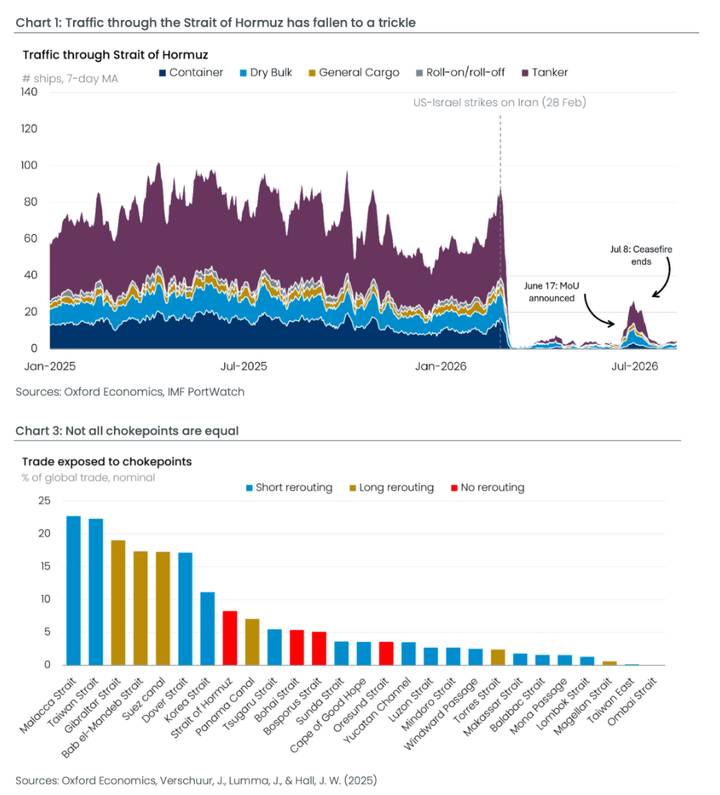
The map behind every sanction announced this week: Hormuz traffic remains a trickle eighteen weeks after the February strikes, and the chokepoint ranking below it explains the asymmetry: Hormuz sits in the small red group with no rerouting alternative at all. Red Sea diversions have already tripled container rates. When the economic war intensifies, this map is the transmission mechanism from a press conference to a CPI print. Source: Oxford Economics, IMF PortWatch.
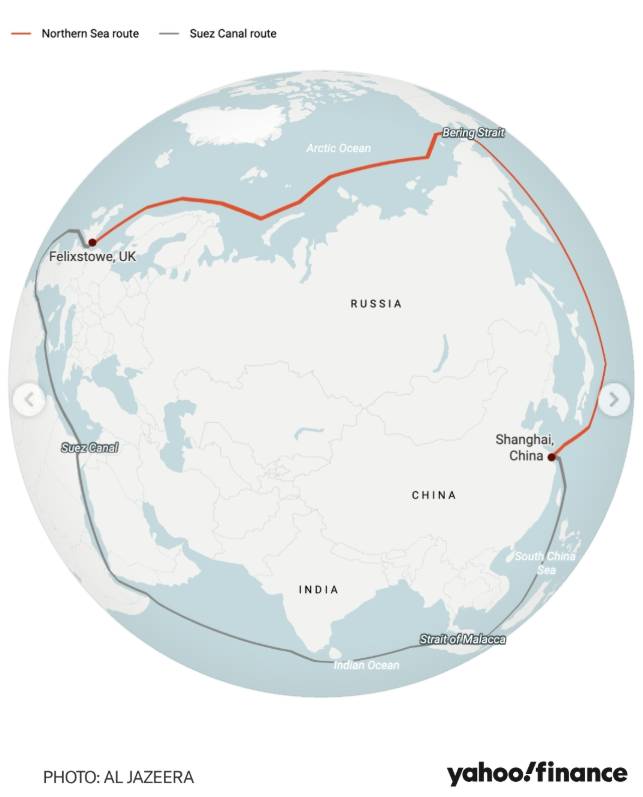
And the reroute nobody had on the bingo card: Chinese vessels are running the Arctic from Ningbo to Felixstowe in half the Suez time, the war making the Ice Silk Road commercial years ahead of schedule. Trade finds a way, but the way now runs along Russia's northern coast, which is its own geopolitical sentence. The war's most permanent effects keep being the maps it redraws. Source: Al Jazeera / Yahoo Finance.
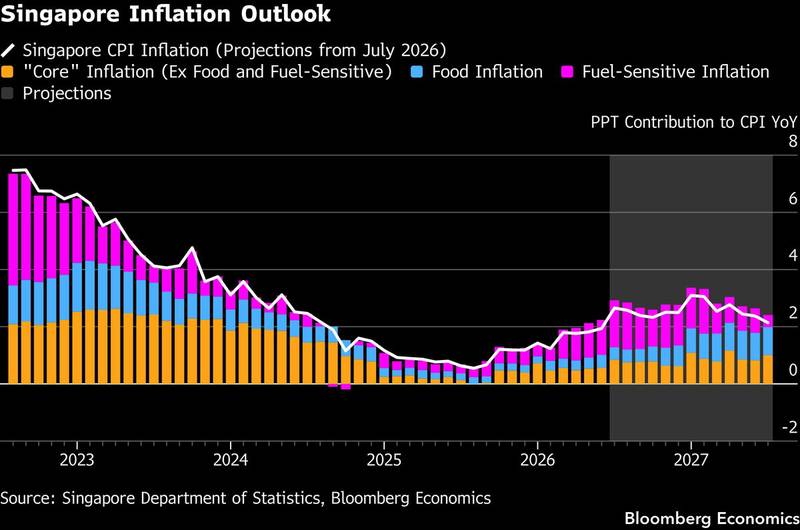
The war reaches the Singapore power bill: CPI seen jumping to 2.7% from 1.9 as electricity tariffs reset to war-priced fuel, with the pink fuel-sensitive band doing the work and El Nino queued behind it in the food band. For the region's most open economy, this is imported inflation in its purest form, and the projection band says it persists through 2027. Source: Singapore DoS / Bloomberg Economics.
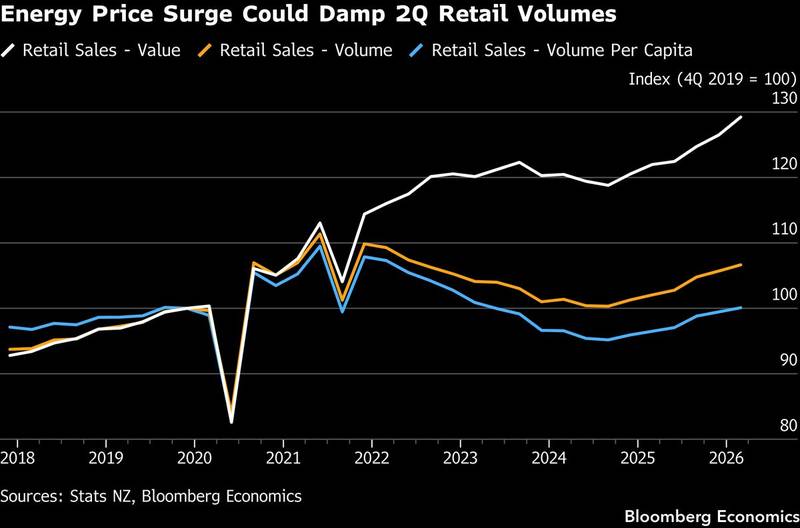
The early-hiker's consumer, three lines diverging: retail values keep climbing while volumes flatline and per-capita volumes sit below 100, meaning New Zealanders are paying more for less, still. The energy shock likely stalled the recovery a second time. It is the cautionary panel for every central bank about to hike into this war's inflation. Source: Stats NZ / Bloomberg Economics.
Two-Year Tuesday
The belly-supply week opens with $69 billion of 2-years, the tenor that has stayed safe while the long end burned. Confidence data and new home sales fill in the American picture, the Canadian banks report into a trade war, and South Carolina votes in the runoff the president asked to be judged by.
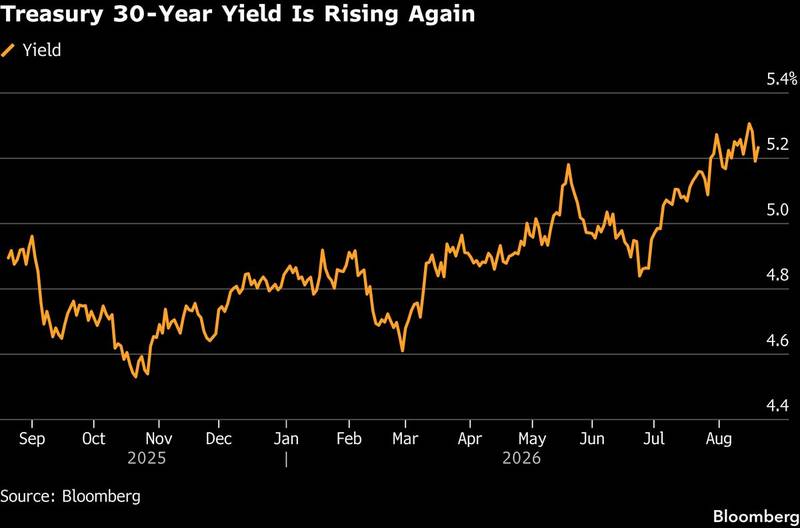
The line the buybacks are meant to hold: the 30-year back above 5.2%, at levels last seen in 2008, having round-tripped its entire post-March rally. This is the chart the Treasury is buying against, and the tell for the week is simple: if this line makes new highs while the buybacks run, the market has called the posture's bluff and the next stop is the 2023 pattern of unhinged days. Source: Bloomberg.
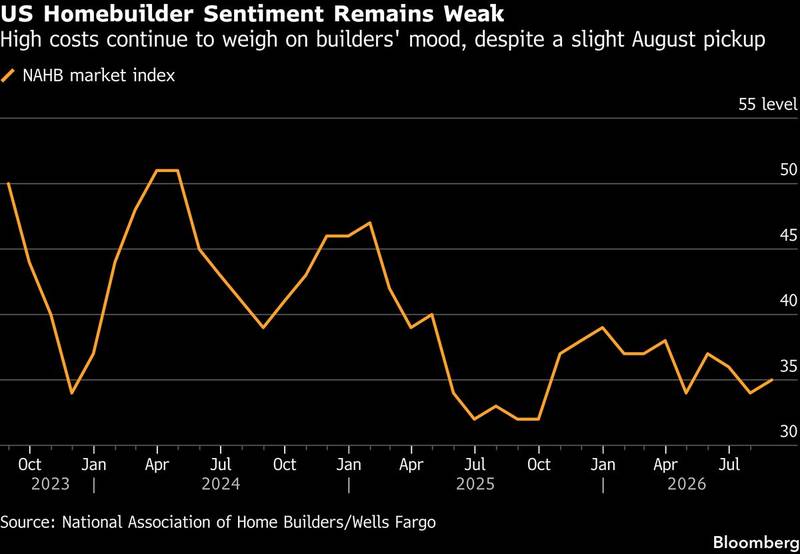
Housing stays the economy's soft underbelly: builder sentiment at 34, pinned near the cycle lows for a second year, with starts missing and pending sales falling last week. The frozen market is the clearest evidence that policy is restrictive, and it is the doves' best chart at Jackson Hole. It is also why the mortgage-search tail later in this letter deserves respect. Source: NAHB / Bloomberg.
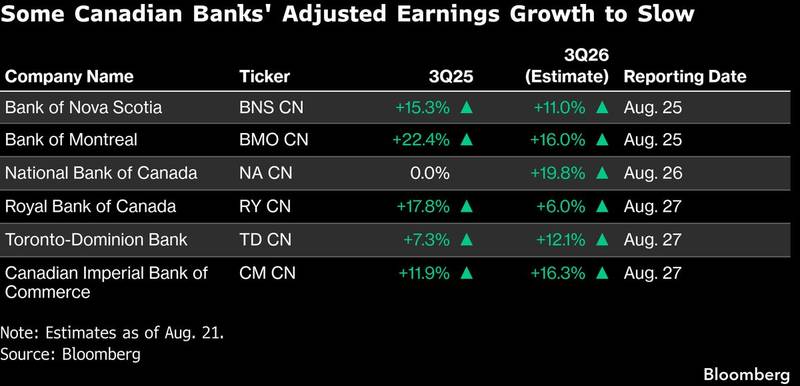
The banks of a country at war, reporting on schedule: all six majors report this week with growth seen slowing but positive, estimates set before Friday's collapse into counter-tariffs. The guidance, not the quarter, is the event: these are the balance sheets that price the trade war first, and provisions language on Tuesday will say more about September 8 than any communique. Source: Bloomberg.
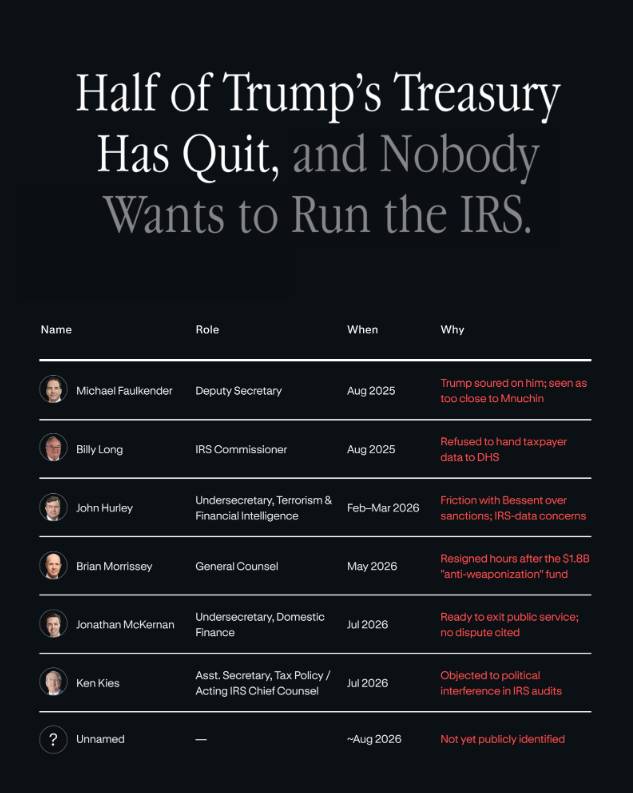
The table behind the Treasury's operations: seven of the sixteen Senate-confirmed positions have turned over, the general counsel resigning hours after the $1.8 billion fund surfaced, the tax-policy chief out over audit interference, and the IRS on its seventh leader in a year. The department running the buybacks, the sanctions war and a $2.1 trillion deficit is the emptiest it has been in the modern era. Institutions are infrastructure; this one is running on skeleton staff into its busiest autumn. Source: Public records.
Prove-It Wednesday
The first peak. PCE, the GDP second estimate and durable goods in the US morning, the 5-year auction at lunch, Nvidia after the close. Australia's CPI and Thailand's hold fill the Asia session. By Thursday morning our time, the inflation picture and the AI picture have both been marked to market.
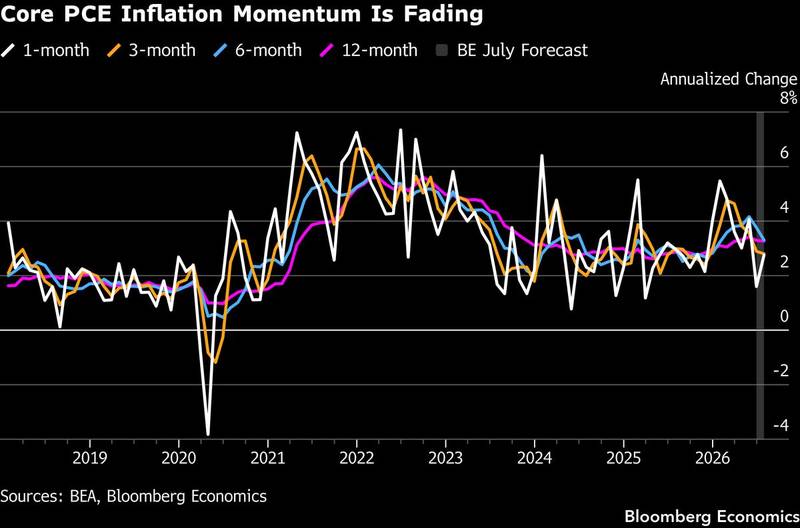
The doves' exhibit A: core PCE momentum fading on every horizon, the 3-month annualised rolling over from its spring spike, with the July forecast bar modest and September's portfolio-fee revisions set to flatter it further. This is the chart Warsh could wave to justify patience. Whether he chooses to is the whole question of Friday night. Source: BEA / Bloomberg Economics.
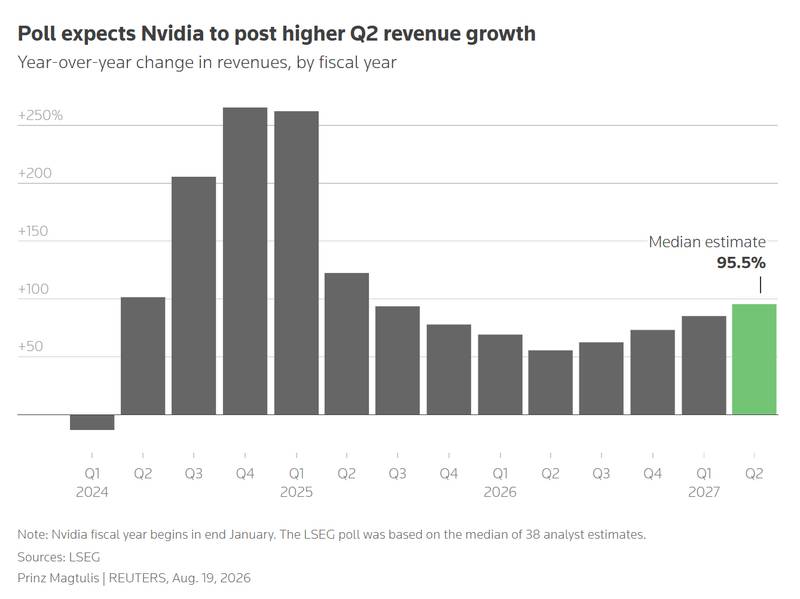
The deceleration nobody sells: revenue growth stepping down from +260% quarters to a 95.5% median estimate, the staircase maturing exactly as the financing needs explode. The comparison the bulls avoid: growth halving while the capital intensity doubles is the profile of a utility, and utilities do not carry these multiples. The coalition exists because the cash machine alone no longer covers the mission. Source: LSEG / Reuters.
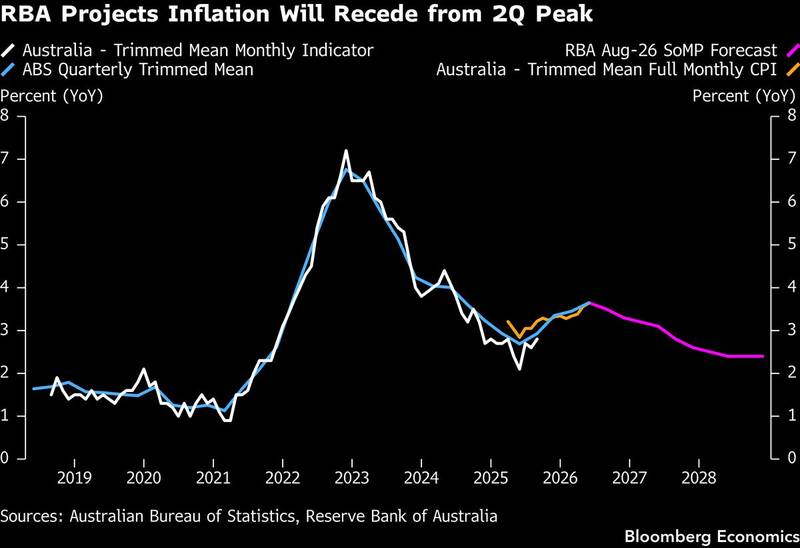
Australia's trimmed mean holds the whole story: headline jumps on the fuel-rebate unwind, adding 30 basis points in one month, while the trimmed mean sits at 3.6% and the RBA's own forecast glides it back inside the band by 2028. Another central bank choosing to look through the war's fuel noise; another bet that the second-round effects stay away. The region's CPI charts this week all rhyme. Source: ABS, RBA / Bloomberg Economics.
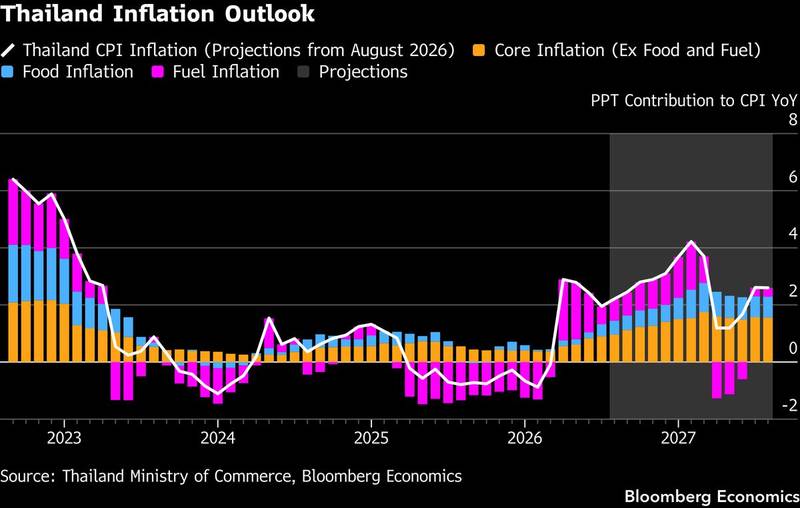
The regional exception that proves the rule: Thailand's inflation back near 2% with fuel doing the recent lifting, core subdued, and the central bank holding at 1.00%, still looking through the shock "for as long as possible". A shrinking workforce, indebted households and a China-dependent tourism sector argue for support; the war argues for caution. The BOT chooses growth, and the baht carries the risk. Source: Thailand Ministry of Commerce / Bloomberg Economics.
Hole-Opening Thursday
Asia does the tightening while Wyoming does the talking. The BOK's close call and a possible Philippine hike land in our morning, claims and the 7-year auction in the US session, and the Jackson Hole symposium opens in the US evening.
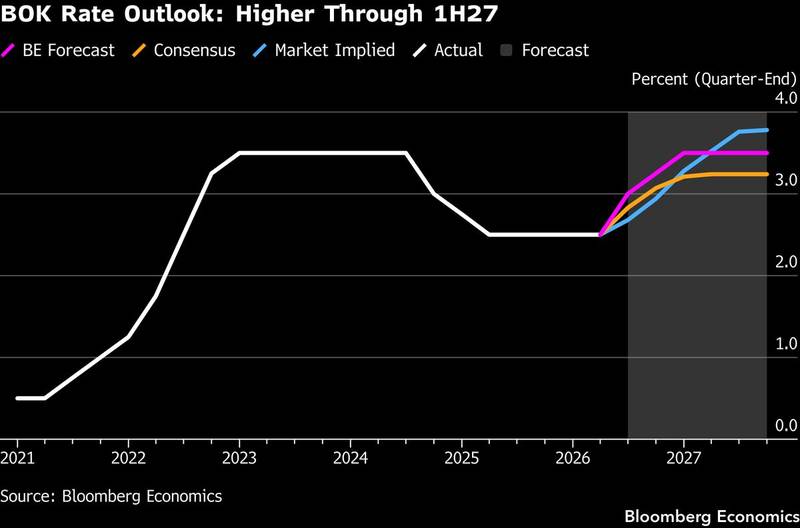
The close call that isn't priced like one: the market-implied path runs above both the house and consensus forecasts, toward 3.75% by late 2027, pricing the BOK as Asia's most determined hiker. AI-driven growth, Seoul housing and a won up 10% in a month all argue for the back-to-back move. For the crosses in this letter, Thursday is the day the funding leg either gets relief or gets trimmed. Source: Bloomberg Economics.
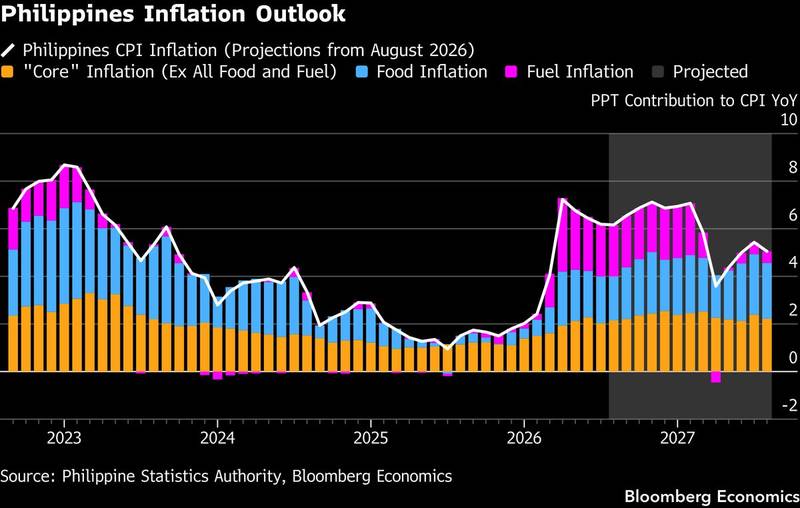
The other hiker, with the ugliest chart in Asia: Philippine inflation back above 6% on fuel and food, the projection band staying elevated through 2027, and a peso under enough pressure to force the BSP's hand again. This is what the war's inflation looks like in an economy that imports both its energy and its rice: the food-and-fuel bands are the whole chart. Source: PSA / Bloomberg Economics.
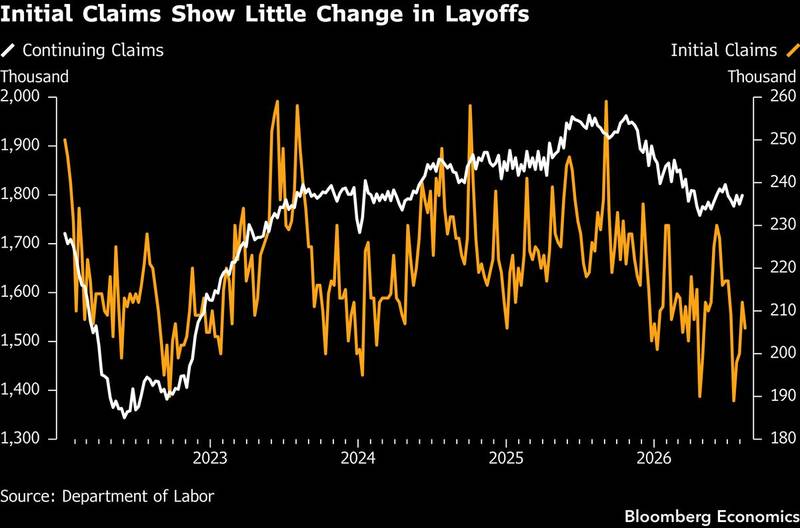
The labour market's flatline, still flat: claims at 206k and continuing claims stable, no crack whatsoever in the layoff data even as payrolls print negative. Firms will not fire and will not hire, and Friday's benchmark revision could reveal the no-hire half was overstated all along. The chart Warsh will have in his pocket if he chooses the hawkish reading. Source: Department of Labor / Bloomberg Economics.
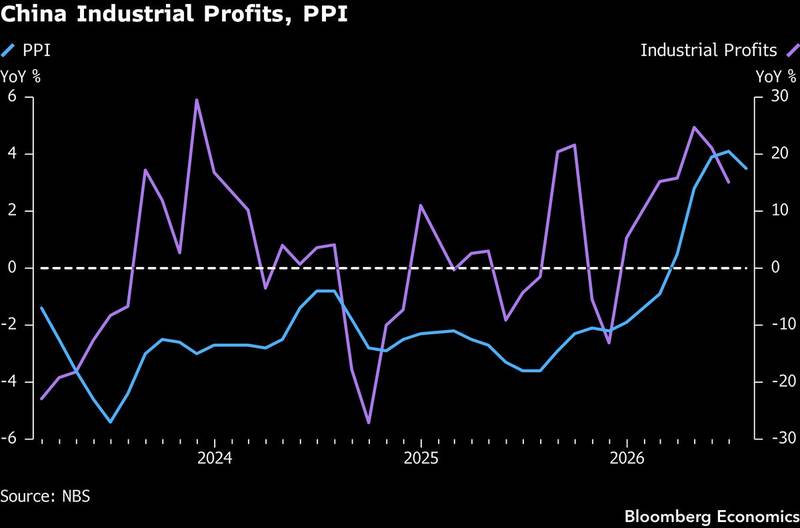
China's profit rebound rides one sector: industrial profits recovering toward 15-20% growth as PPI turns positive, but the tech-and-AI complex is doing the lifting while the old economy idles. Thursday's print shows whether the export machine's margins survived the reroutes. The LPR held again this week; Beijing's patience with its own slowdown remains the region's most consequential policy choice. Source: NBS / Bloomberg Economics.
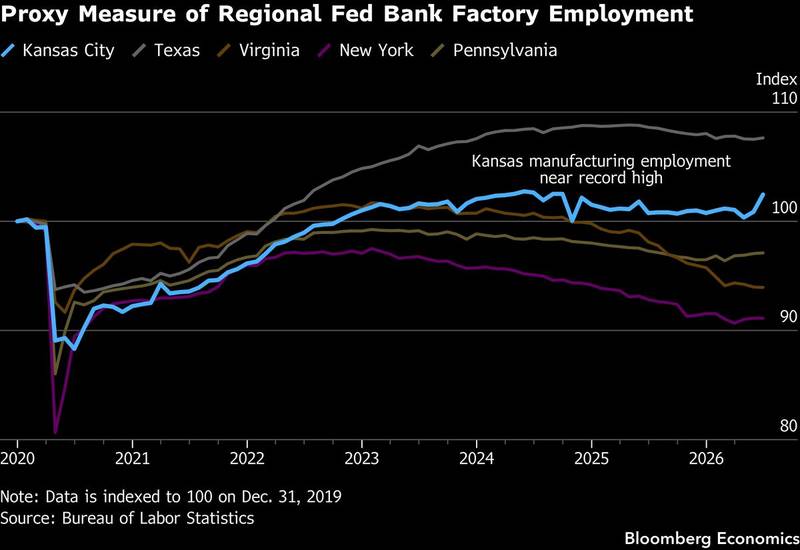
Where the capex boom actually lives: Kansas factory employment near record highs while New York's index languishes ten points below its 2019 level, the geography of data centres, LNG and defence spelled out in payrolls. The KC Fed survey lands hours before the symposium it hosts; its capex subindex is the AI build-out measured in Midwestern hiring. Source: BLS / Bloomberg Economics.
Ten O'Clock Friday
The second peak arrives at 10pm our time. The chair's first Jackson Hole keynote, the benchmark payrolls revision in the same hour, Schnabel for the ECB, and a morning of Asian and European inflation prints setting the table. The rule stands: whatever Friday says, the bond market grades it, and Monday's open does the arithmetic.
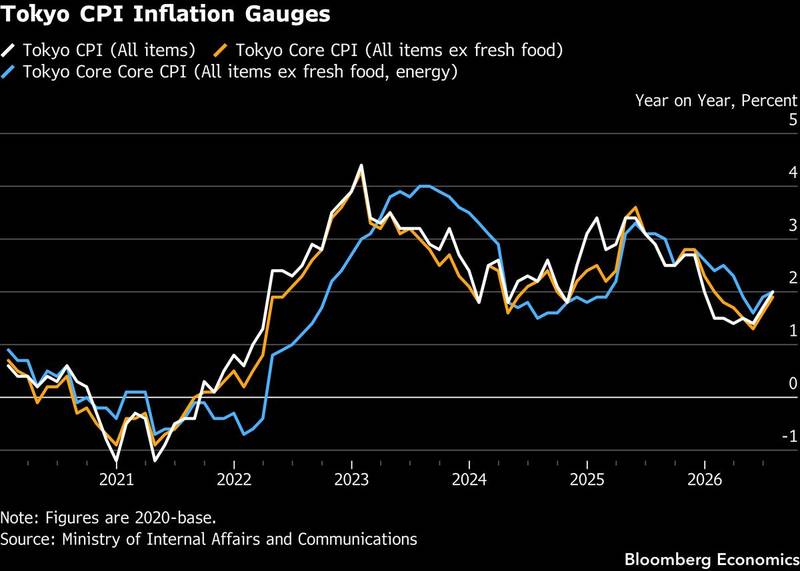
The BOJ's last box: Tokyo's three gauges converging back toward 2% with core-core turning up, the imported-cost pressure now broadening into services. A firm print makes October's hike the base case with September live, and hands the yen its fundamentals story just as the Ministry's intervention era quietly ends. The most consequential 8:30am of the Asian week. Source: MIAC / Bloomberg Economics.
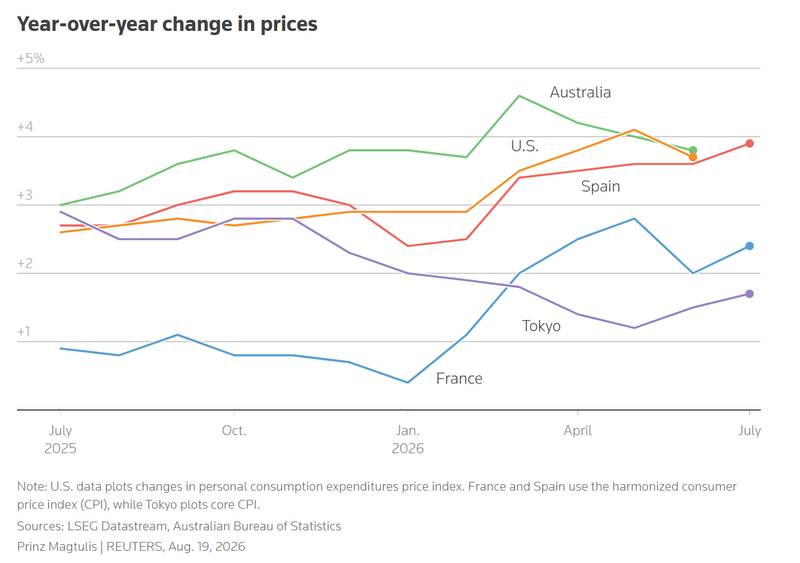
The week's inflation prints, pre-drawn: Australia rolling over from the top, the US and Spain converging near 4%, France accelerating from below and Tokyo turning up from the bottom. Everyone's line bends toward the middle, which is precisely the uncomfortable zone, too high to cut, too scattered to coordinate. The chart Schnabel and Warsh will be politely disagreeing about on the same stage. Source: LSEG / Reuters.
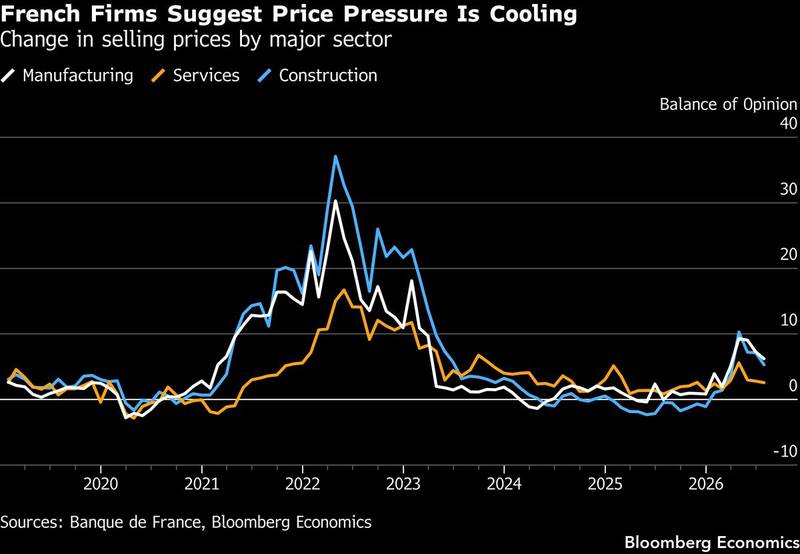
France's selling-price surveys say the pass-through is fading: manufacturing and construction balances rolling over after the spring fuel spike, services never spiking at all. The ECB's September hike is fully priced; this chart is the case that it is the last one. Friday's HICP at 2.6% will not change the September vote, but it frames the October argument. Source: Banque de France / Bloomberg Economics.
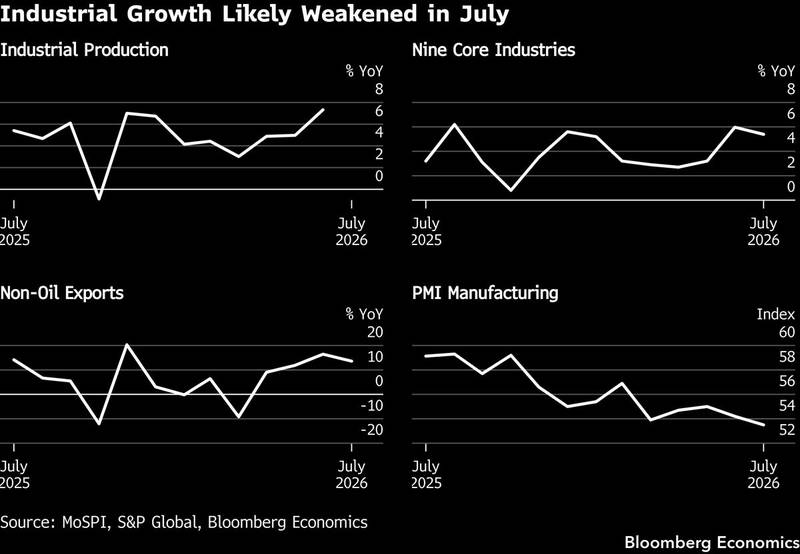
India's four dials all point the same direction: industrial production rebounding toward 6%, core industries firm, non-oil exports recovering and the PMI easing but expansionary. The economy that pays the war's oil tax twice keeps growing through it anyway. The quiet counterexample to every stagflation narrative this letter runs. Source: MoSPI, S&P Global / Bloomberg Economics.
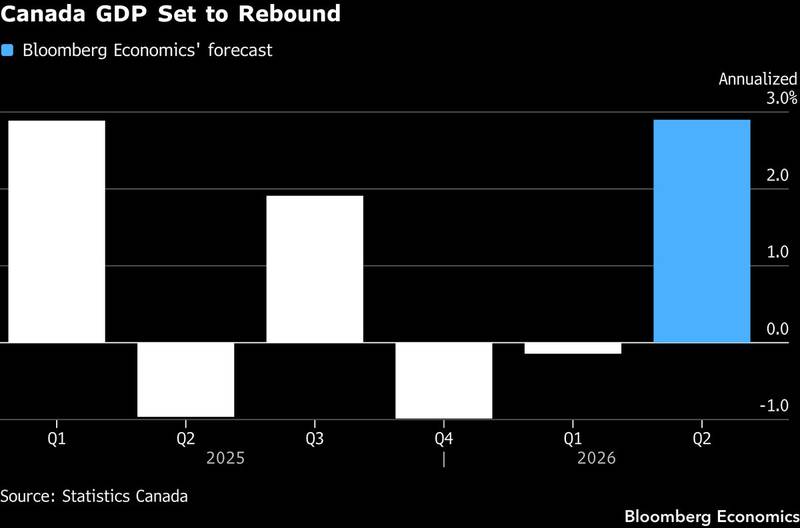
Canada's rebound, printed mid-war: Q2 GDP seen near 2.8% annualised, recession fears formally ended the same week counter-tariffs were announced. The economy entered this fight with momentum, 181k jobs added in three months, which is exactly why Ottawa felt able to retaliate. Strength is what makes trade wars last. Source: Statistics Canada / Bloomberg Economics.
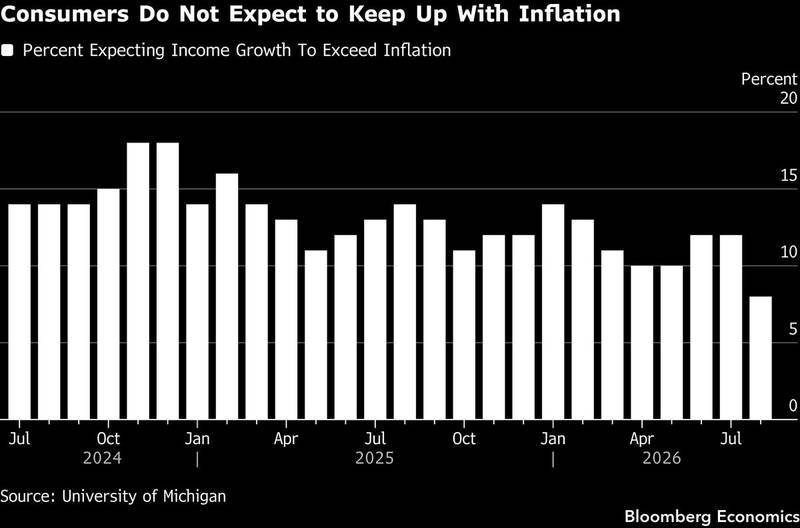
The revision's context, in one bleak bar chart: barely 7% of American consumers expect income growth to beat inflation, the lowest on record, with the erosion concentrated among older, lower-income and non-college households. Whatever the benchmark revision says about payrolls, this is what households already believe about the economy. The gap between the two is the midterm. Source: University of Michigan / Bloomberg Economics.
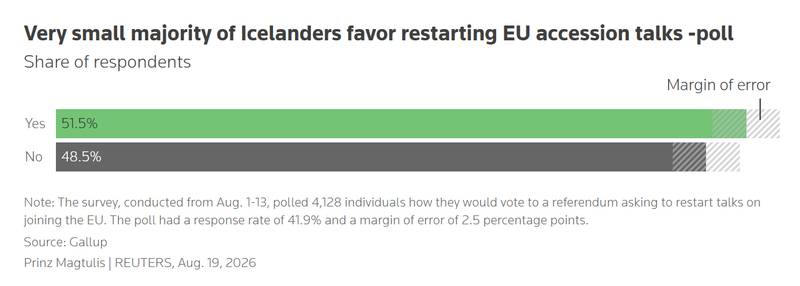
Saturday's quiet European moment: Iceland votes on reopening EU accession talks with the polls at 51.5 to 48.5, inside the margin of error. Fisheries against security, sky-high rates against sovereignty. A yes would be the EU's first enlargement momentum in a decade, arriving the same summer America's alliances turned transactional. Small vote, large signal. Source: Gallup / Reuters.
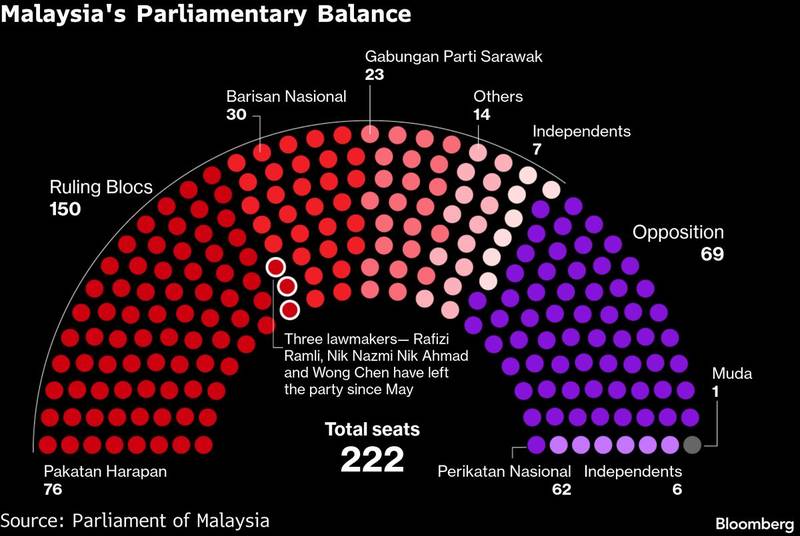
And nearer home, the arithmetic of a split: Rafizi's new Bersama party takes three seats out of the 150-seat ruling bloc, aiming for 50,000 members by October and a fifth of the vote where it stands. Malaysia's reform coalition now has a reform opposition, and the 2027 math gets harder for everyone. One to watch over the teh tarik, not the terminal. Source: Parliament of Malaysia / Bloomberg.
The AI Fracture, week eight: the tourists arrive
The credit is broadening as the equity narrows. Junk-bond investors are buying investment-grade data-centre paper, QTS at 7.23%, BlackRock's Texas project at 7.53%, because IG-rated AI debt now pays double-B yields; $410 billion has been borrowed for AI this year and the projection is a trillion a year from 2027, funded mostly in debt markets. Broadcom is raising another $60 billion for chips benefiting Anthropic, whose leaked $11.5 billion quarter, $10 billion-plus revolver and imminent IPO filing arrive as OpenAI's losses widen to $12.3 billion a quarter and its rival cuts prices 20%. The system is pre-positioning for the massive and final fundraisings, and the ratings agencies are upgrading CLOs on new methodologies while Moody's warns about rating-shopping in private credit. As one strategist put it, wider spreads are becoming the only stabiliser of supply. "The financial system has shifted from short-dated deposit funding toward long-dated institutional capital, matched more closely to the assets it finances", writes Apollo's Torsten Slok, and this week that system takes its biggest single-name mark.
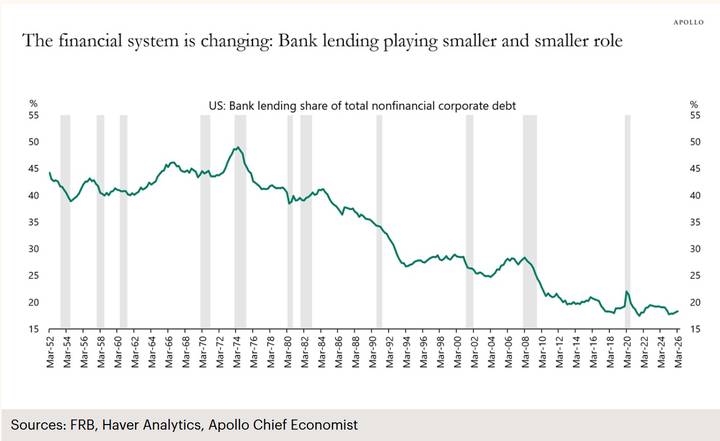
The seventy-year chart behind the tourists: bank lending's share of corporate debt down from half in the 1970s to under a fifth, the financing of American business handed to markets and private capital. It is why the AI build-out could raise $410 billion in eight months, and why the risk now sits with long-duration investors who chose it rather than deposit-funded banks who could run. That is the bull case. The bear case is that nobody has tested the new system's plumbing in a real drawdown. Source: Apollo, FRB / Haver.
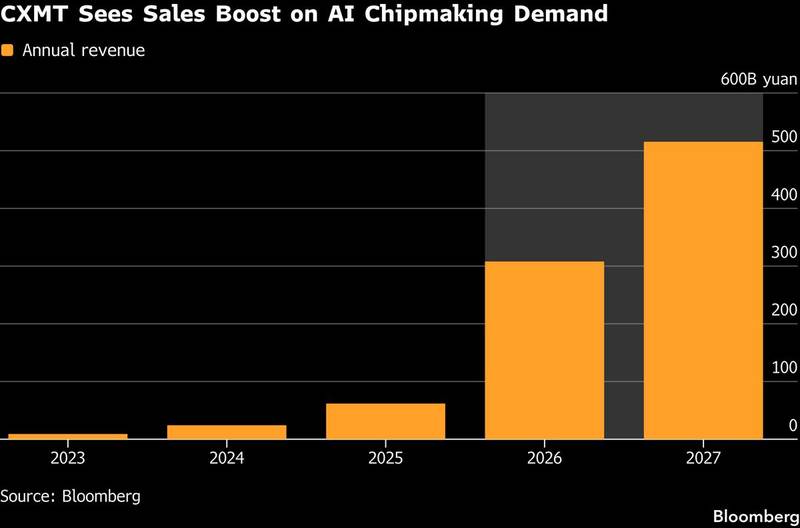
The memory squeeze goes both ways: China's CXMT guiding revenue from a standing start to nearly 500 billion yuan by 2027 on AI chipmaking demand, the same memory shortage that is crushing Salesforce and HP margins this week funding a Chinese national champion's rise. Export controls built this company a market. Wednesday's earnings calls will complain about the prices it now sets. Source: Bloomberg.
The 2007 rhyme
Two charts from opposite ends of the economy, both pointing at the same year. The research question worth sitting with: the last time both of these were at current levels was the eve of the financial crisis, and the official statistics disagreed with them then, too.
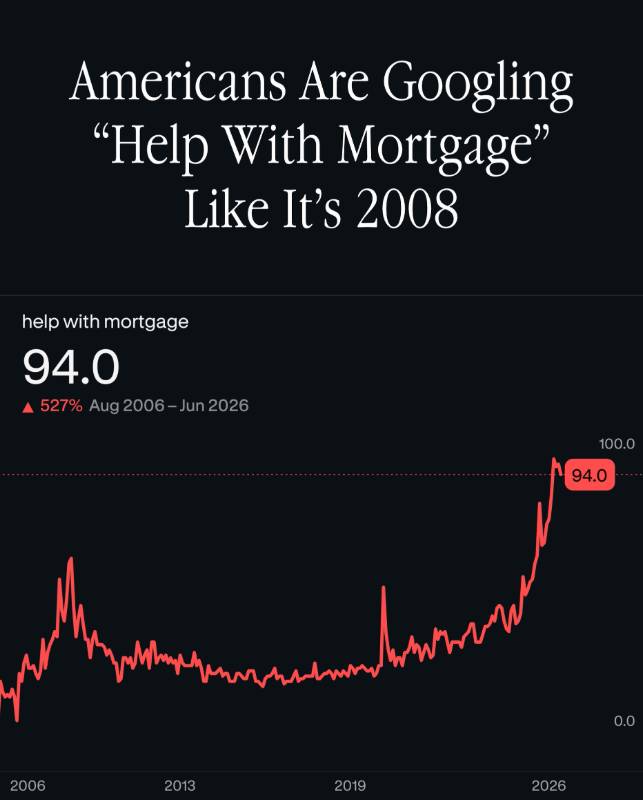
Desperation gets typed into a search bar the same night; the statistics take months. Searches for "help with mortgage" hit 94, up 527% from 2006 and above the 2008 record, and the unsettling part is the slope: no single shock, just households running out of adjustments one by one through two years. Claims say nothing is wrong. The search bar says the crack arrives before the data does. In 2008 this moment came after the banks failed; this time it is arriving first. Source: Google Trends.
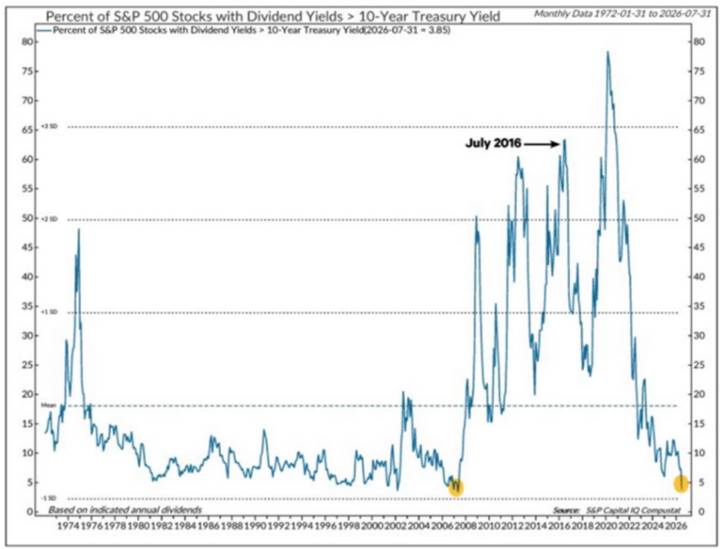
And the other side of the rhyme, from the market's end: only 3.85% of S&P 500 stocks out-yield the 10-year Treasury, pinned at the lows that marked 2007, against nearly 80% at the 2020 extreme. Equities offer no income cushion against a 4.74% risk-free rate; the real-yield-versus-forward-earnings version of the same math sits near 2.6% against 10% averages after the crisis. Stocks are priced for the bond market to be wrong. The bond market, per this whole letter, has stopped being polite about it. Source: S&P Capital IQ / Compustat.
VC+ Special Dispatch, The Business of Entertainment
Nine charts on the money behind what the world watches, streams and plays. Recorded music alone brought in $31.7 billion in 2025, its eleventh straight year of growth, and the dispatch's real story is the coexistence of empires: billion-dollar catalogues and franchises alongside podcasters and YouTubers earning eight and nine figures. Attention is the scarcest commodity in this letter after capital, and this is its balance sheet. Credit to the VC+ team.
Infographic 1 - Spotify's Most Streamed Albums
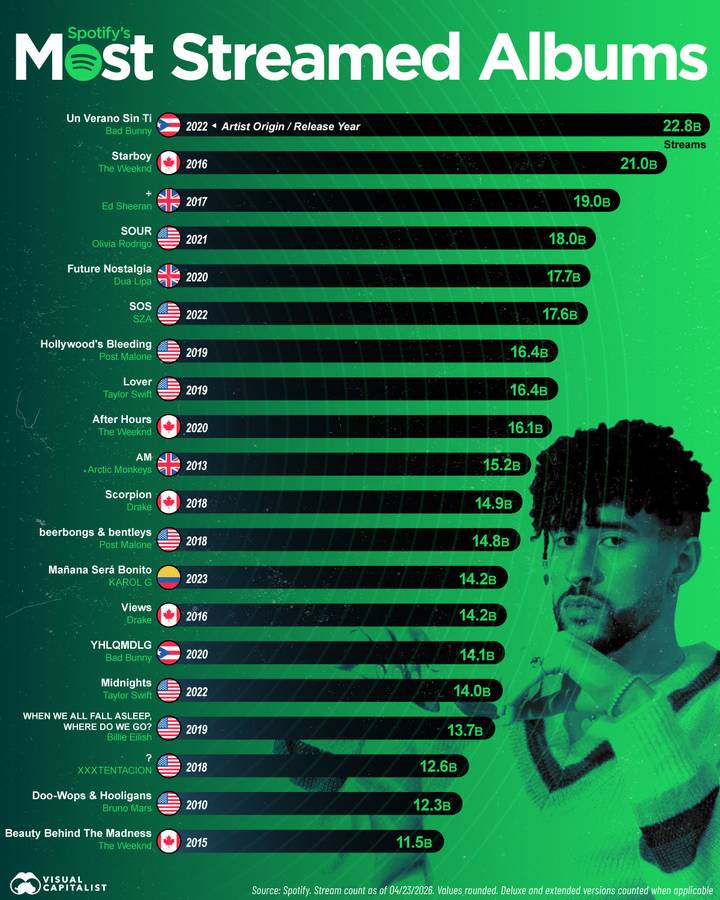
Bad Bunny's Un Verano Sin Ti leads at 22.8 billion streams, a Spanish-language record atop a list where half the entries are less than a decade old. Streaming rewrote the catalogue economics: the leaders are not the best-sellers of history but the most repeatable, and repeatability is what the billion-dollar catalogue acquisitions actually bought. Source: Spotify / Visual Capitalist.
Infographic 2 - Best-Selling Albums in American History
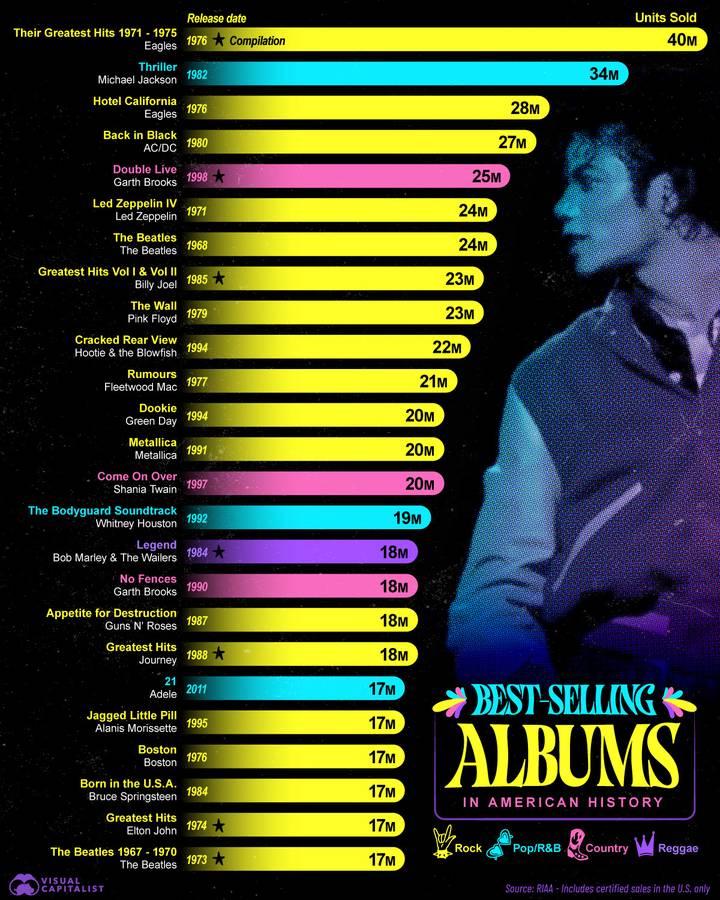
The physical era's leaderboard is frozen in amber: the Eagles at 40 million units, Thriller at 34, nothing after Adele's 2011 entry. Two economies of music now run in parallel, one measured in units that stopped moving, one in streams that never stop. The catalogue funds buying the first are betting the second never abandons it. Source: RIAA / Visual Capitalist.
Infographic 3 - The Richest Music Artists
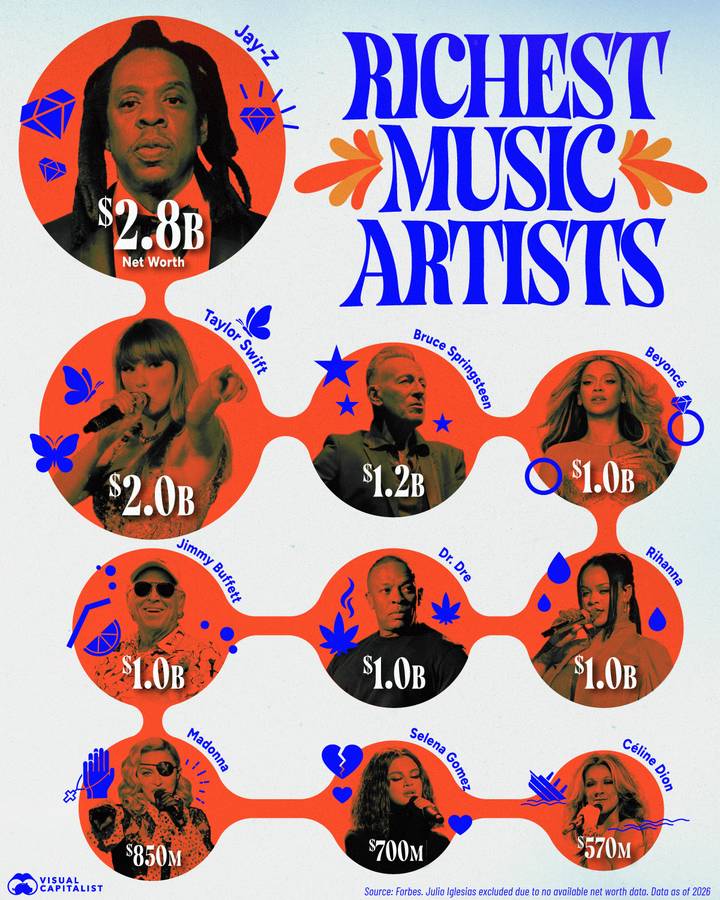
Jay-Z at $2.8 billion, Taylor Swift at $2.0, and the instructive detail is how: champagne, streaming platforms, masters ownership, touring. The music itself is rarely the fortune; the fortune is owning the adjacent businesses the music makes possible. The salary was never the asset, again. Source: Forbes / Visual Capitalist.
Infographic 4 - Top-Earning Podcasters
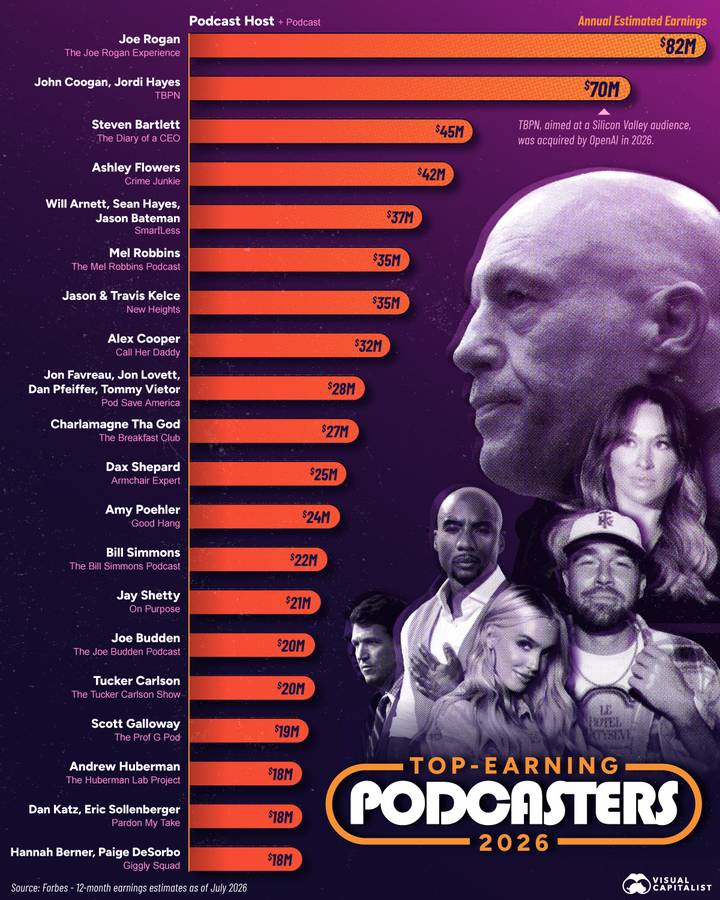
Rogan's $82 million leads, but the second line is the story: TBPN at $70 million, acquired by OpenAI this year, the AI labs now buying distribution for the narrative war. When the companies raising the final private rounds start purchasing the shows that cover them, the media column of this dispatch belongs in the AI section. Source: Forbes / Visual Capitalist.
Infographic 5 - Top-Earning Content Creators
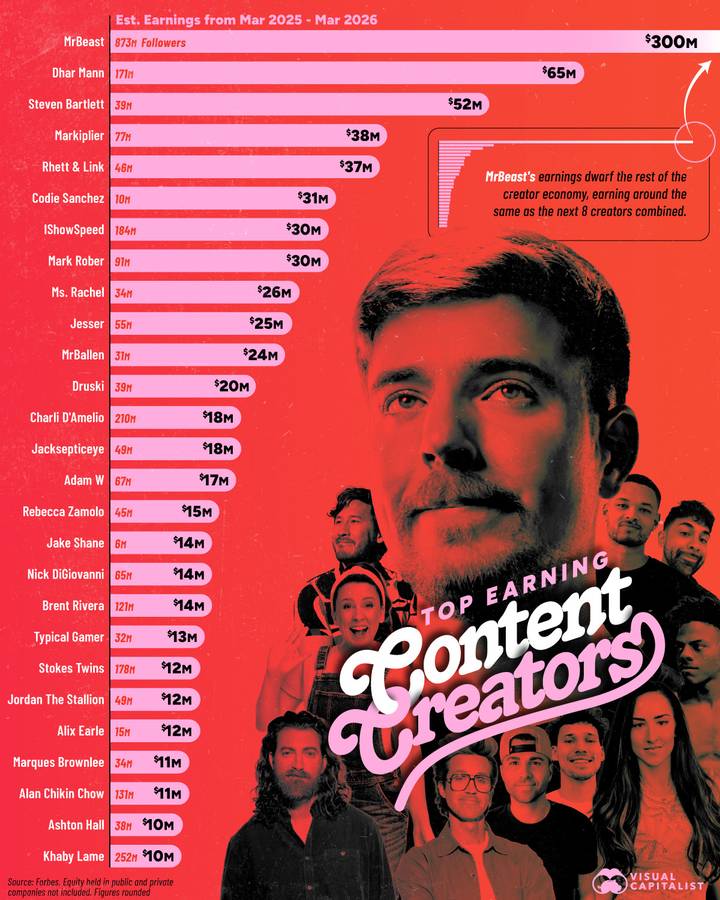
MrBeast earns $300 million, the next eight combined: the creator economy reproduces the market's concentration problem perfectly, a Mag-One atop a long tail. The follower-to-earnings conversion varies a hundredfold across this list, which is the whole business model question in one column of numbers. Source: Forbes / Visual Capitalist.
Infographic 6 - All-Time Highest-Grossing Movies
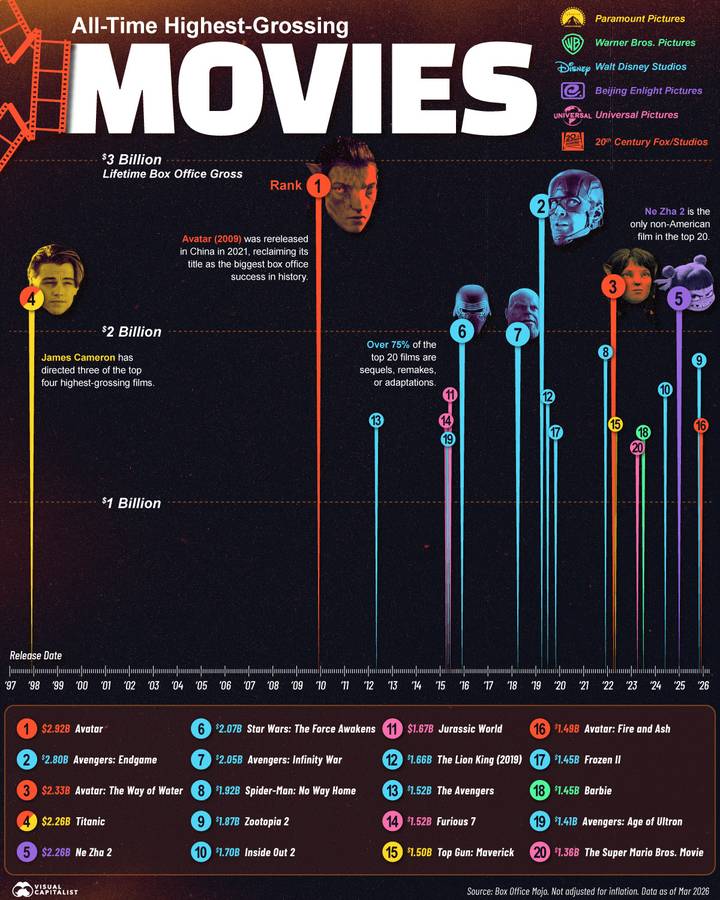
Avatar's $2.92 billion still leads, over 75% of the top twenty are sequels or adaptations, and Ne Zha 2 is the only non-American entry. The franchise machine is a bond ladder in costume: predictable cash flows from pre-sold audiences, which is why studios finance them and originals fight for scraps. Source: Box Office Mojo / Visual Capitalist.
Infographic 7 - IMDb's Highest-Rated Movies
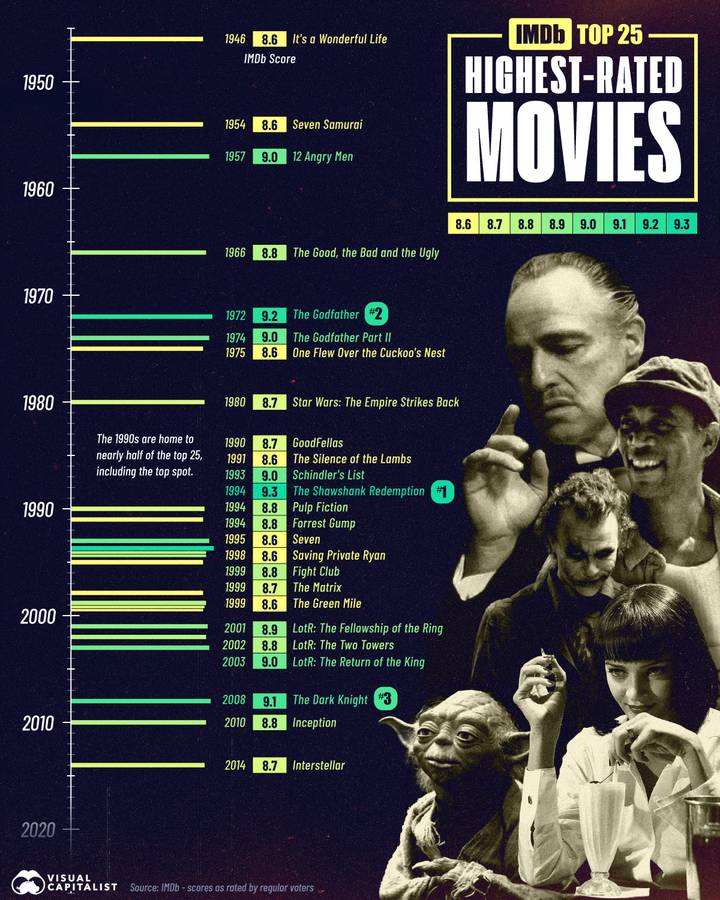
The audience's own list tells the opposite story: Shawshank at 9.3, the 1990s supplying nearly half the top 25, and almost nothing from the franchise era ranking at all. What people gross and what they treasure diverged decades ago. Both lists are true; only one of them compounds. Source: IMDb / Visual Capitalist.
Infographic 8 - All-Time Best-Selling Video Games
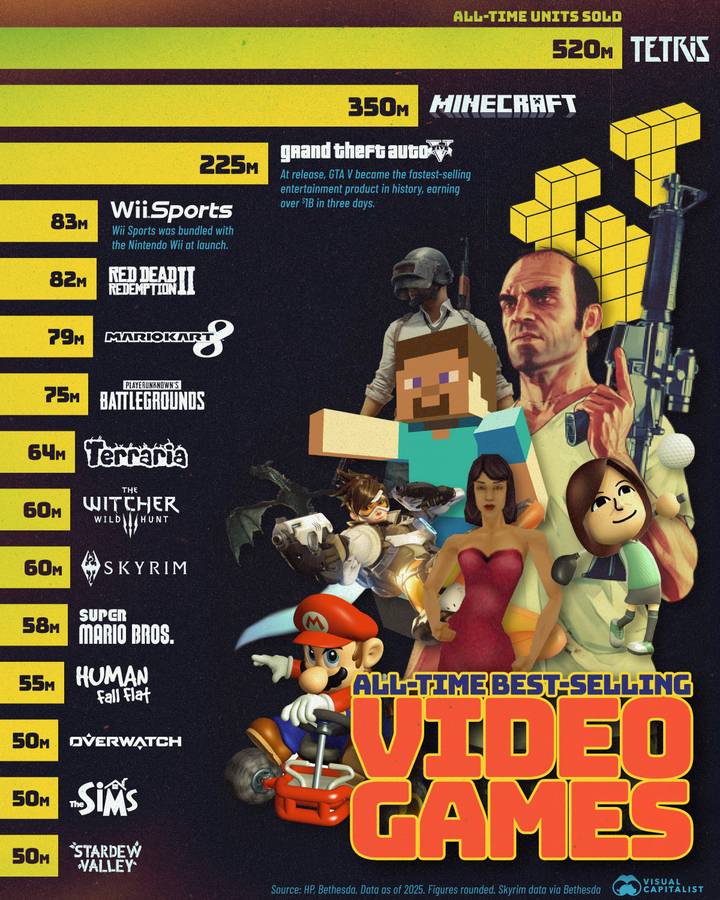
Tetris at 520 million copies, Minecraft at 350, and GTA V earning a billion dollars in three days, still the fastest entertainment launch in history. Gaming out-earns film and music combined and remains the least financialised of the three, which in this year of everything-securitised probably counts as a compliment. Source: HP, Bethesda / Visual Capitalist.
Infographic 9 - The World's Most Popular Social Platforms
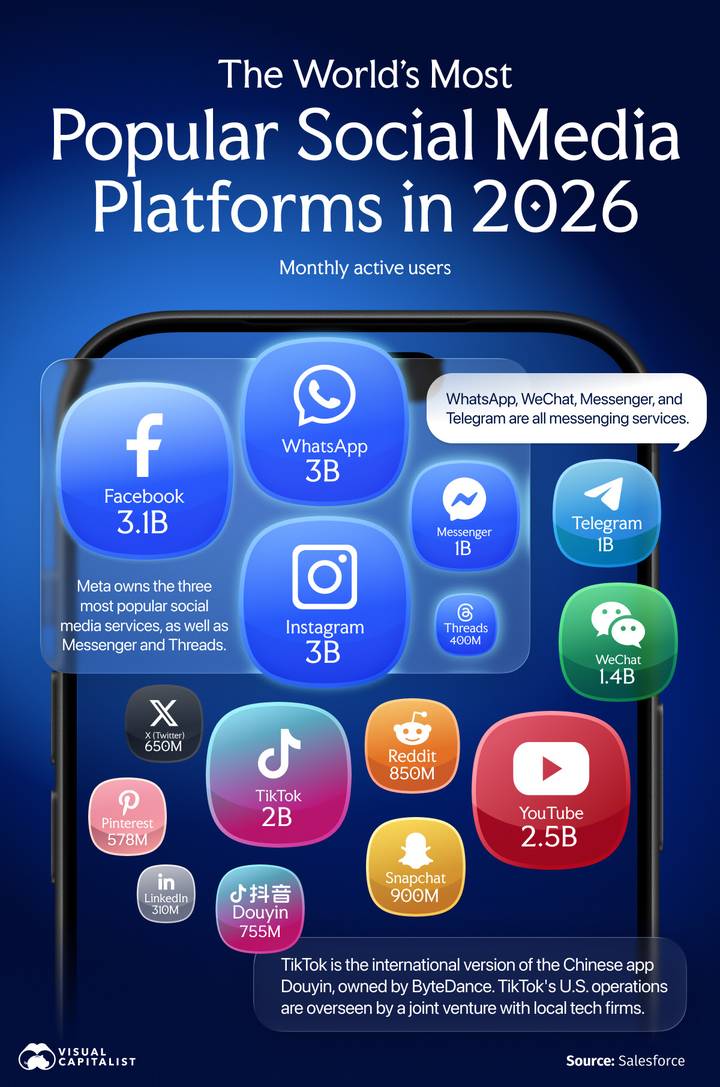
The distribution layer under all of it: Meta owns three of the top five with Facebook and Instagram at 3 billion-plus users each, TikTok's US operations now run through a joint venture, and X at 650 million is smaller than Reddit's audience is loud. Every business model in this dispatch rents its audience from this chart. The rent keeps rising. Source: Salesforce / Visual Capitalist.
The Good Wrap
What is left at the close. The all-time trading-loss leaderboard gains a new champion. The managers are burning out and the young are lifting weights alone. The one chart that sits upstream of everything. And week four of the eight great cuisines arrives in the province that answers every question with chillies, because this letter ends where every good week should: at the table.
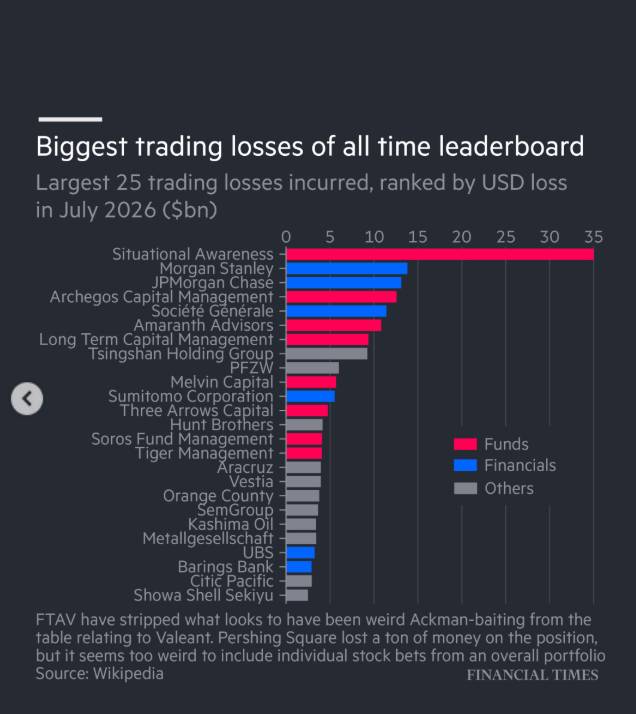
The leaderboard nobody wants to top has a new number one: July's Situational Awareness blowup now ranks above Morgan Stanley's crisis losses and Archegos, at roughly $35 billion the largest trading loss ever recorded, and only seven of the top 25 are actually funds. The two-step recipe never changes: inspire enough faith to manage vast sums, then let conviction cast aside risk management. Every name on this list was the smartest in the room the year before. Source: FT Alphaville / Wikipedia.
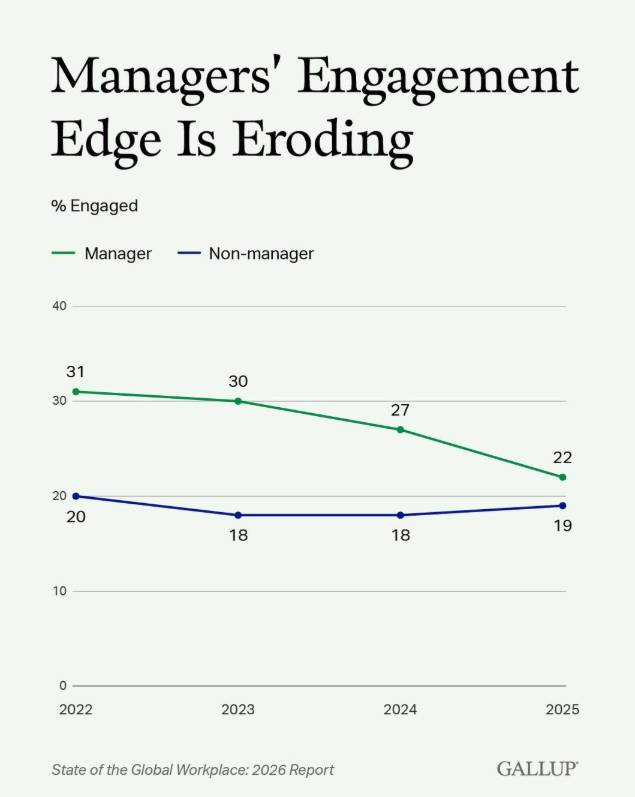
The managers are losing the will first: engagement among managers down nine points since 2022 to 22%, nearly converged with the people they lead, while carrying more stress, anger and loneliness. Gallup puts 70% of team-engagement variance on the manager. The AI era's quiet workplace story is not the jobs it replaces; it is the middle layer burning out while holding everyone else's. Source: Gallup.
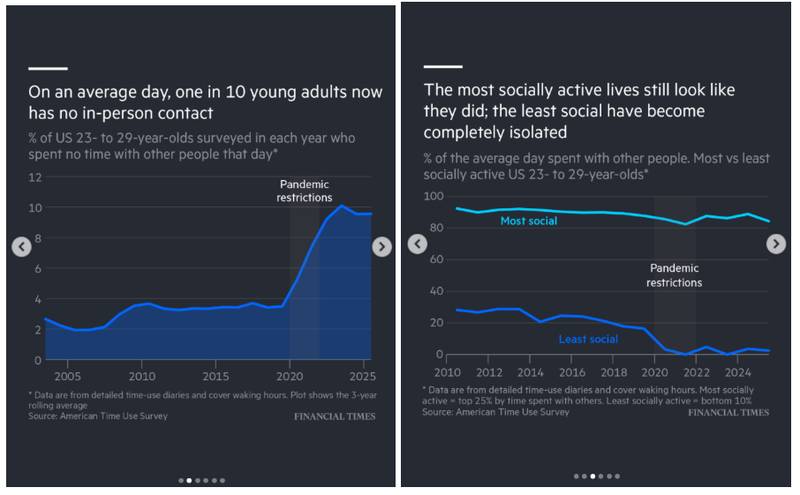
One in ten young adults now spends the average day with no in-person contact at all, triple the pre-pandemic rate, and the most isolated tenth never recovered what 2020 took. The most social lives look unchanged; the least social have gone dark entirely. Every screen-time chart this letter has ever run is downstream of this one. Source: American Time Use Survey / FT.
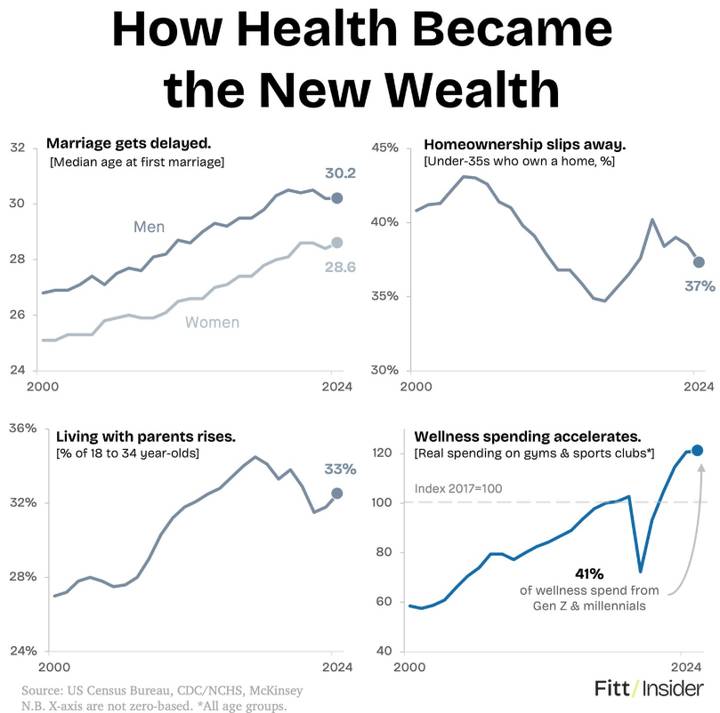
Priced out of the old milestones, the young bought new ones: marriage at 30, homeownership at 37% and falling, a third living with parents, and wellness spending up 41% driven by Gen Z and millennials. Health became the asset class you can actually accumulate at 26. More than half join gyms for community, which, after the loneliness chart above, reads less like vanity and more like adaptation. Source: Census, CDC, McKinsey / Fitt Insider.
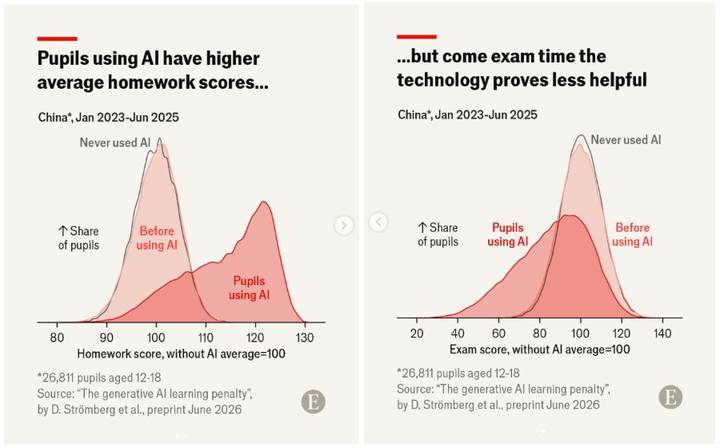
The AI learning penalty, measured on 27,000 pupils: homework scores up 18% with AI, exam scores 20% lower when the crutch is removed. The machine does the work and the learning quietly stops happening. File it wherever you keep your thoughts about analyst training programs, and possibly about letters like this one. Source: Strömberg et al / The Economist.
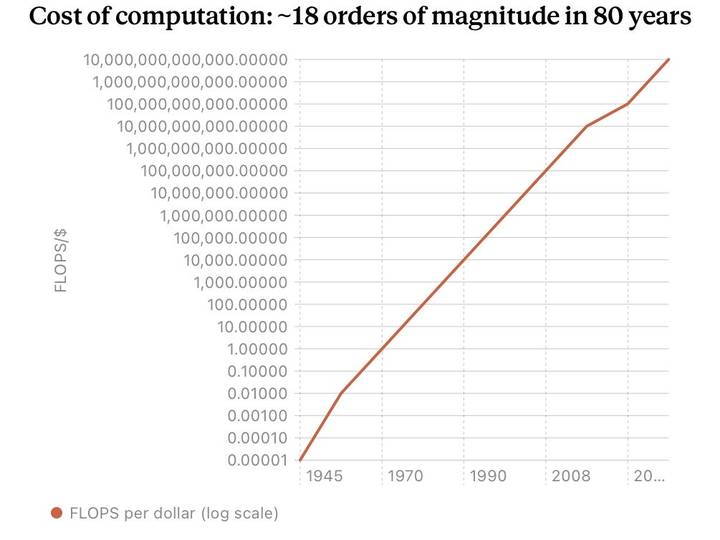
The chart to show the visiting alien: the cost of computation down eighteen orders of magnitude in eighty years, the straightest line in economic history. Everything in this letter, the capex, the puts, the bubble question, the debasement hedge, is downstream of this line continuing. It has never bent. The trillion-dollar question of the decade is simply whether it pauses for breath. Source: Chamath / public data.
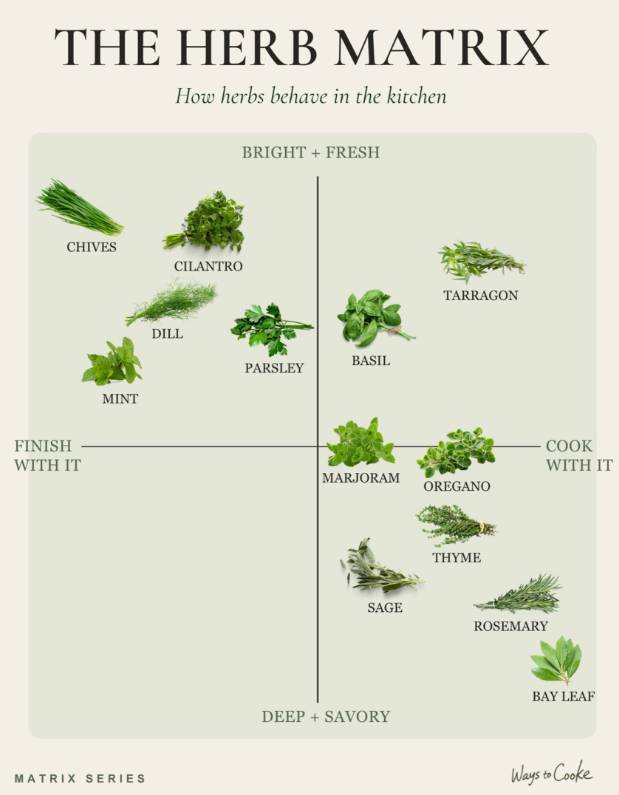
For the kitchen, a matrix worth taping inside a cabinet: the sturdy herbs, rosemary, thyme, bay, go in early and cook; the tender ones, basil, mint, cilantro, are finishers that die in heat. Most herb mistakes, like most trading mistakes, are timing mistakes: right ingredient, wrong entry. Source: Ways to Cooke.
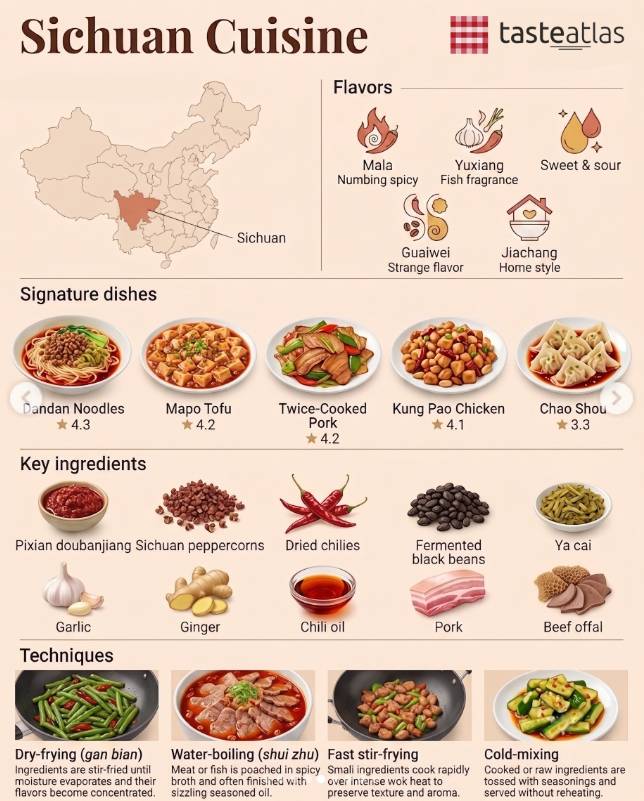
Week four of the eight great cuisines: Sichuan, the one the world thinks it knows, and the one with the deepest bench: mala numbing heat, yuxiang fish-fragrance with no fish in it, guaiwei the deliberately strange flavour, twenty-three codified taste profiles from one basin's humidity. Dan dan noodles, mapo tofu, twice-cooked pork. Where Hunan dries its heat, Sichuan ferments it, doubanjiang aging in clay like the province's patience. The kitchen that proves complexity and comfort are not opposites. Source: TasteAtlas.
Best,
Hoelon
WITPTW is a personal publication. Everything here is personal opinion and market commentary, written in a personal capacity. It is not investment advice and not a recommendation to buy or sell any security. It is not associated with, endorsed by, or representative of any employer, fund or company. Charts and images are reproduced from their original publishers, credited to their sources for commentary and discussion; all rights remain with the respective copyright holders.