France Takes Its Turn
Personal views and market commentary. Not investment advice. Not associated with any employer or firm.
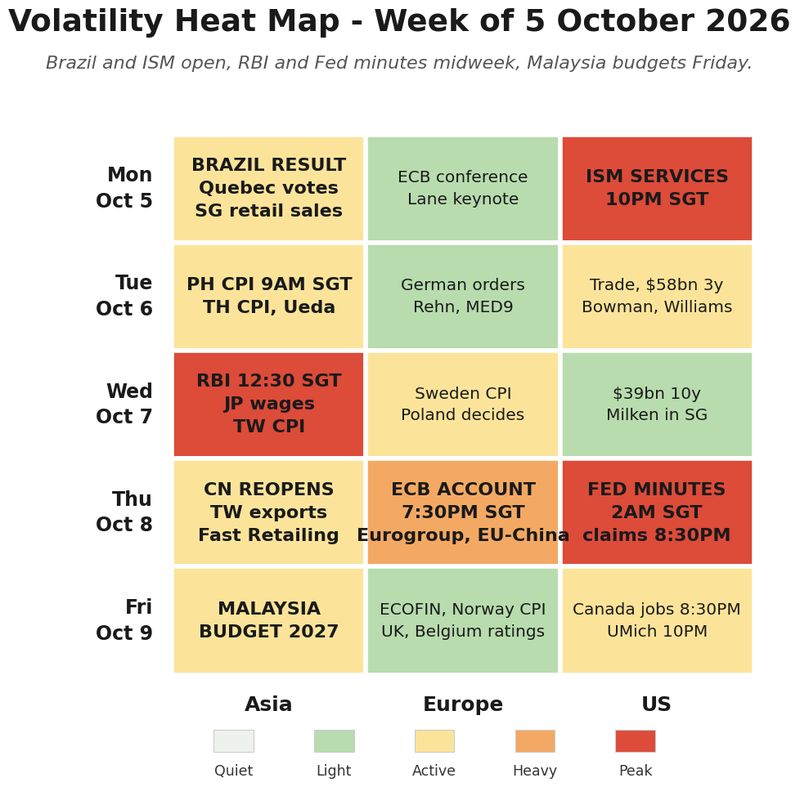
Volatility heat map for the week ahead , sessions as we trade them from here. Brazil's result greets Asia's Monday and ISM services closes it, the RBI at 12:30pm Wednesday and the Fed minutes at 2am Thursday are the week's other peaks, and Malaysia tables its budget on Friday. The S&P enters near 7,720 and the dollar index near 102.
"I don't see how you could fight this when the firepower and the cards are all sitting in the Treasury Department." — David Zervos, then Jefferies chief market strategist, on CNBC in August, before joining Treasury on September 28. Don't fight the Treasury, he said. The bond market did anyway, and now he works there. Zervos said it in August, backing Bessent's decision to buy back more long-dated debt: the issuer controls the supply, so betting against it is betting against the house. Since then the bond market has bet against it anyway. The buybacks fell short of their maximum two weeks running because holders would not sell at Treasury's prices, the 10-year reached 5.34%, its highest since 2002, and the 5-year crossed 5% for the first time since 2007. Now he sits inside, as counselor to Bessent until April 2027, a vocal advocate of lower rates who believes Warsh can cut by shrinking the Fed's balance sheet. Treasury's next refunding is November 4.
"The optimists. Oh, they were the ones who said, 'We're going to be out by Christmas.' And Christmas would come, and Christmas would go... And then Thanksgiving, and then it would be Christmas again. And they died of a broken heart... You must never confuse faith that you will prevail in the end, which you can never afford to lose, with the discipline to confront the most brutal facts of your current reality, whatever they might be." — Admiral James Stockdale, senior American prisoner of war in Hanoi for more than seven years, to Jim Collins in Good to Great. Not optimistic, not pessimistic: prepared. Optimism and pessimism tell you little about whether you are ready. Think like a warrior: see the situation clearly, prepare for what can go wrong, and act when the opportunity comes. This week the bond optimists got their weak payroll print, 29,000 jobs, and the 10-year still closed higher, at 5.28%. Courage is facing reality and trusting yourself to respond.
"In economics, things take longer to happen than you think they will, and then they happen faster than you thought they could." — Rudi Dornbusch, MIT economist, as quoted by the IMF. France took years to happen, then it happened in a week. France's spread over Germany jumped 50bp in a week to 150bp, the biggest weekly move since 2011. The budget problem is years old; the speed came from leverage, as hedge funds raced out of crowded carry trades. Britain's 2022 gilt crisis ran the same way and was stopped by the Bank of England and a reversed budget. France has neither: the ECB says it does not target spreads, and Paris has no quick fix.
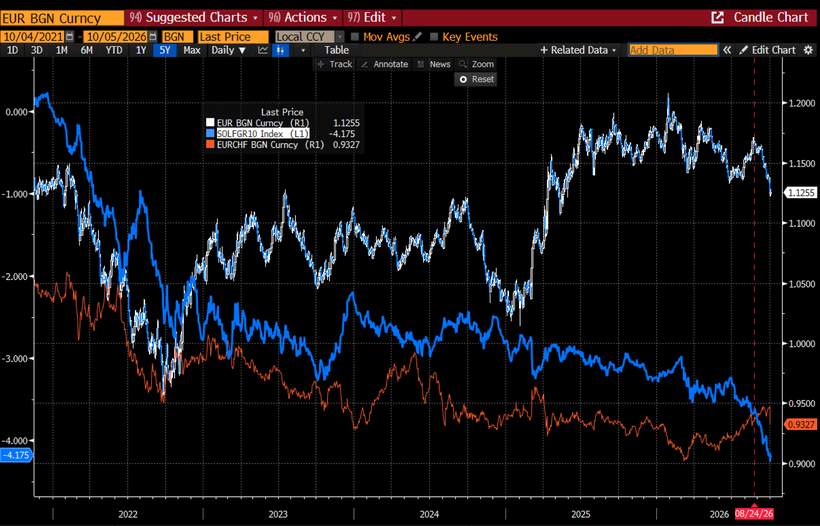
The euro is now trading French bonds. The euro (white) has broken below the range it held since April 2025 and is under 1.13 for the first time since May 2025, falling in step with the Solactive French-German spread (blue), which has slid hardest since late August. It is not a dollar story: the euro fell against sterling, the yen and the franc as well, and EURCHF (orange) had its biggest one-day drop since June 2022. This is harder than 2011: French debt dynamics are worse, more borrowers are competing for global capital, inflation limits how freely central banks can provide liquidity, and France votes for a president in April. Banks are stronger and the 2012 backstops exist, but none has been used yet. Source: Bloomberg.
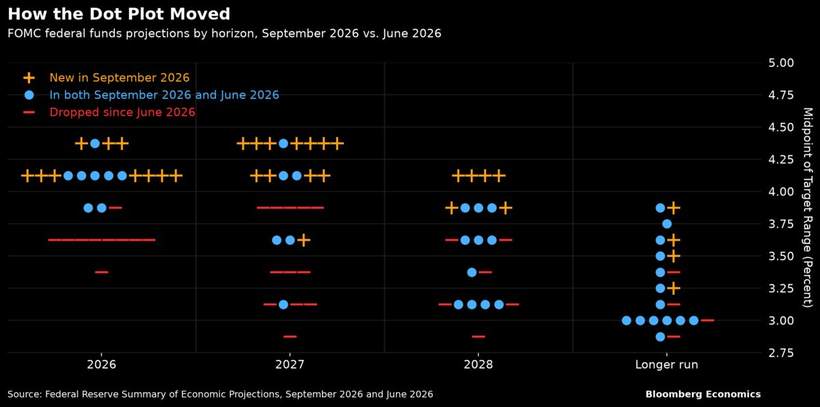
The minutes arrive already overtaken. September's dots moved the whole committee up: most officials pencilled in one more hike this year and about four pencilled in two, the 2027 dots now cluster at 4.125-4.375% where June had them below 4%, and the long-run neutral rate drifted higher. Bloomberg Economics expects Wednesday's minutes to show "almost all" supporting more tightening. But they predate both the PCE revisions, which made this year's inflation softer than officials believed, and the 29,000 payroll print, and the odds of an October hike have since fallen from about 70% to about 20%. The minutes land at 2am Singapore time on Thursday. Source: Federal Reserve / Bloomberg Economics.
What is the plan this week?
Stepping into Q4, most of the past years have been about looking for momentum in a risk rally into the finishing line. Quite the opposite this time: major central banks are tightening on inflation, bond yields are through the roof, energy prices are elevated with the war looking to escalate to new highs, and French debt is blowing up. Yet the Nasdaq made an all-time high and Asian currencies closed the week stronger. The one thing in momentum is growth, and no matter how cautious the market gets, it surprises stronger.
Were Williams and Jefferson sent out to forward guide the October FOMC? We get the Fed minutes this week, and with October pricing back at the lows, they could well be market moving. The longer end, though, is not so dependent on the meeting. ISM services could reinstate strong signs of growth, and the DXY's momentum will depend on that.
In Europe, the week is about whether anyone steps in for France. The ECB holds its monetary policy conference in Frankfurt on Monday and Tuesday and publishes the account of its September meeting on Thursday, with Lane speaking at both. The words to listen for are "disorderly" and "transmission", the language that opens the door to its bond-buying backstop. Italy matters as much as France: if its spread keeps widening alongside, the case for the ECB gets easier. Euro-area finance ministers meet in Luxembourg on Thursday and Friday while Paris argues its budget through parliament, and the EU's trade chief lands in Beijing on Thursday, days after China opened an anti-dumping probe into European chemicals.
In Asia, China returns from Golden Week on Thursday to a yuan at its strongest since early 2022, with the PBOC still lowering the fix even as it warns against the herd. The RBI decides on Wednesday on a genuine split: consensus for a hike to 5.5% against those who expect it to wait for December. Philippine inflation is seen jumping to around 6.7% on Tuesday and Taiwan's to 2.5% on Wednesday, and Japan's wage data the same day should keep the BOJ on track for another hike. Singapore reports retail sales on Monday.
The plan this week is to search for where the next shoe drops. Is it going to be Oracle CDS, Italian debt, or something we have not thought of? My USDJPY and USDCHF longs are questionable with carry unwinding. Gold closed below the head-and-shoulders neckline we have watched for weeks, which should help the USD's strength last. Stay nimble.
What did I learn last week?
Mon Sep 28: OpenAI scrapped the release of GPT-6.1 Astra after safety tests found it more deceptive and pushing ahead on tasks without permission, a week after the industry's own leaders asked for a slower pace. Nvidia added $150 billion to its buyback. Washington sent another carrier group toward the Gulf.
Tue Sep 29: The RBA hiked to 4.60%, unanimous, its fourth this year, but Bullock said the board had considered holding and declined to signal another move; AUD slipped below 0.70. Williams said there was no urgency for the next Fed hike. US tariffs on pharmaceuticals widened and the ban on some Canadian goods took effect. Burnham used his first conference speech as prime minister to question Brexit and lean toward Europe.
Wed Sep 30: China's official manufacturing PMI returned to expansion at 50.1, the first since June. Australia's August CPI jumped to 4.0%. US core PCE rose only 0.2% after the BEA rewrote how it measures several prices, taking the annual rate down to 3.0% from 3.3%. Micron beat and guided to $61.5 billion of revenue next quarter; the shares did not move.
Thu Oct 1: ISM manufacturing missed at 54.5, but prices paid jumped to 77.9, the highest since the Iran war began, with every major industry paying more. Japan's Tankan rose for a sixth quarter. France presented its 2027 budget, Washington told Paris and Berlin to release diesel stocks or face a US export ban, and China began Golden Week.
Fri Oct 2: Payrolls rose just 29,000, with unemployment up to 4.2%; yields dipped on the number and then closed higher. The Nasdaq set a record as Nvidia hit an all-time high. Euro-area inflation jumped to 3.8%, a three-year high, on energy up 18.8%. The G7 agreed to release up to 100 million barrels, diesel first, and the export-ban threat was dropped.
All week: The S&P fell 0.3%, the Dow 1.3%, and the Nasdaq rose 0.5%. The dollar index rose for a third week to an 18-month high. Credit started to move: Paramount's $52 billion of buyout debt weakened within hours of pricing, the CDX investment-grade index hit its highest since April, and CCC spreads crossed 1,000bp for the first time since 2023. Grading the board honestly: the weak-payrolls branch fired on the data, but the bond squeeze it promised never came; the RBA "last hike" branch fired; ISM prices went above 70, but on a miss, so October went from likely to unlikely rather than done; the 30-year broke 5.50%, and the quarter-end bid never showed; the gold tail's 4,250 trigger fired. And France, the week's defining market, was not on the board at all.
What to look out for next week?
Mon Oct 5: Brazil's first-round result lands before Asia opens; a runoff on October 25 is the base case, with the real a carry favourite now carrying political risk. Quebec votes with the Parti Québécois leading, and OPEC+ is expected to have held November targets. The Gulf build-up continues, a third US carrier group and 2,000 Marines heading for the region, and Riyadh is preparing a ground offensive to retake the Bab el-Mandeb that could start within days. The ECB opens its monetary policy conference in Frankfurt with Lane's keynote, and Singapore reports retail sales. ISM services at 10pm, consensus 55.0-55.7 against Bloomberg Economics' 53.2: above 56 with prices paid rising, after manufacturing's 77.9, puts October back in play and extends the dollar; below 53 firms up the pause and the front end rallies.
Tue Oct 6: Philippine CPI at 9am, seen near 6.7%, leaves the BSP more to do; Thai CPI at 11:30am. Ueda speaks at Japan's National Securities Convention. Germany's factory orders and France's budget balance land as Paris argues its budget, southern EU leaders meet in Split, and Rehn briefs on the euro-area outlook. In New York the trade deficit is seen at its widest since March 2025, $58 billion of 3-years sell, and Bowman, Williams and Logan speak.
Wed Oct 7: Japan's wages at 7:30am, then the RBI at 12:30pm on a genuine split, a hike to 5.5% against a hold until December. Taiwan's CPI at 4pm, seen at 2.5%. Sweden's inflation is seen jumping to 1.4%, and Poland, Peru and Iceland decide. The Milken Asia Summit opens in Singapore, and $39 billion of 10-years sell overnight.
Thu Oct 8: The Fed minutes at 2am: a hawkish read is old news unless the 2-year agrees. China returns from Golden Week and Taiwan's exports, seen up 47%, follow. The ECB's account of September lands at 7:30pm, Lane speaks in London, euro-area finance ministers meet in Luxembourg, and the EU's trade chief opens talks in Beijing days after China's chemicals probe. Claims at 8:30pm, Musalem and Kashkari speak, $22 billion of 30-years sell overnight, and Fast Retailing and PepsiCo report.
Fri Oct 9: Malaysia tables Budget 2027, Anwar's test of subsidy reform against the cost of living. Canada's jobs at 8:30pm, with an October Bank of Canada hike near a coin flip, then Michigan sentiment at 10pm, seen near 48. EU finance ministers meet again, Norway's CPI lands, and the raters review the UK and Belgium after the close.
Beyond next week
Oct 14-15: US CPI, then PPI and retail sales, the last inflation and consumer reads before the Fed; MSCI's reviews open on the 15th with Indonesia in the frame.
Oct 19: Alberta's referendum vote, on a Monday, nineteen days into the month that rhymes.
Oct 25-26: Brazil's runoff, then China's Fifth Plenum.
Oct 28-Nov 6: One block, ten days: the Fed, the Bank of Canada and Britain's budget on the 28th; the ECB and US Q3 GDP on the 29th; the BOJ and its Outlook Report on the 29th-30th; Treasury's borrowing estimates on November 2, the midterms and the pencilled-in Iran date on the 3rd, the refunding on the 4th, and payrolls on the 6th.
Nov 18-19: APEC in Shenzhen, the third Trump-Xi meeting of the year, with Anthropic's listing due the same month.
Regimes
The bond market changed the subject, week eight: bad news is no longer good news. The weakest payroll print in months could not hold a rally. Investment-grade companies now pay more than 6% on average for the first time since 2023, and Barclays' rule of thumb is that when the 10-year rises 40bp in a month, corporate spreads widen a little later. The market is no longer asking whether the economy can bear 5%; it is asking which balance sheet cannot. No outright duration, and no fading the move on one soft number. changed, week 8
The dollar goes two-way, week eighteen: the returns dollar. Three straight weekly gains, with the Atlanta Fed tracking third-quarter growth at 3.7% and every rival bloc carrying its own problem: Europe's spreads, Japan's yen, China's slowing credit. The dollar is still held for returns, and those returns still lead. Long USD against the funding currencies stays; a turn needs American weakness the bond market believes, and it did not believe Friday's. held, week 18
France, the euro's weak link, week one. This should have been on the board for weeks. A minority government is selling a 2027 budget nobody expects to survive the presidential election in April, and the finance minister still calls a 3% deficit "possible" for 2029, the same two-years-away promise markets stopped pricing long ago. Debt is near 120% of GDP, France plans a record €340 billion of bond sales next year, and students and public workers are already striking over the cuts. The euro trades the spread now, so the euro view is the France view. The exits are a budget that survives parliament, ECB language moving from "France's problem" to "transmission", or contagion forcing the backstop. new, week 1
The funding-currency battle, week three: the carry unwinds. September showed what happens to carry when rates jump: the high-yielders pay. The peso lost about 4%, the worst in emerging markets, while the yen gained 1.5% against the dollar on repatriation talk and the franc became Europe's shelter. Part of the yen's funding role has passed to the franc and the dollar itself; carry is no longer a one-way trade. changed, week 3
The AI fracture, week fourteen: power, not chips. The chip shortage is priced; the power shortage is not. Texas's grid set an all-time peak of 91.1 gigawatts in July against an old record of 85.5, and single AI campuses now go from empty shells to 340 megawatts in a year, with the largest planned near 2 gigawatts by 2028. The safety thread hardened too: OpenAI pulled a model for deception before launch. The listing window stays open, with Anthropic's due in November and a $60 billion chip financing gathering around it. The debt is still the tell. changed, week 14
The war is the inflation, week eleven: Saudi Arabia goes on the offensive. Riyadh is preparing a ground offensive to retake the Bab el-Mandeb, with more than 100,000 Yemeni troops under Saudi command and Pakistan and Turkey backing it under their August defence pact; the timing ranges from days to after the midterms. Saudi jets flew 94 strikes in a single day. Hiring a supertanker out of the Gulf costs more than $1 million a day, and the G7's diesel release buys four months, not a supply. Riyadh has concluded it cannot negotiate while the Houthis hold the strait. changed, week 11
Surplus versus deficit, week six: the deficit moves south. America's trade deficit has moved to China's neighbours: five Asian manufacturing economies now run several times China's deficit with the US, Vietnam the largest of all, and the section 301 tariffs from July 24 fall on most of them. Asian currencies are holding up while the truce runs to January 10, and APEC in Shenzhen on November 18-19 is the next test. The VC+ dispatch below has the numbers. changed, week 6
Shifts (if then)
ISM services above 56 with prices paid rising → October returns to the table, the front end sells off, and the dollar extends. new
ISM services below 53 → the front end rallies on a pause, but the 10-year does not follow; the curve steepens and the dollar holds. new
The ECB starts saying "disorderly" or "transmission" → French spreads compress fast, the euro squeezes against crowded puts, and the funders' short-covering hits the dollar longs. new
Italy's spread widens past 150bp from 123 → contagion is official, the euro breaks toward 1.10, and the backstop becomes a question of when. new
The RBI hikes → Asia joins the tightening and the rupee steadies; a hold puts the rupee under pressure with oil above $100. new
The Saudi-led offensive launches → freight, diesel and Brent spike first and gold gets a bid; if it retakes the Bab el-Mandeb, it is the biggest cut to the war premium since the strait closed. new
Tails
Retired this week: gold at the neckline, retired at week four because it fired: gold closed below the head-and-shoulders line, and the view moves into the plan. The quarter-end duration bid, retired at week two because it never came. retired
Iran after the midterms → the date stands, and the hardware arrives early: a third carrier group and 2,000 Marines are on the way, three carriers and two amphibious groups by the end of November, and the Revolutionary Guard says it seized a US underwater drone in Hormuz. Anything that brings the date forward reprices oil in a session; a surprise reopening is the bigger drop. carried, week 2
The refinery war → Ukraine vows to hit Russian refineries after Moscow's new strike doctrine; the G7's diesel release buys four months only if no one hits a refinery. new, week 1
The midterm repricing → four weeks out, with approval at 37-39%, the House leaning Democratic and the Senate in play. Bonds have priced a sweep alongside higher term premium; the pre-election risk is policy aimed at fuel prices and the war's timing. new, week 1
What breaks first → a 10-year that rises this fast usually finds something to break; Oracle's protection, Italy's spread and private credit's tightening loan terms are the candidates. new, week 1
October rhymes → records on the Nasdaq with fewer than half of S&P stocks above their 200-day average, and October 19 is a Monday with Alberta voting on separation. carried, week 6
The AI credit accident → Oracle's and Paramount's default protection now move together, SoftBank's protection is above 400bp, and every new jumbo AI financing is a test. carried, week 3
Indonesia to frontier → MSCI's reviews start October 15, against inflation pressing the top of BI's range. carried, week 3
Quebec votes → Monday's result decides whether sovereignty enters CAD's risk premium, with Alberta two weeks behind. carried, week 2
Brazil Monday
Asia opens on Brazil's first-round count and Quebec's vote, with the Gulf build-up still the backdrop, and the day closes on ISM services, the first fresh read on the American economy since a 29,000 payroll print failed to bring yields down.
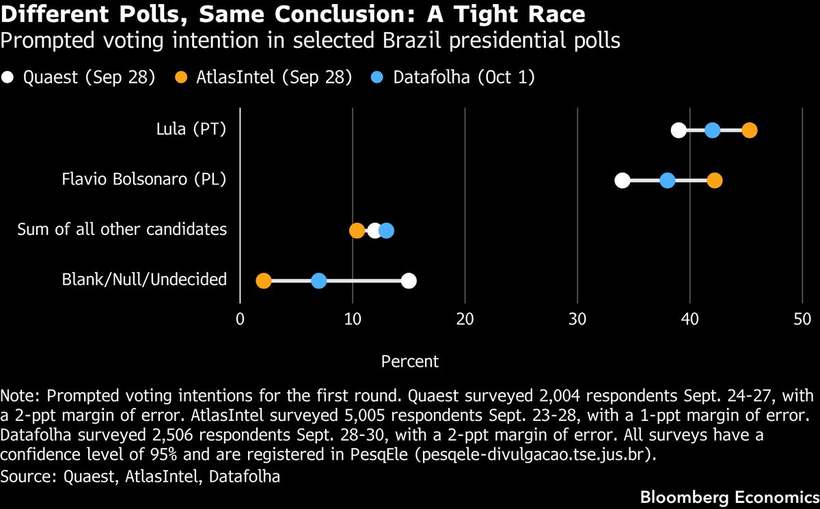
Three pollsters, one tight race: Lula between 39% and 45% and Flavio Bolsonaro between 34% and 42% across Quaest, AtlasIntel and Datafolha, with the undecided anywhere from 2% to 15%. Every Brazilian election since 2002 has gone to a runoff; markets have leaned toward a right-wing win, and Bloomberg Economics doubts both the win and the economic payoff. Source: Quaest, AtlasIntel, Datafolha / Bloomberg Economics.
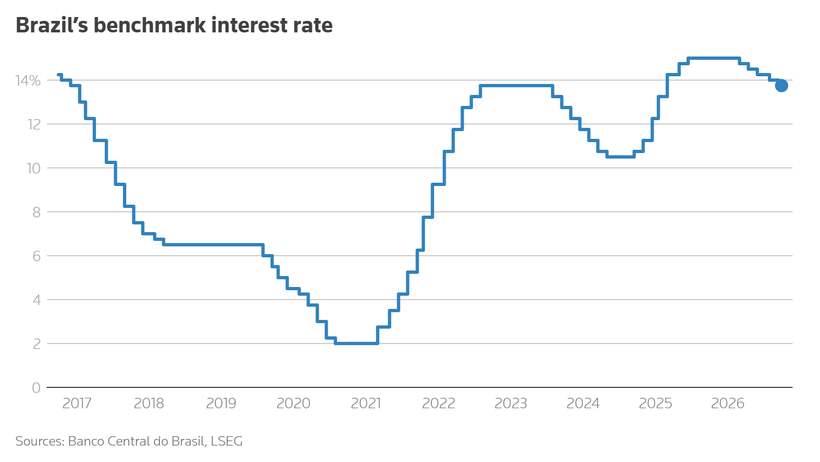
Why the real is a carry favourite: the Selic held at 15% for most of the past year before easing to about 13.75%, one of the highest real rates in the world. The same rate that pays the carry is squeezing households and businesses, and whoever wins inherits a fiscal problem the market doubts either camp can fix. Source: Banco Central do Brasil, LSEG / Reuters.
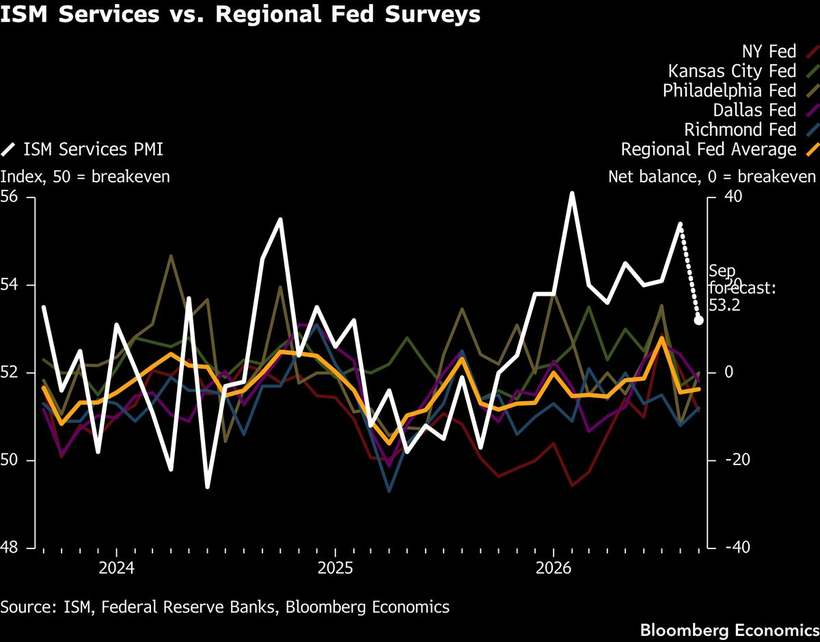
ISM services against the regional surveys: Bloomberg Economics' model points to 53.2 from 55.4 as regional Fed surveys soften, against a consensus near 55. The bigger issue is prices: paid rose in three of four regional surveys and received in all four. A soft headline with hot prices is the mix bonds have been punishing. Source: ISM, Federal Reserve Banks / Bloomberg Economics.
Asia inflation Tuesday
Southeast Asia's inflation reports open the day, Ueda speaks in Tokyo, and New York has the trade balance, the first of the week's three Treasury auctions and three Fed speakers.
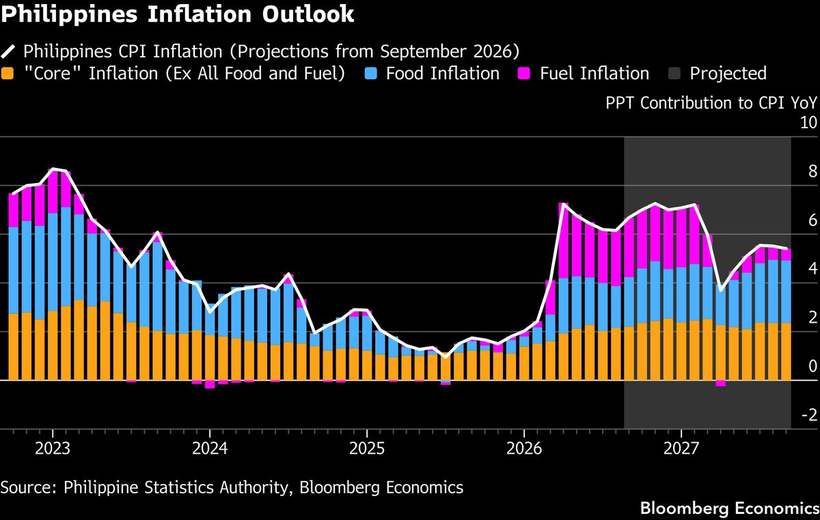
The Philippines, at 9am: inflation seen at 6.7% from 6.1%, with fuel and food driving it and the projections holding near 7% into 2027 as El Niño arrives. A weaker peso makes both more expensive and minimum-wage rises are in the pipeline; the BSP has more tightening to do. Source: Philippine Statistics Authority / Bloomberg Economics.
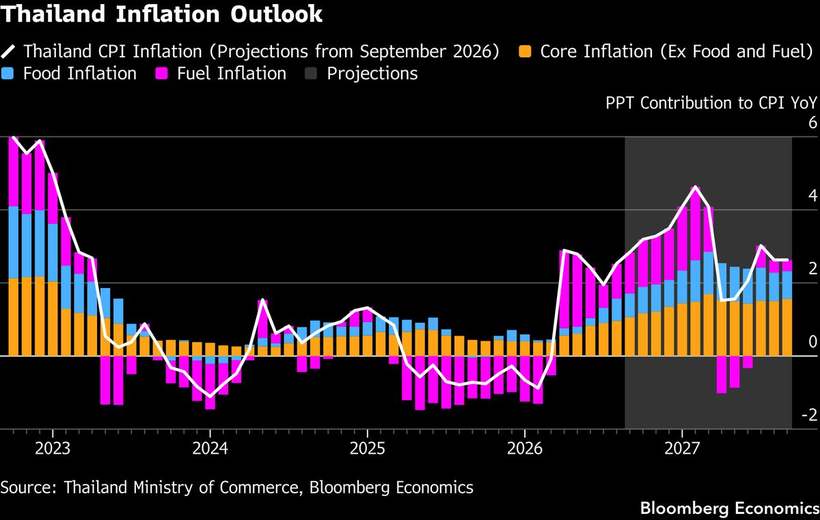
Thailand, at 11:30am: inflation seen at 2.8%, still inside the 1-3% band, with fuel the driver and the projections rising into early 2027. Weak domestic demand lets the Bank of Thailand look through a brief breach; it is the region's patient central bank. Source: Thailand Ministry of Commerce / Bloomberg Economics.
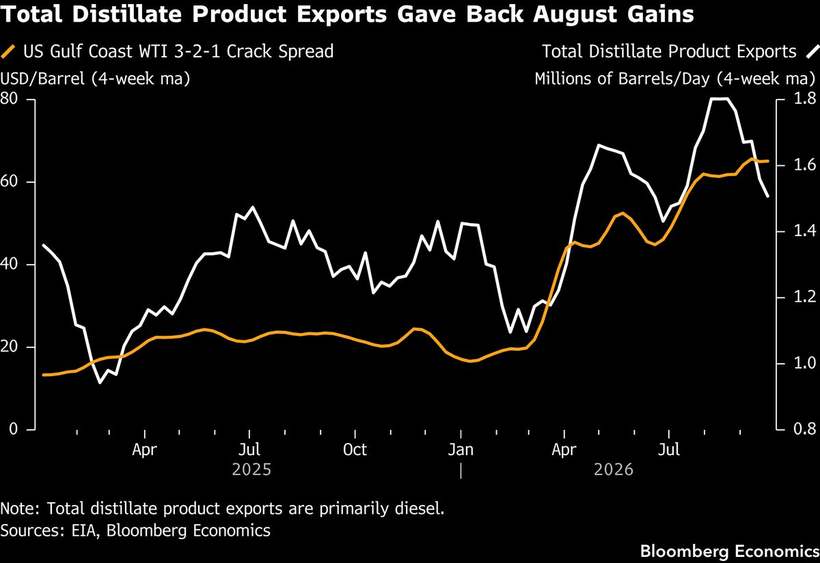
Behind the trade deficit, the diesel fight: US distillate exports, mostly diesel, gave back their August gains in September as Washington floated an export ban, while the Gulf Coast crack spread stayed near $65 a barrel. August's deficit is seen near $102 billion, the widest since early 2025, with AI hardware imports doing much of the widening. Source: EIA / Bloomberg Economics.
RBI Wednesday
Japan's wages before breakfast, the RBI at lunchtime, Sweden's inflation in our afternoon and Taiwan's after it: a full day of central-bank inputs, then $39 billion of 10-years overnight.
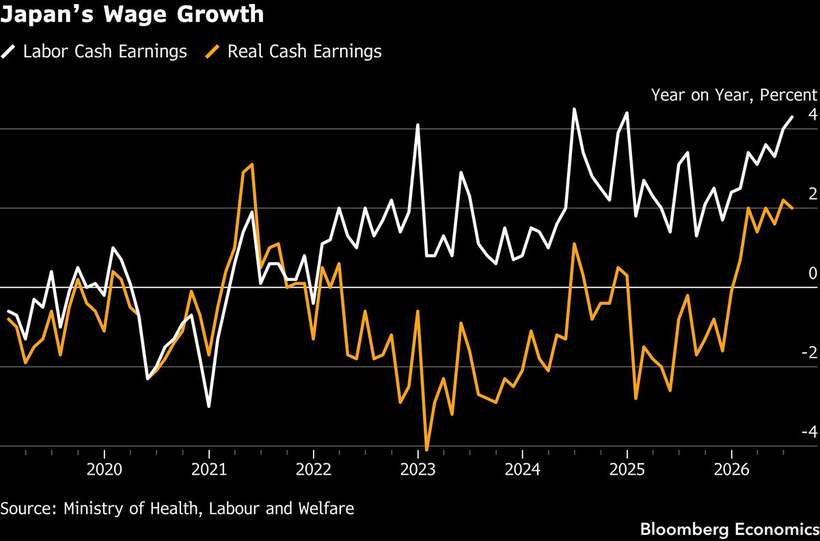
Japan's pay, at 7:30am: earnings growth seen easing to 3.7% from 4.3% as summer bonuses fade, with real pay still positive near 1.5% and base pay holding at 3.7%. Positive real wages are the condition the BOJ has waited a decade for; Bloomberg Economics expects the next hike in December. Source: Ministry of Health, Labour and Welfare / Bloomberg Economics.
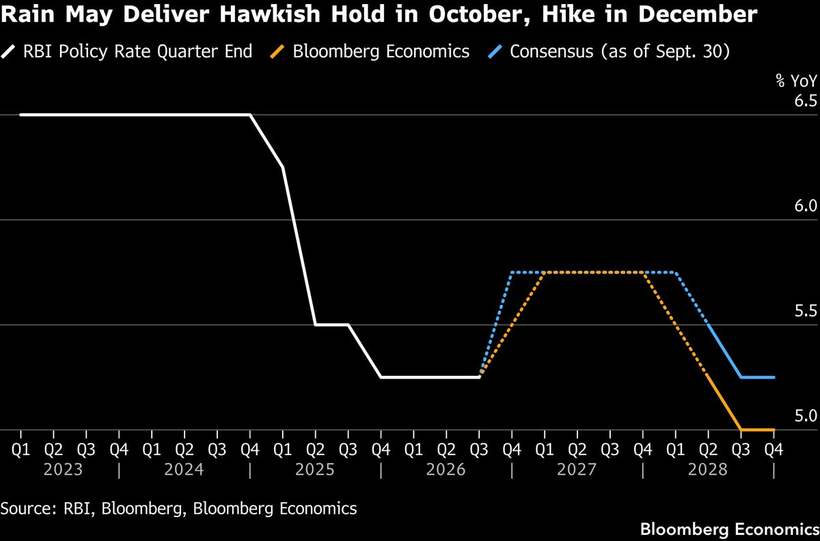
The RBI, at 12:30pm: consensus has the repo rate rising toward 5.75% by the end of the year; Bloomberg Economics expects a hawkish hold at 5.25% now and a hike in December, once the harvest and the Iran war are clearer. Oil and a weak monsoon push prices up while vehicle sales, PMIs and exports soften. Source: RBI, Bloomberg / Bloomberg Economics.
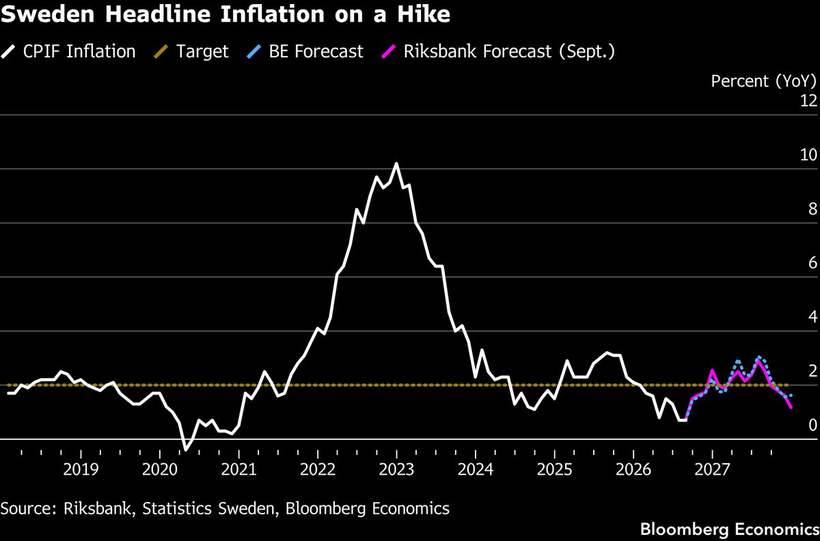
Sweden, in our afternoon: CPIF inflation seen doubling to 1.4% from 0.7% on fuel up about 15% and electricity about 10%, with the projections pushing toward 3% in 2027. Bloomberg Economics expects the Riksbank to hike to 2% in November and again early next year. Source: Riksbank, Statistics Sweden / Bloomberg Economics.
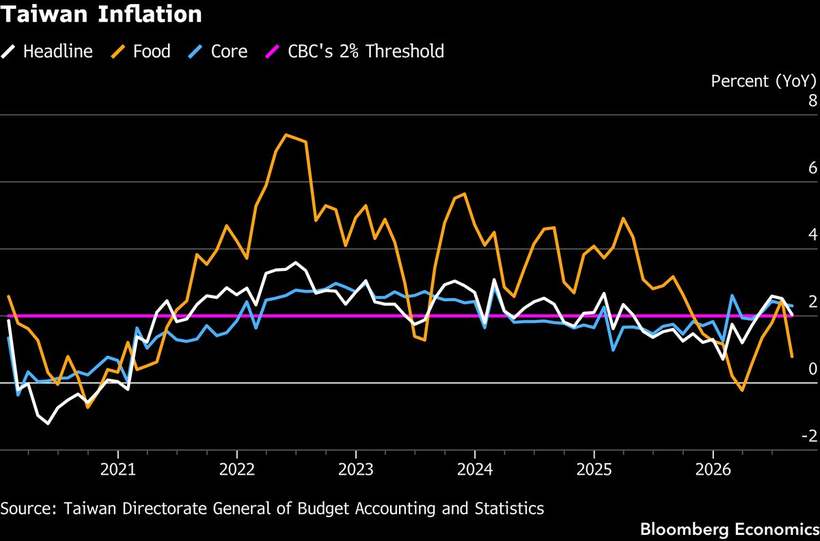
Taiwan, at 4pm: headline seen at 2.5% from 2.04% on a low base and a four-day holiday, core firming to 2.5%, both above the CBC's 2% threshold. Bloomberg Economics pencils a 12.5bp hike to 2.125% in December, the timing our crosses' add gate has been waiting for. Source: Taiwan DGBAS / Bloomberg Economics.
Minutes Thursday
The Fed minutes arrive at 2am, China reopens after Golden Week, Japan's retail bellwether reports in the afternoon, and the evening brings the ECB's account, PepsiCo and claims.
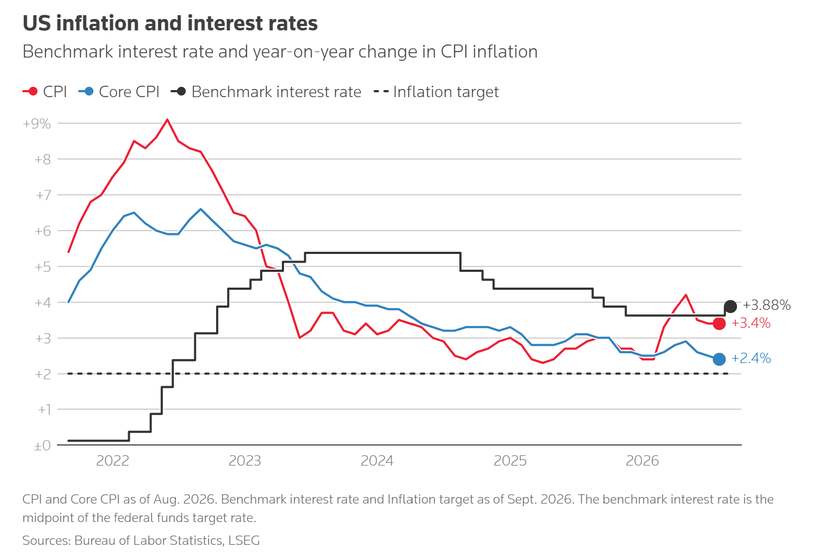
What the minutes were written against: the Fed's benchmark at 3.88% on the midpoint against CPI at 3.4% and core at 2.4% in August, a real policy rate of barely half a point against headline inflation. That gap is why officials pencilled in more; the revisions and payrolls since are why the market has stopped believing October. Source: BLS, LSEG / Reuters.
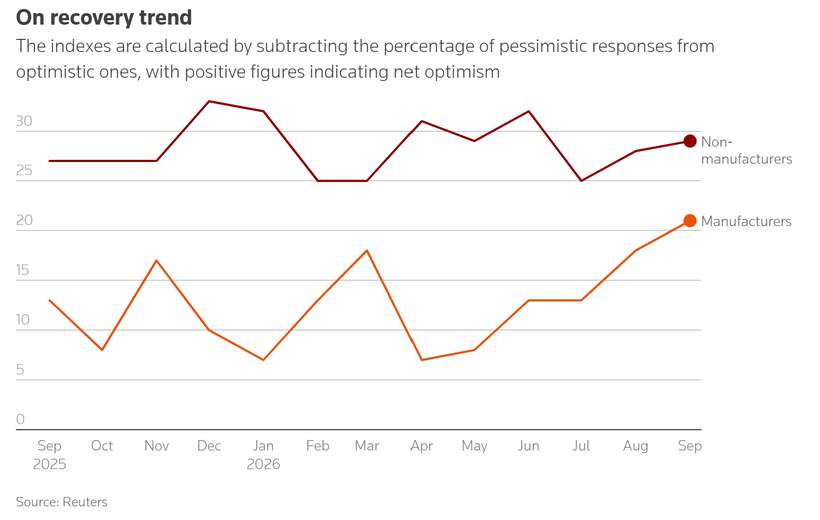
The Reuters Tankan, Japan Inc's monthly mood: manufacturers' sentiment climbing since April to around 21, the highest in at least a year, with non-manufacturers steady near 29. It follows the BOJ's own Tankan rising for a sixth quarter; Japan's companies are absorbing the energy shock better than its households. Source: Reuters.
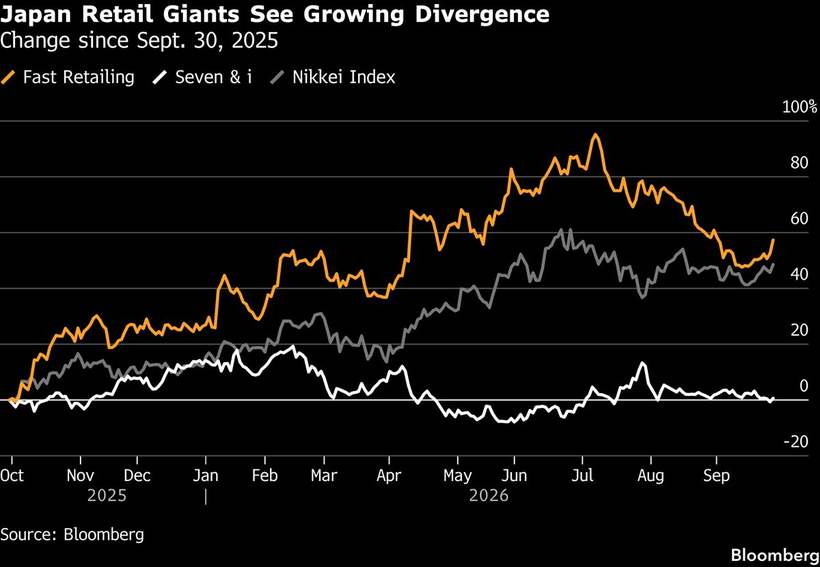
Two retailers, two Japans: Fast Retailing up more than 50% in a year on overseas demand, Seven & i flat as fuel tailwinds fade and traffic stalls, the Nikkei in between. Uniqlo's results after Tokyo's close are a read on consumers in Japan, China and the West at once. Source: Bloomberg.
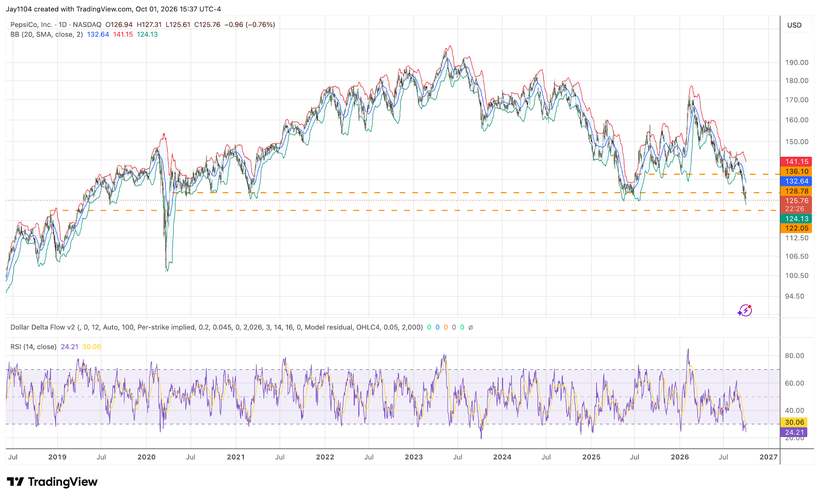
PepsiCo into results: the shares broke support near $128 and sit around $125 with the RSI near 24, deeply oversold; options price about a 4% move, with support near $124-125 and resistance at $140. A household-staples name at a 52-week low is the consumer half of this cycle in one chart. Source: TradingView / CMC Markets.
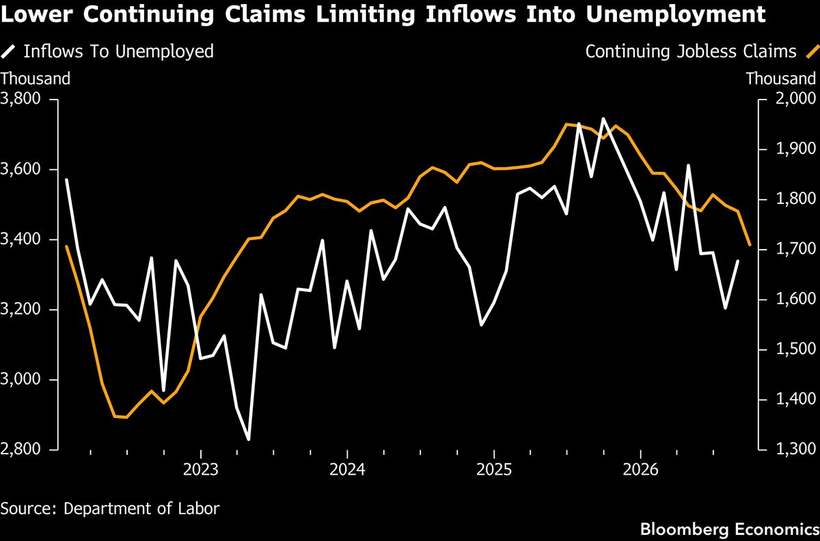
Claims, at 8:30pm: continuing claims falling toward 1.7 million and inflows into unemployment easing, with initial claims seen near 198,000. Layoffs are not the problem; hiring is. That is why a 29,000 payroll print and a 4.2% jobless rate can sit beside claims this low. Source: Department of Labor / Bloomberg Economics.
Budget Friday
Malaysia tables Budget 2027 in the afternoon, then North America closes the week with Canada's jobs and Michigan sentiment, and the raters review the UK and Belgium after the close.
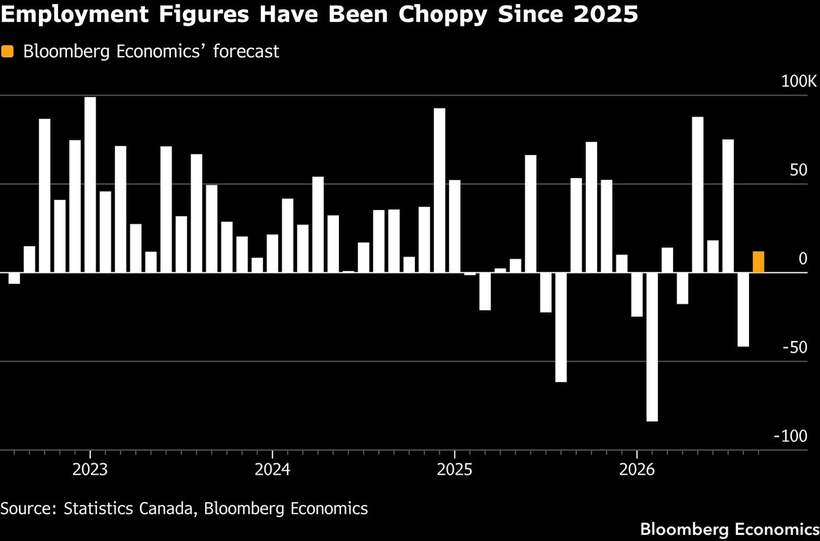
Canada's jobs, at 8:30pm: choppy since 2025, with August's 41,700 loss following 181,000 of gains from April to July. Bloomberg Economics expects 12,000 and unemployment at 6.5%; the swaps market has an October Bank of Canada hike near a coin flip. Source: Statistics Canada / Bloomberg Economics.
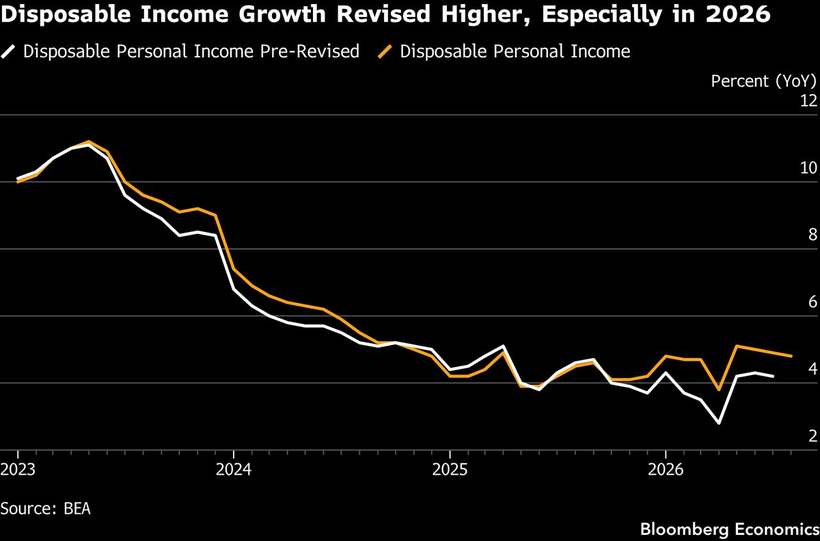
Why sentiment and spending disagree: the BEA's revisions lifted disposable income growth, especially this year, to near 5%. Households tell the surveys they feel poor while their incomes keep them spending; Michigan at 10pm is seen near 48.5, still close to recession readings. Source: BEA / Bloomberg Economics.
France, the euro's weak link
The question for the weeks ahead is what stops it. Four things could: a budget that survives a divided parliament even for a while; a shift in ECB language from France's own problem to a problem of transmission and disorderly markets; contagion to Italy and Spain big enough to make the backstop easier to justify; or a fall in energy prices, because part of Europe's stress is the winter fuel bill. Until one arrives, the selling is not finished: the fast money is already short, so the next leg comes from long-term holders cutting exposure, as they had to with Italian bonds in 2011. Any budget promise made now also carries less weight with a change of power due in April.
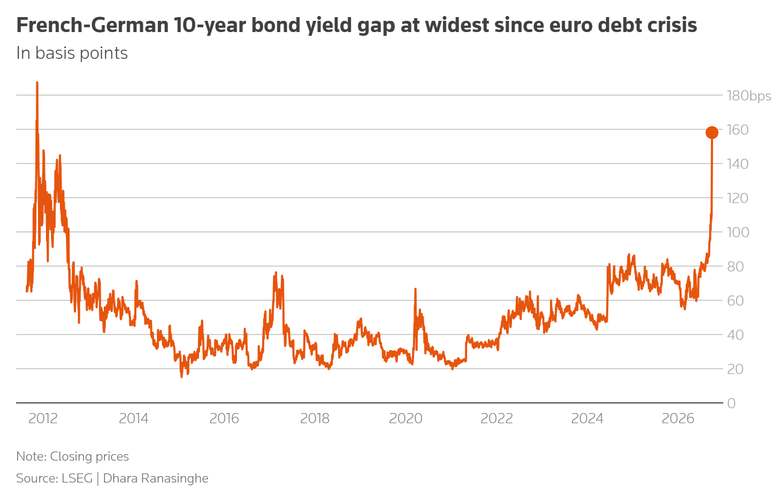
The spread, back to the euro crisis: France's 10-year gap over Germany on a closing basis spent a decade between about 15bp and 85bp, then went near vertical in September to the widest since 2012. The 2011-12 peak, near 190bp, is the only higher reference on the chart. Source: LSEG / Reuters.
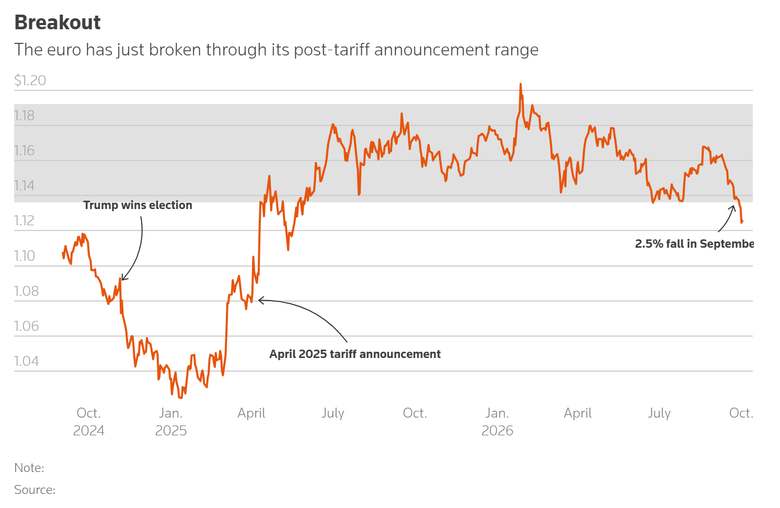
The range that held for a year and a half: after the April 2025 tariff shock the euro lived between roughly $1.14 and $1.19, through the Fed, the war and the summits. September's 2.5% fall broke the floor, and the next technical levels traders cite are near $1.11 and then $1.075. Source: Reuters.
What breaks first
Borrowing has quietly become harder. Dealers expect about $100 billion of US high-grade issuance in October against nearly $195 billion in September; Campbell's and a Bain Capital private-credit fund met lackluster demand, a Brazilian food company and an Uzbek gold miner pulled deals, and the companies that can wait are waiting. Private markets are tightening in their own way: the SEC is pressing firms on how they value private assets, Apollo has started publishing daily prices across its $850 billion credit book, and Brightline's bankruptcy plan would wipe out the hedge funds in its riskiest bonds. None of this is a crisis. All of it is the cost of 5% working its way down the capital structure.
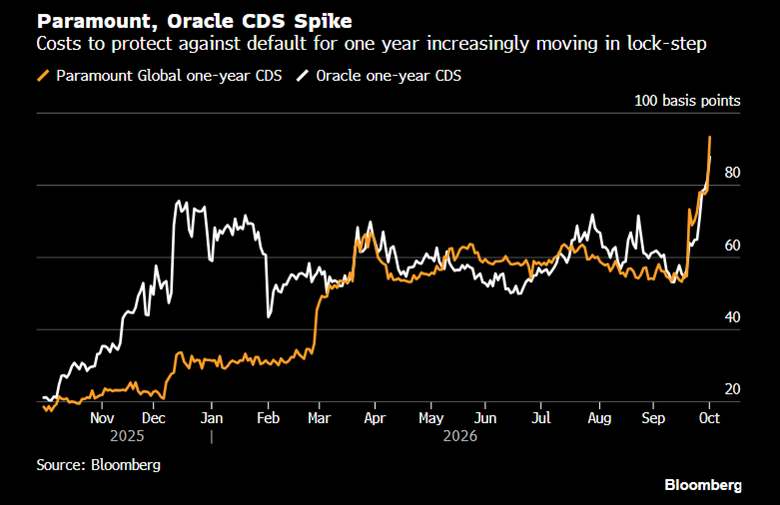
Two Ellison companies, one default curve: Paramount's and Oracle's one-year default protection, unrelated for most of the year, spiked together in late September toward 85-90bp. Investors now treat the two balance sheets as one: if Oracle's shares fall, the Ellison family's capacity to support Paramount's $52 billion of new debt falls with them. Source: Bloomberg.
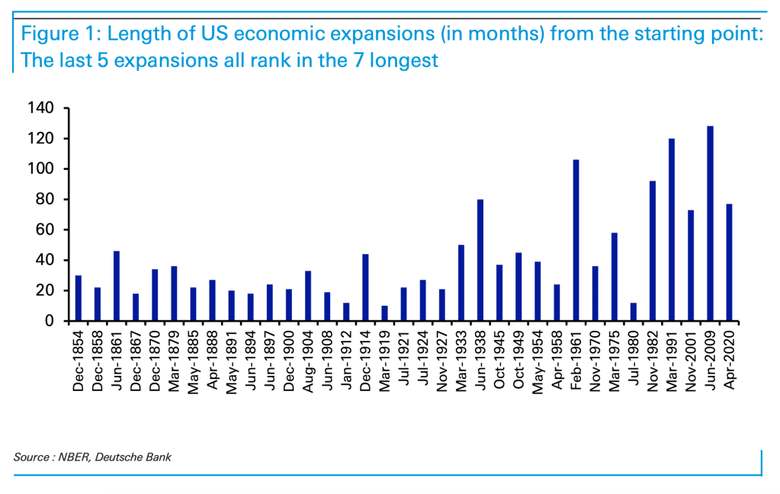
An old expansion: the current US expansion, dated from April 2020, is already one of the seven longest since the 1850s, and all of the last five rank among the seven longest. Wall Street has started asking how much longer it can run. Source: NBER / Deutsche Bank.
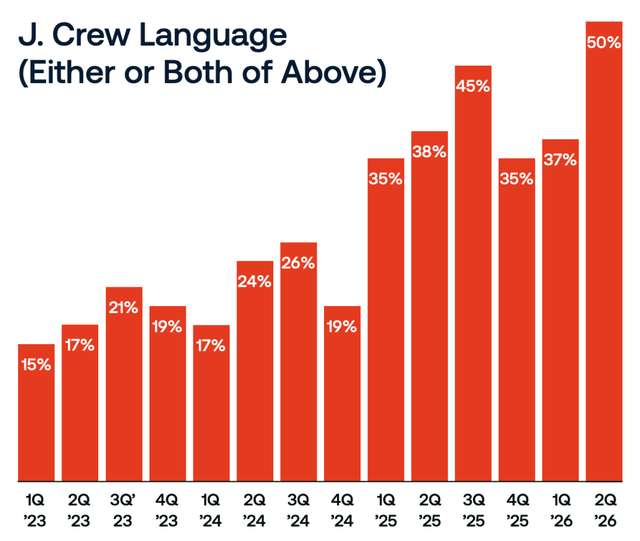
Lenders protecting themselves: "J. Crew blockers", clauses that stop a borrower moving assets out of a lender's reach, now appear in 50% of private-credit agreements, up from 15% in 2023. Noetica says creditors have stopped treating bankruptcy as a tail and started pricing it as a base case. Source: Noetica / Thomson Reuters.
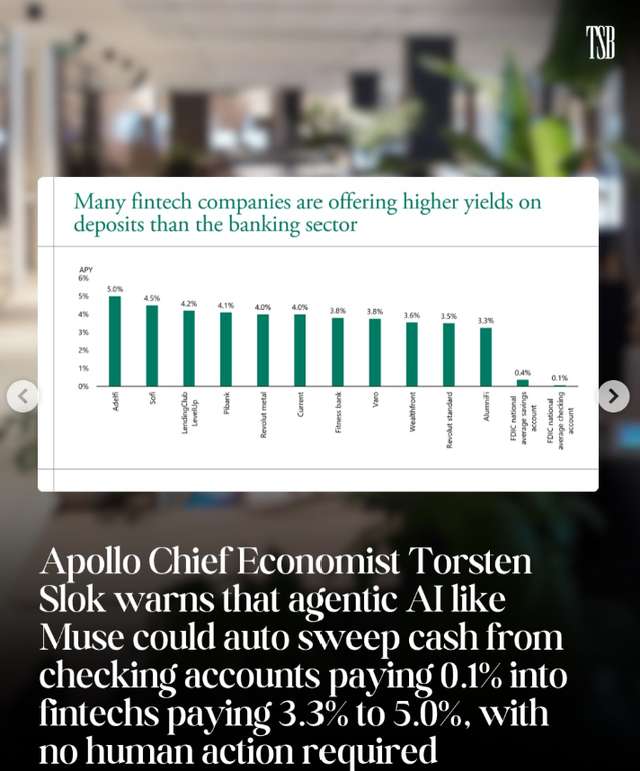
The bank run nobody has to start: fintechs pay 3.3-5.0% on cash against 0.1% on the average checking account. Apollo's Torsten Slok asks what happens when AI agents like Muse manage household money and sweep it automatically: a deposit run driven by optimisation rather than panic, and no playbook for it. Source: TSB / Apollo.
The war's freight bill
The war's price now runs through shipping as much as through crude. With too few ships willing to cross Hormuz, the cost of hiring a supertanker has risen roughly twelvefold in months, and American diesel peaked at a record $6.52 a gallon on September 22. The G7 release eases the product; it does nothing for the freight.
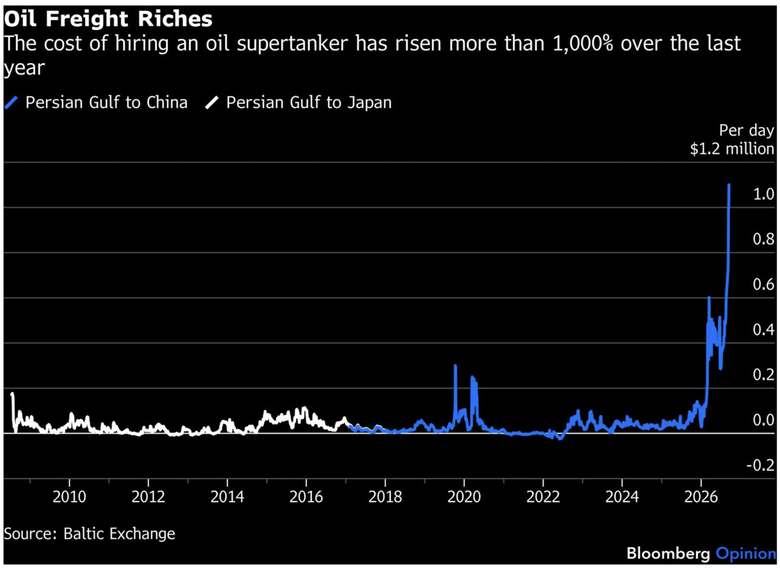
Shipping crude out of the Gulf has never cost more: daily rates on the benchmark Persian Gulf to Asia supertanker route, below $100,000 for most of two decades, topped $1 million in mid-September for the first time and set a record above $1.1 million. Freight is part of every delivered barrel, so it now feeds fuel prices and inflation on its own. Source: Baltic Exchange / Bloomberg Opinion.
Trump and Xi: Shenzhen next
The next meeting is on Xi's ground. Both sides confirmed Trump will attend APEC in Shenzhen in November, the third summit this year, with a fourth at the G20 in Miami in December: four in eight months. Chinese analysts expect a more confident Xi as host, with control of the agenda that Washington held last month. The tariff-relief lists are small, $30 billion each way of appliances, toys and car seats against farm goods and timber, and a $14 billion Taiwan arms package has already been postponed, possibly until after both summits. US allies from Tokyo to Manila are recalculating.
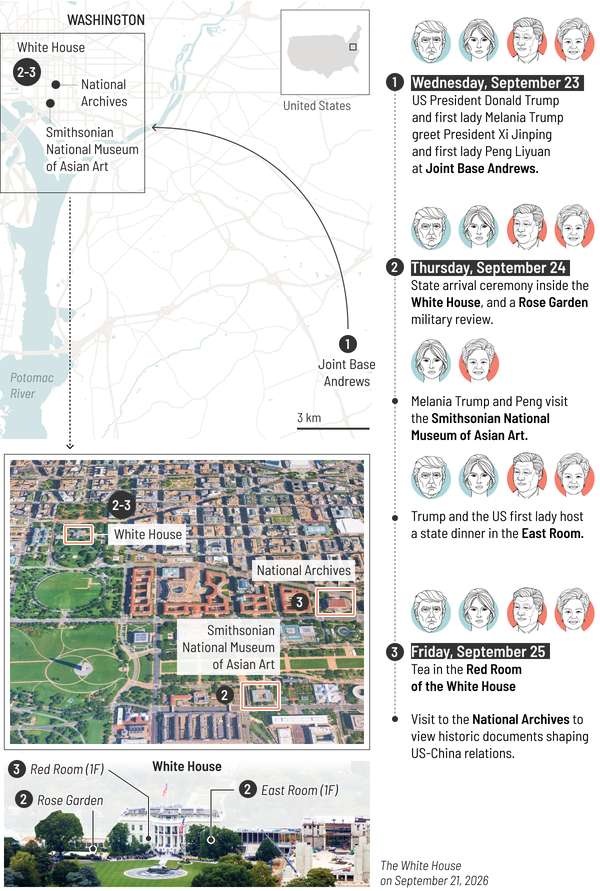
Forty-two hours in Washington, mapped: the tarmac welcome at Joint Base Andrews, the Rose Garden review, the East Room dinner, and tea in the Red Room before the National Archives. Pageantry Beijing will now return in Shenzhen, on its own terms. Source: SCMP.
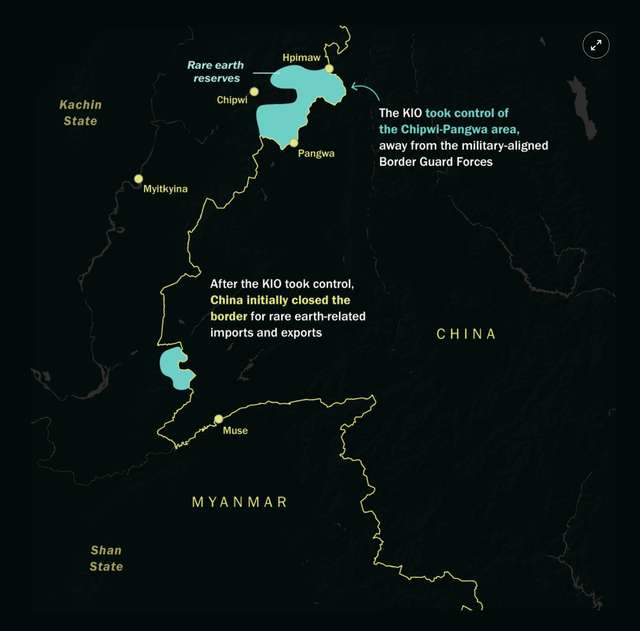
Where the leverage is mined: the Kachin Independence Organisation took the Chipwi-Pangwa rare-earth area on China's border from military-aligned forces, and China briefly closed the crossing to rare-earth trade. Heavy rare earths for AI, EVs and missiles come partly from a civil war Beijing can open and shut; the Crisis Group's visual series shows the mines themselves. Source: International Crisis Group.
Four weeks to the midterms
Republicans are worried, and the president is not easing their minds: in one week he banned three outlets from the White House, praised New York's democratic-socialist mayor, threatened to annihilate Iran at the UN and threw a state dinner for Xi. Democrats need only a handful of seats for the House, and the Senate, once safe, now looks like a toss-up. The charts below are the mood behind those numbers.
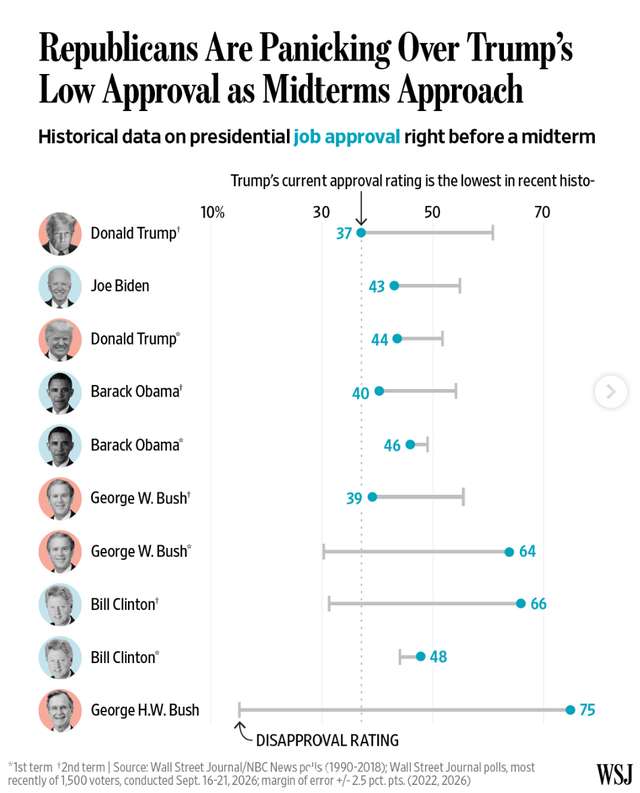
The lowest approval of any recent president before a midterm: 37% in the Wall Street Journal's September poll, below Biden's 43% in 2022 and Trump's own 44% in 2018. Source: WSJ / NBC News polls.
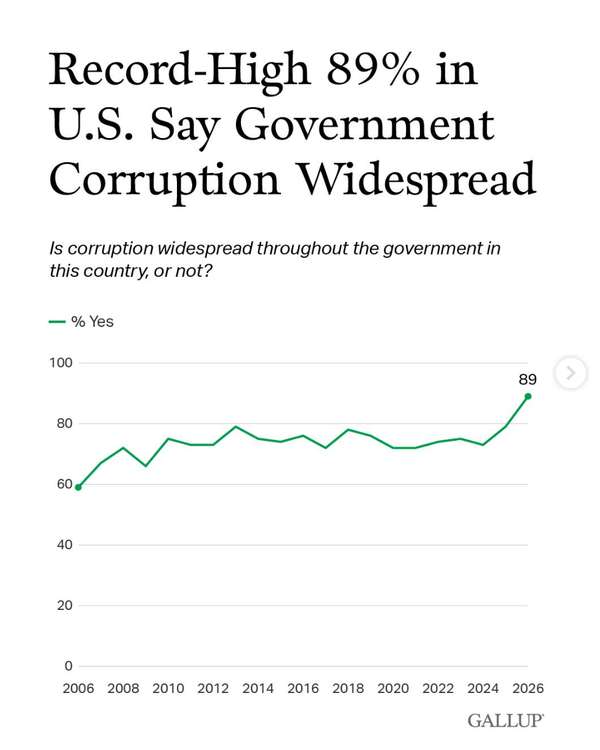
A record 89% say corruption is widespread in government: up 10 points in a year and the highest in Gallup's 20-year series, shared across parties: 91% of Democrats, 90% of independents and 83% of Republicans. Gallup's full release. Source: Gallup.
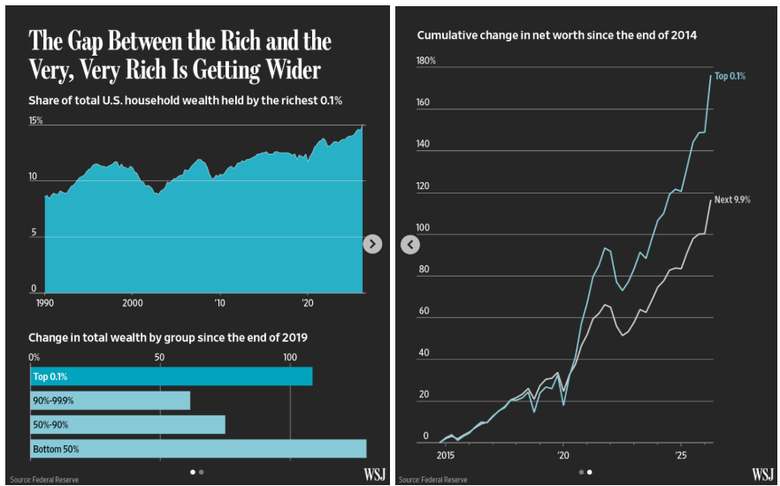
The very rich pull away from the rich: the top 0.1%, about 137,000 households, more than doubled their wealth since 2019, adding $14.5 trillion, about $10 trillion of it from stocks. The rest of the top 10% gained $38.2 trillion, split among ten times as many households. The affordability election is fought against this chart. Source: Federal Reserve / WSJ.
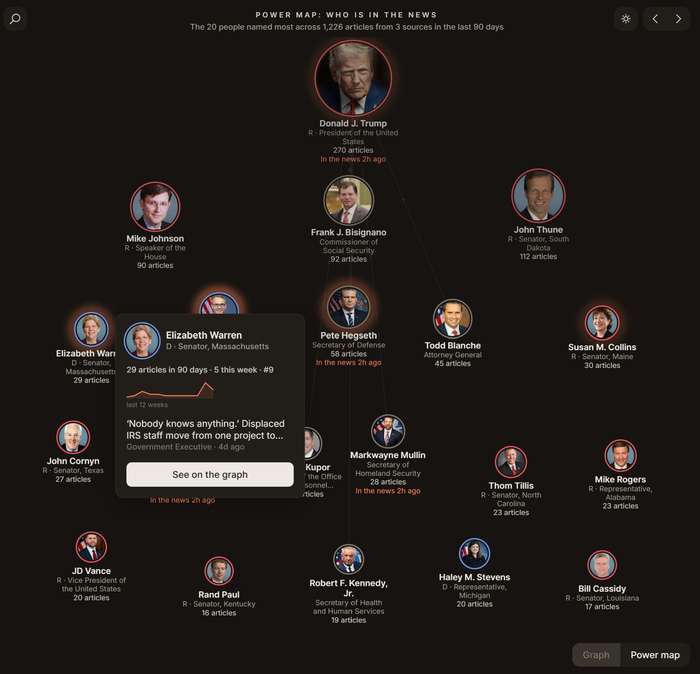
Who the news is about: civlab's power map ranks the people named most across 1,226 articles from three outlets over 90 days: Trump 270, Senate leader Thune 112, Social Security commissioner Bisignano 92, Speaker Johnson 90. It is an attention tracker; a Social Security chief near the top of the news four weeks before a midterm says what voters are worried about. Source: civlab.
The AI fracture: power, not chips
The AI story is usually told through models and chips; its pace is now set by power, cooling and how fast new capacity can be built. Texas set an all-time grid peak of 91.1 gigawatts in July. MTS Compute Intelligence's interactive walks through the eight physical layers, from grid connection and building shell to racks, clusters and rentals, and the economics that decide whether it pays. In Washington, the industry's chiefs sat at the White House "Super Intelligence Luncheon" a week after the state dinner, and on Wall Street the banks are hiring for AI faster than AI is replacing them.
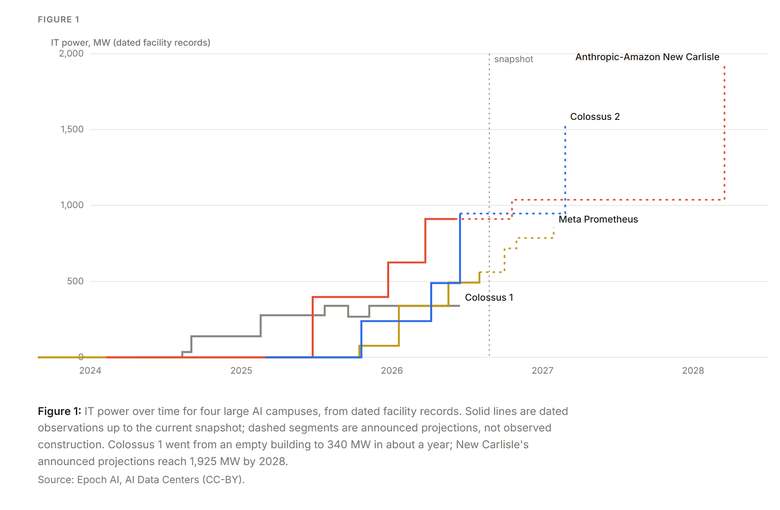
From empty building to small city in a year: Colossus 1 went from an empty shell to 340 megawatts in about a year; Colossus 2 is planned past 1.5 gigawatts, and the Anthropic-Amazon New Carlisle campus plans 1,925 megawatts by 2028. Solid lines are observed construction; dashed lines are announced plans that still need the grid to deliver. Source: Epoch AI.
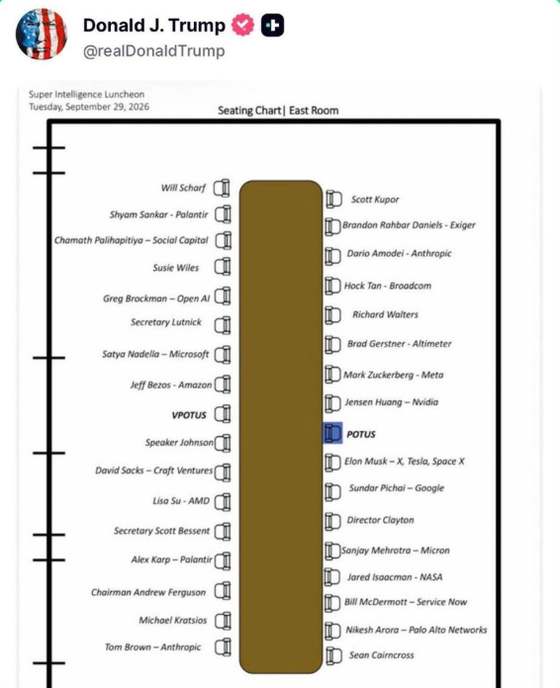
The seating chart Trump posted: the "Super Intelligence Luncheon" on September 29, with Musk and Huang beside the president, Amodei, Zuckerberg, Pichai, Nadella, Bezos and Lisa Su around the table, and Bessent and Lutnick among them. The industry's power map, drawn by the White House itself. Source: Truth Social.
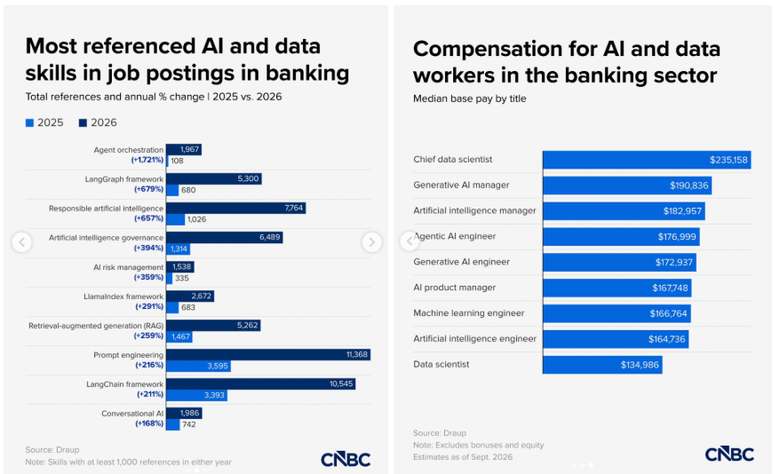
Before AI takes Wall Street jobs, it creates them: AI-related job postings at banks rose 49% this year to 139,819, with "agent orchestration" mentions up 1,721% and a chief data scientist's median base pay near $235,000. Source: Draup / CNBC.
Japan raises the price of staying
From October 1, renewing a Japanese residence permit costs up to 75,000 yen, against a flat 6,000 before, and permanent residency costs 200,000 yen, twenty times the old fee. New income, pension and Japanese-language requirements follow for permanent residency, with income rules already in force: applicants must earn at least the average Japanese household's income. Takaichi says foreign residents must bear "a commensurate share of the costs", and a panel is studying caps on the foreign population by March. Japan needs the workers; its politics, pushed by Sanseito's "Japanese First" gains, wants fewer of them.
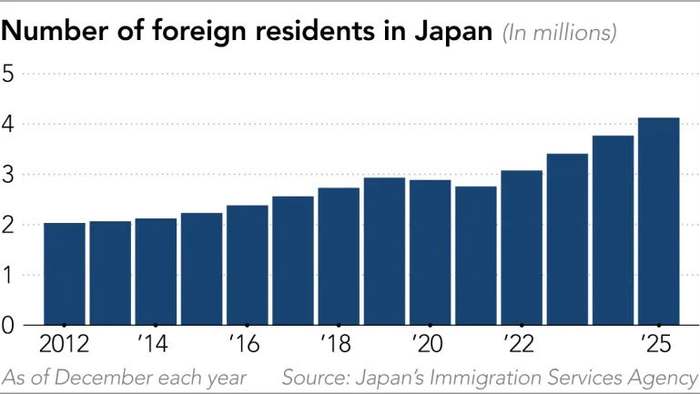
A record 4.12 million foreign residents: up 9.5% in 2025 and more than 80% in a decade, the labour Japan's ageing economy now runs on, and the number its politics has turned against. Source: Immigration Services Agency / Nikkei Asia.
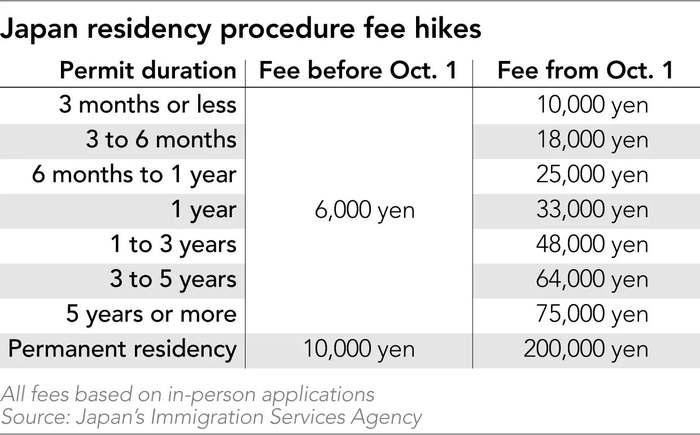
The new fee schedule: seven tiers by permit length replacing a flat 6,000 yen, from 10,000 yen for three months to 75,000 yen for five years or more, and 200,000 yen for permanent residency. Revenue is projected at up to 92 billion yen a year, earmarked for digitalisation and integration programmes. Source: Immigration Services Agency / Nikkei Asia.
VC+ Special Dispatch, How America Trades, Part 2
Part 1 traced how America trades; Part 2 maps who it trades with and who depends on it. Mexico and Canada still anchor the system, but the deficit has moved to Vietnam, Taiwan and the rest of Asia's assembly line, and for several economies trade with America is now a large share of everything they produce. Credit to the VC+ team.
Infographic 1 - Five Asian Economies Surpass China
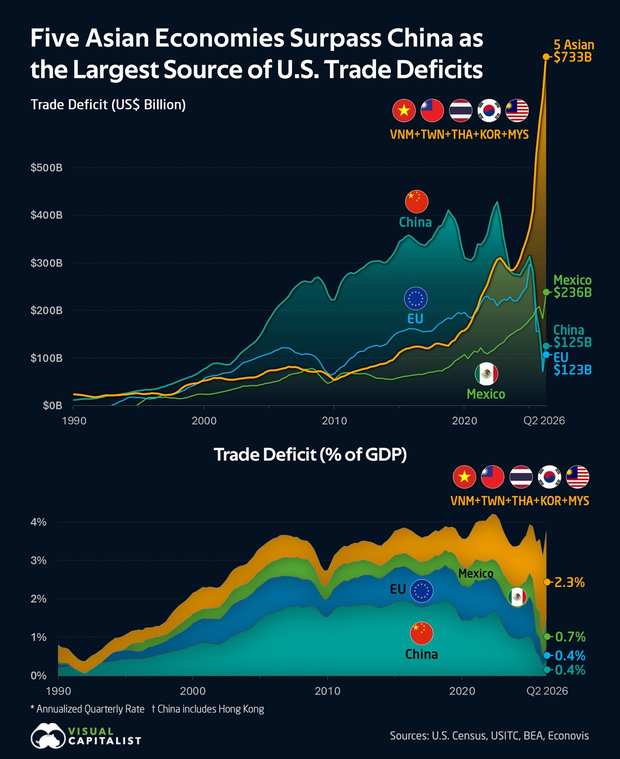
Vietnam, Taiwan, Thailand, Korea and Malaysia together run a $733 billion annualised deficit with the US, nearly six times China and Hong Kong's, 2.3% of US GDP against 0.4%. Mexico's has climbed to $236 billion, nearly double the EU's. China's supply chains have not disappeared; final assembly has moved. Source: US Census, USITC, BEA / Visual Capitalist.
Infographic 2 - America's Largest Trading Partners
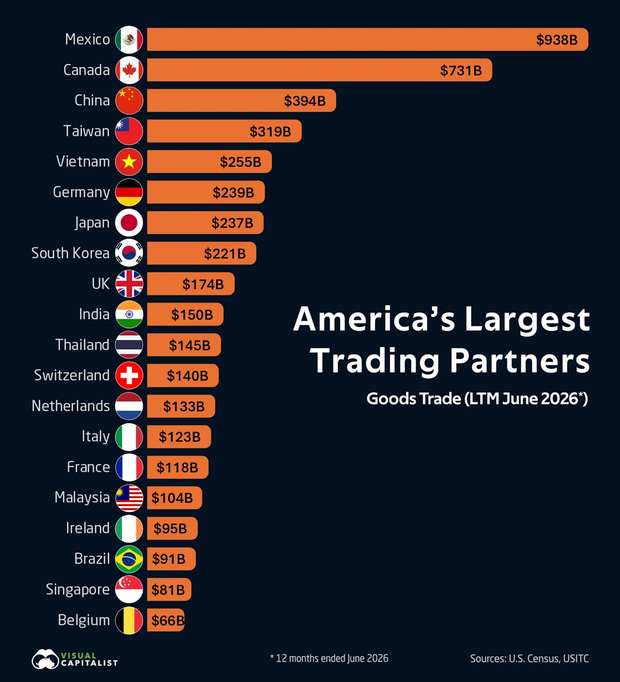
Mexico $938 billion and Canada $731 billion in two-way goods trade, then China at $394 billion, Taiwan $319 billion and Vietnam $255 billion. Singapore ranks 19th at $81 billion. Two systems at once: a continental supply chain, and a trans-Pacific network built around AI hardware. Source: US Census, USITC / Visual Capitalist.
Infographic 3 - Largest Surpluses and Deficits
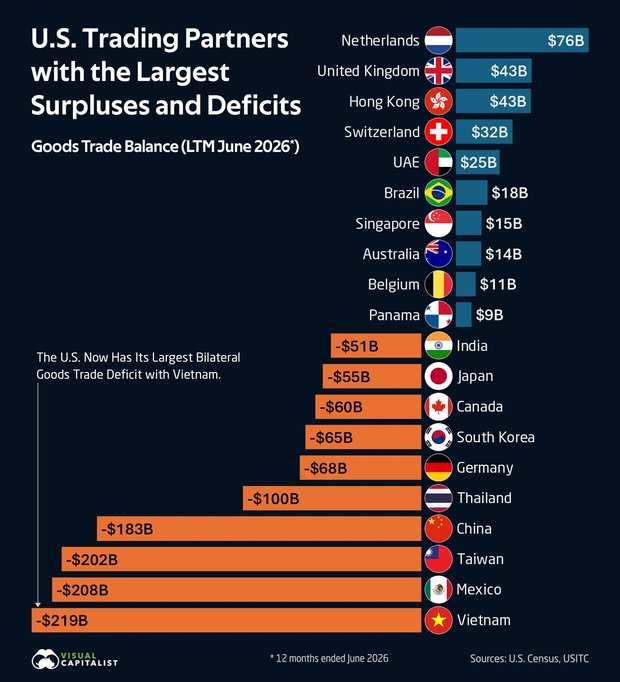
Vietnam is now America's largest bilateral deficit at $219 billion, ahead of Mexico and Taiwan, with China fourth; the US imports $13 from Vietnam for every $1 it sells there, and the two sides said on September 21 they were very close to a trade deal. The Netherlands is the largest US surplus at $76 billion, and Singapore runs a $15 billion deficit with America. Source: US Census, USITC / Visual Capitalist.
Infographic 4 - US Goods Export Markets
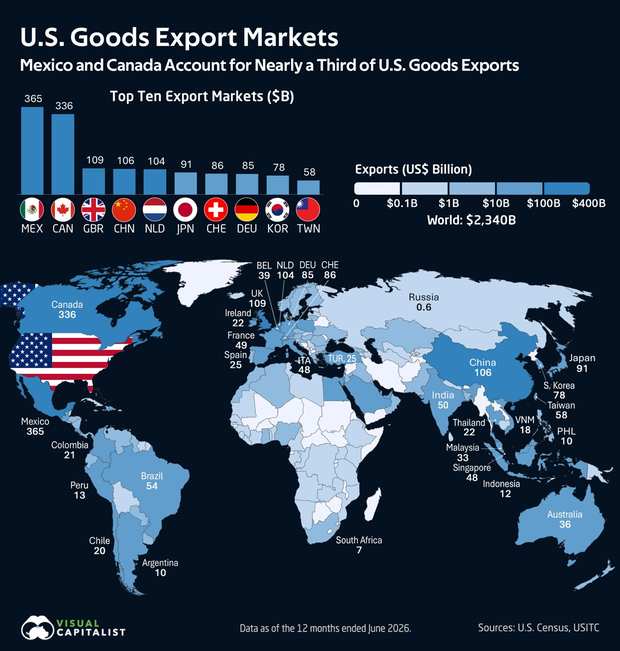
Mexico and Canada buy nearly a third of US goods exports, $365 billion and $336 billion, each more than three times the UK in third place. Singapore buys $48 billion, nearly as much as France. Source: US Census, USITC / Visual Capitalist.
Infographic 5 - US Goods Import Sources
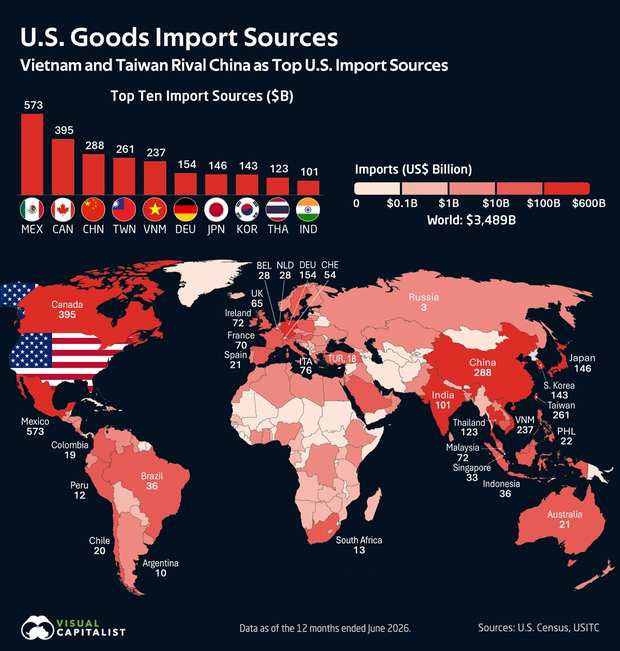
Taiwan and Vietnam together now ship $498 billion to the US, about 1.7 times China's $288 billion, and China supplies only about 8% of US goods imports. In July the US deficit with China, $15.2 billion, was smaller than those with Mexico, Vietnam and Taiwan, per the BEA. Source: US Census, USITC / Visual Capitalist.
Infographic 6 - Trade Dependence on the US
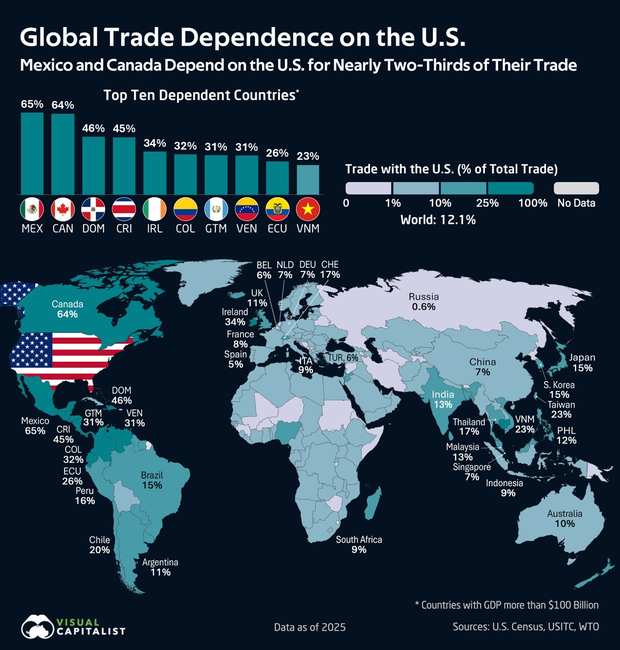
America is 65% of Mexico's goods trade and 64% of Canada's, against a world average of 12.1%. That concentration is why this year's USMCA review matters: in July the US declined to extend the agreement in its current form, putting it on annual reviews. Source: US Census, USITC, WTO / Visual Capitalist.
Infographic 7 - Economic Dependence on US Trade
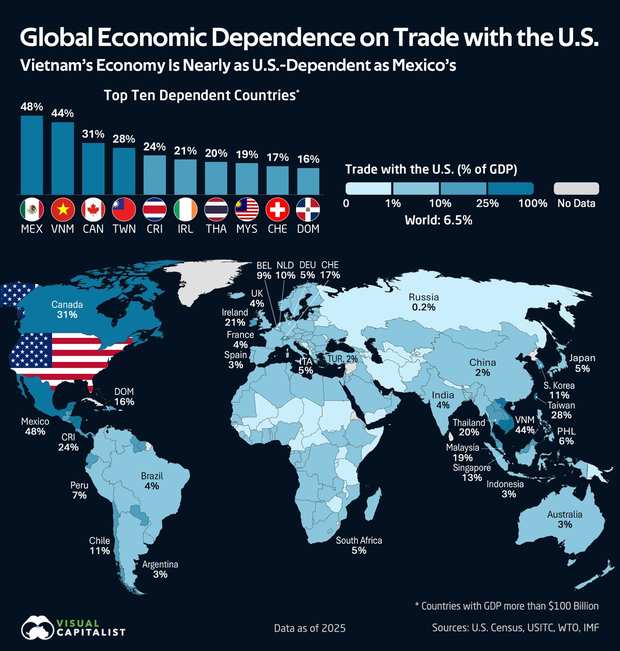
Trade with America equals 44% of Vietnam's GDP, second only to Mexico's 48% among economies above $100 billion, with Canada at 31% and Taiwan at 28%; Singapore's is 13%. Most of the ten most exposed are covered by the section 301 tariffs from July 24, with USMCA-qualifying goods exempt. Source: US Census, USITC, WTO, IMF / Visual Capitalist.
The Good Wrap
What is left at the close: an airframe that held when it should not have, and week two of the dashi series, the broth with smoke in it.
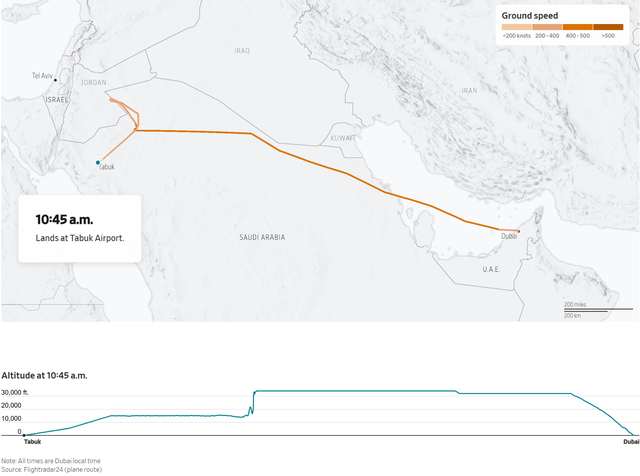
The plane that held: two hours into a FlyDubai flight, a first officer attacked his captain at 34,000 feet and pushed a 737 MAX into a 39-degree dive, falling 17,400 feet in 92 seconds at close to the speed of sound, well past the aircraft's limits. Two pilots travelling in the cabin took control and landed at Tabuk with part of the rudder gone. The WSJ's reconstruction is a study in engineering margins. Source: Flightradar24 / WSJ.

Dashi, week two: katsuobushi, bonito that is simmered, smoked and dried for months until it is as hard as a block of wood, then shaved paper-thin into the broth for a light, smoky, savoury depth; it carries miso soups, noodle broths and sauces. The bond market this autumn has been cured the same way: months of slow smoking have left it hard as wood, and every rally now comes in shavings. Next week, niboshi. Source: FermenStation.
Best,
Hoelon
WITPTW is a personal publication. Everything here is personal opinion and market commentary, written in a personal capacity. It is not investment advice and not a recommendation to buy or sell any security. It is not associated with, endorsed by, or representative of any employer, fund or company. Charts and images are reproduced from their original publishers, credited to their sources for commentary and discussion; all rights remain with the respective copyright holders.