America Votes
Personal views and market commentary. Not investment advice. Not associated with any employer or firm.
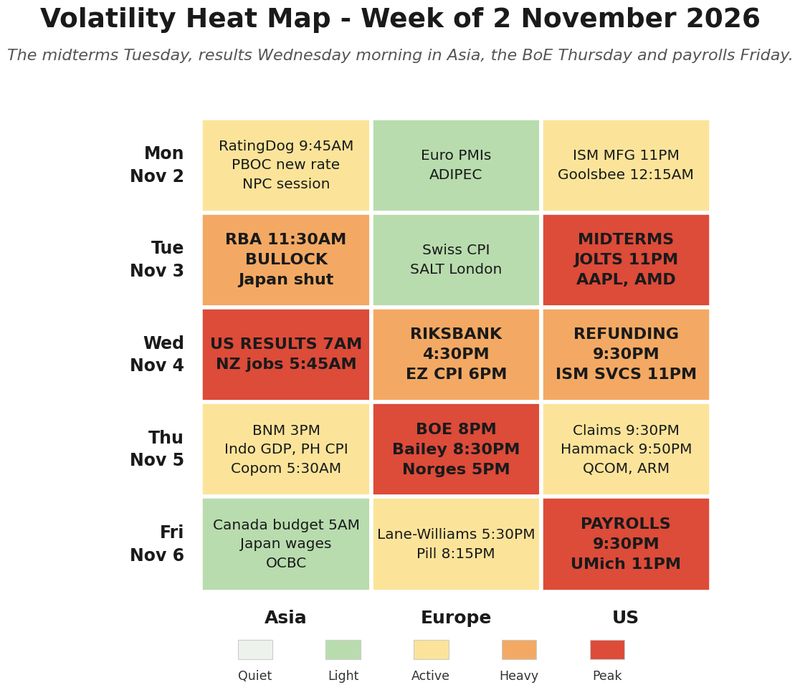
Volatility heat map for the week ahead , in Singapore time. US clocks went back this weekend, so New York is now 13 hours behind Singapore and London eight; the US election results arrive in our Wednesday morning. The S&P enters near 7,580 and the 10-year near 4.94%.
"I don't think that I can remain neutral." — Christine Lagarde, on 29 October, announcing she will leave the ECB on 7 February, nine months early. The referee is leaving the field with French spreads still at the door. Neutrality, she said, is the price of independence, and she no longer wants to pay it: "I'm interested in the truth, and I see the truth being very often damaged." She would not say whether she will back a candidate in France's April election. The council held at 2.50% but seriously debated a hike, and still expects to raise in December. On France she named no country, saying only that the ECB has instruments if markets threaten the transmission of its policy. The OAT spread eased to about 154bp, some 40bp over Italy, and Oxford Economics sees it near 200bp by the election. The race to succeed her starts now, and it will be fought over one question: who stands behind the bonds.
"Offend thousands rather than fail 1.4 billion people." — Zhang Fuhai, deputy secretary of China's anti-corruption commission, describing Xi Jinping's resolve after the fifth plenum on 30 October. Beijing spent four days turning the blade inward, then ended the week with its name on a deal far outside its borders. The plenum expelled 33 senior members, 16 of them from the military, and left five of the seven seats on the Central Military Commission empty. For markets the message was discipline, not stimulus: Oxford Economics warns local officials may put political compliance ahead of experimentation, and the CSI 300 lost another 2.9% last week. Yet the inward turn did not stop Beijing reaching out. Reports from Doha on Saturday said Qatar and Pakistan had brokered preliminary understandings between Washington and Tehran, with China, and possibly Russia, as guarantors of any deal. Tehran denies direct talks, and Washington has warned Gulf allies of strikes as early as Wednesday. If a deal holds, Beijing takes a seat in the Gulf just as Washington steps back.
"Treat everybody the way you want to be treated as you move up in your careers, it's almost like a superpower. People want you to win if you treat them in a good way." — Jon Gray, Blackstone's president, to the firm's summer analysts in July. When every firm can buy the same analysis for almost nothing, the edge that is left is how people feel about working with you. Brains get you the offer; care is what sets you apart after that. Peter Drucker saw it coming in 1954, under a heading he called "What the Manager Must Always Be: Integrity": "Intellectual and conceptual education alone will not enable the manager to accomplish the tasks of tomorrow." AI makes knowledge abundant, so the premium moves to what cannot be copied: judgement, trust, and leading people through uncertainty. Machines can already sound caring. In a 2023 JAMA study, clinicians found ChatGPT's answers to patients empathetic nearly ten times as often as doctors'. What a machine cannot do is be accountable to someone over years. That is emotional intelligence, and it can be trained: notice the feeling, name it, manage it, then read the room.
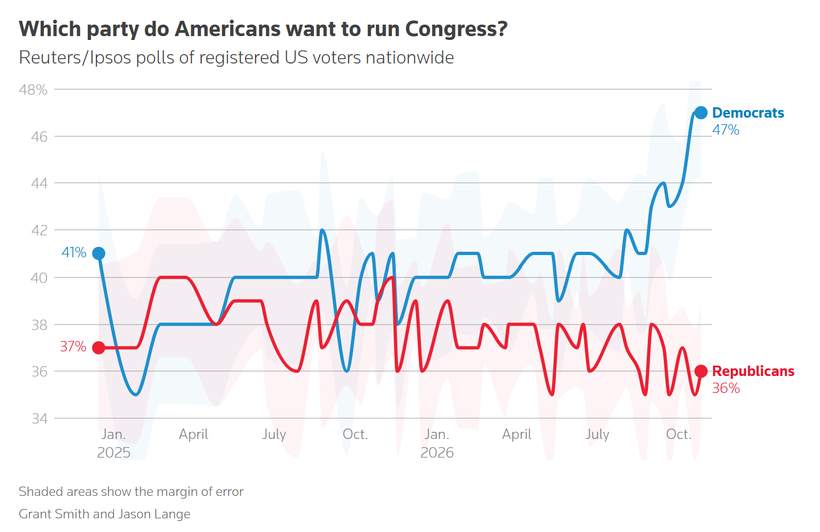
Americans want the Democrats to run Congress. In Reuters/Ipsos polling, 47% of registered voters now prefer the Democrats against 36% for the Republicans, a gap that opened over the summer from 41% to 37% at the start of 2025. A Democratic Congress would bring scrutiny of AI and data centres, Wall Street and crypto, and could try to constrain the war on Iran, but the president keeps his hands on trade and foreign policy. Divided government has historically not hurt stocks after a midterm. Source: Reuters/Ipsos.
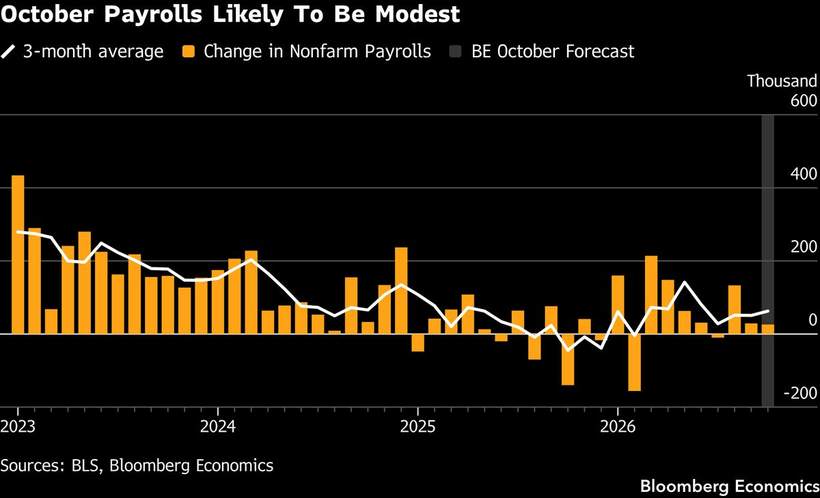
Payrolls are the swing vote for December. The three-month average of job gains (white) has sunk toward zero, with healthcare doing most of the hiring while leisure, business services and transport shed jobs. Yet jobless claims sit near 57-year lows, and the Fed upgraded its view of the economy to "strong" last week. Friday's report, three days after the vote, decides whether the hawks or the data win. Source: BLS / Bloomberg Economics.
What is the plan this week?
At a glance, this is the most pivotal week of the year, with the US midterms landing in the middle of several market trends that are still undecided. Oil is holding near its highest since the war started, while US equities closed near their recent lows. The Middle East, where the day after the vote decides whether the talks in Doha or the strikes Washington has warned its Gulf allies about set the oil price, a diesel deal with Russia showing that international policy can shift without warning, bourbon stocks overflowing in Kentucky, Anthropic's valuation, cybersecurity and AI security are among the many stories running at once.
I had a few phone discussions over the weekend, and the consensus seems to think the correction can go deeper but is still the dip to buy. The moves are still uncanny: FX is not breaking anywhere, while gold and silver liquidate further and bitcoin follows them down. I guess it is still positions unwinding, or more liquidation from the Middle East? Or is China finally cracking with one of its onshore local-government vehicles? Zhuhai Huafa, with about 413 billion yuan of debt, is asking its banks for more time and missed two trust payments, and its bonds had their worst day on record. There is less and less place to hide, hence the rally in Treasuries.
In the US, the ISM opens the week on Monday and job openings land as Americans vote, ADP and ISM services arrive on Wednesday as the results roll in, and payrolls close the week on Friday, seen at 55,000-63,000 after September's 29,000, with Bloomberg Economics at only 26,000. Unemployment is seen at 4.2%. A strong print with wages up 0.3% fully prices the December hike that markets give about a 70-75% chance; a second miss revives the doves just as Logan calls for two more hikes. Prediction markets give the Democrats more than 90% for the House and about 70% for the Senate, but control may not be known for days: in 2022 the House took eight. The Treasury's quarterly refunding comes in two parts: borrowing estimates early on Tuesday our time and the refunding statement on Wednesday night. August's promise to keep coupon auction sizes unchanged "for at least the next several quarters" is the base case; any hint of larger auctions or more long bonds would land on a bond market that has just rallied 35bp in a month, whoever wins.
In Europe, euro-area inflation is seen at 4.0% on Wednesday with core at 2.5%, after France's economy shrank in the third quarter. The OAT spread eased to about 154bp on the ECB's promise of instruments. The Bank of England is expected to hike to 4.00% on Thursday by 7 votes to 2, with new forecasts showing inflation near 4.5% early next year; the Riksbank is expected to hike on Wednesday and Norges Bank to hold. Lagarde, Schnabel and Lane all speak before Friday's close.
In Asia, a lot is going on. China starts the week on the back foot: the official PMIs released on Saturday both fell back below 50, manufacturing to 49.3 from 50.1 and non-manufacturing to 49.7, with new orders contracting. Beijing switches its policy anchor to a 1.25% overnight rate from Monday, the NPC Standing Committee sits all week with no fiscal items on its agenda, and the import expo opens in Shanghai on Thursday. The RBA is expected to hike for the fifth time this year on Tuesday, to 4.85%, the highest since 2008, while Japan is shut that day for Culture Day. Korea's CPI, Indonesia's GDP and inflation in the Philippines, Taiwan and Thailand all land midweek, with the Philippines seen above 7%. Bank Negara is expected to hold on Thursday, Japan's wages close the week, Singapore's three banks report, and New Zealand votes on Saturday.
The plan this week is to keep powder dry. Short USDJPY and USDCHF has not worked on risk-aversion selling, and even the won is trading well. I have pared the peso and rupee shorts because risk-off is not working in the FX world. However, the AI complex looks very troubling. Stay patient.
What did I learn last week?
Mon Oct 26: Lula won the runoff 51.8% to 48.2%, the first candidate to win after losing the first round, and the Ibovespa fell 13.9%, tripping its first circuit breaker in six years. Pakistan hiked by 50bp to 12%. Anthropic filed to list on Nasdaq, targeting the week of November 16. In China, Zhuhai Huafa sought to extend loans, and its bonds fell a record 17% the next day.
Tue Oct 27: Korea's economy grew 1.0% in the third quarter, against 0.8% expected. Israel's vote left no bloc with a majority, and the shekel had its worst day in 16 months. US consumer confidence jumped to 91.7 against 81.0 expected. SK hynix said its DRAM and HBM output is sold out through 2029.
Wed Oct 28: Australia's CPI rose to 4.3%, and the quarterly trimmed mean of 1.0% beat the RBA's own 0.8%. The RBNZ held at 2.75% by 4 votes to 3 against a hike that was about 90% priced, and the kiwi fell 1.6%. Healey's budget left £15 billion of headroom and gilts rallied. The Bank of Canada hiked to 2.50%, its first hike since 2023, and warned of more. The Fed held by 10 votes to 2, with Governor Cook and Hammack dissenting for a hike.
Thu Oct 29: Alphabet fell about 13%, its worst day ever, as cloud revenue doubled but free cash flow turned negative. The ECB held at 2.50%. US GDP grew 3.4% against 3.2% expected, with consumption up 3.8%, and PCE inflation held at 3.6%. Binance lost about $6.3 billion in the largest crypto theft on record, which TRM Labs and Chainalysis attribute to North Korea.
Fri Oct 30: The BOJ held at 1.25%, with Takata dissenting for a hike, and Tokyo's core CPI eased to 2.6%. Taiwan's economy grew 14.4% on the year, its fastest in 48 years. France's GDP shrank 0.1% while the euro area grew 0.4%. Intel fell about 30% on weak guidance, and Dallas Fed President Logan called for at least two more hikes.
Weekend: Iranian negotiators met Qatari mediators in Doha, but no direct US talks were confirmed, while Washington warned Gulf allies of strikes as early as Wednesday.
All week: The S&P fell 0.6% to 7,580 and the Nasdaq 2.0%, while the equal-weighted index and small caps rose. The 10-year ended at 4.94%, 6bp lower, and the 2-year fell 13bp to 4.56%. Gold fell 2.7% to $3,899, a one-year low, and bitcoin about 5.5%. The DXY ended near 101.9, USDJPY at 157.5 and EURUSD at 1.1166. Grading the board: Canada, the BOJ hold, US growth and PCE fired, and the hot Australian core points to a hike. Brazil, the RBNZ and our three dissents missed. The vigilantes won the hyperscaler round: Alphabet promised much more capex for 2027 and fell, while Microsoft held its capex and was spared.
What to look out for next week?
Mon Nov 2: The PBOC steers by its new 1.25% overnight rate from today, and the RatingDog PMI lands at 9:45am, seen at 52.0. The NPC Standing Committee sits all week; Indonesia's CPI, the HKMA's financial leaders' summit in Hong Kong and ADIPEC in Abu Dhabi run alongside. The ISM at 11pm, seen at 54.7 with prices paid near 77, and Goolsbee at 12:15am.
Tue Nov 3: Japan is shut. The Treasury's borrowing estimates and the Fed's loan officer survey come early in the morning, with Apple and Palantir after New York's close. Korea's CPI at 7am, then the RBA at 11:30am, seen hiking to 4.85% with about 80% priced, and Bullock at 12:30pm. Swiss CPI in the afternoon. Americans vote for all 435 House seats and 35 in the Senate; job openings at 11pm, and AMD reports after the close.
Wed Nov 4: US results from 7am; Texas and Pennsylvania close at 9am and California at noon. New Zealand's jobs at 5:45am. The Riksbank at 4:30pm, seen hiking to 2.00%, and euro-area CPI at 6pm, seen at 4.0%. ADP at 9:15pm, the refunding statement at about 9:30pm and ISM services at 11pm, seen near 54.8. Brazil's central bank decides at 5:30am on Thursday, a cut to 13.50% now in doubt, and Qualcomm and Arm report after the close. UOB reports.
Thu Nov 5: The BOJ's September minutes at 7:50am. Inflation in the Philippines, Taiwan and Thailand, and Indonesia's third-quarter GDP, seen at 5.1%. Bank Negara at about 3pm, seen holding at 2.75%. China's import expo opens. Norges Bank at 5pm, then the BoE at 8pm, seen hiking to 4.00% by 7 votes to 2, with Bailey at 8:30pm. Claims and productivity at 9:30pm, Hammack at 9:50pm and Barkin at 10:10pm. DBS and Sony report.
Fri Nov 6: Lagarde in Milan at midnight, Banxico at 3am and Canada's budget at 5am. Japan's wages at 7:30am, seen at 3.8%, and OCBC's results. Lane and Williams at 5:30pm and Pill at 8:15pm, then payrolls at 9:30pm, seen at 55,000-63,000, Musalem at 10:10pm and Michigan sentiment at 11pm. Ueda's IMF lecture at midnight and Bowman at 1:15am, and New Zealand votes on Saturday.
Beyond next week
Nov 8-12: Deepavali on the 8th, with India's Muhurat session that afternoon and Singapore shut on the 9th; US CPI on the 10th; the US bond market shut for Veterans Day on the 11th; UK GDP and India's CPI on the 12th.
Nov 14: Malacca's state election, the first test of UMNO working with PAS.
Nov 16-19: Anthropic's targeted listing week, APEC in Shenzhen on the 18th and 19th, and the FOMC minutes on the 19th.
Nov 26-29: The BOK, seen hiking to 3.25%, on the 26th, and Spain's snap election on the 29th.
Dec 9-17: The Fed on the 9th and the SNB on the 10th, the US stopgap funding expiry on the 11th, and the ECB and the BSP on the 17th. The White House hearing on Governor Cook has reportedly slipped into December.
G10 rates at a glance
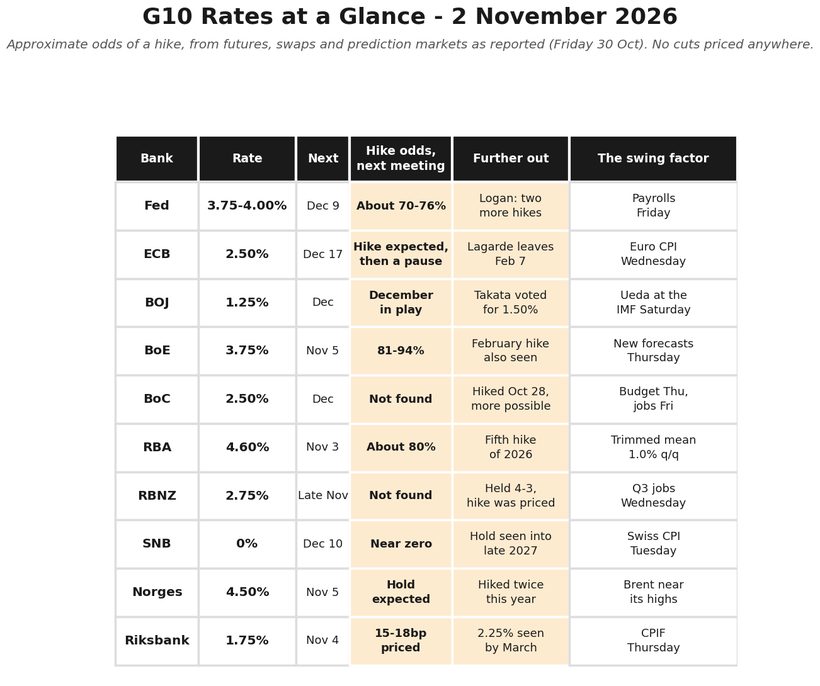
Four G10 banks decide this week, and the hikers outnumber the holders. The RBNZ's 4-3 hold was the one blink in a tightening chorus; Canada hiked a day later. The odds are snapshots from Friday's close or the latest reports, from futures and swaps where they trade and prediction markets or surveys where they don't; where we found no market price, the cell says so. Source: ASX, CME FedWatch, LSEG, swaps and prediction markets as reported, Bloomberg Economics.
Regimes
The capital shortage, week twelve: even AI pays more. Treasuries were the haven, with the 2-year down 13bp, but money got dearer for everyone else. S&P cut Meta's outlook to negative on its AI spending, OpenAI cut its funding target by $10 billion to about $20 billion at a lower valuation, Microsoft sold bonds for the first time since 2017, and Musk says debt markets have almost shut for anyone living off AI data centres. The credit turn of the last two weeks folds in here. Still no outright duration. changed, week 12
The dollar goes two-way, week twenty-two: the range holds. The DXY ended at 101.9, inside its 101.5-103 range for more than a month, while the broader Bloomberg dollar index touched a 17-month high. The euro is the weak leg. The range breaks only on a surprise from the vote or payrolls. changed, week 22
France, the euro's weak link, week five: shrinking with no referee. France's economy shrank 0.1% in the third quarter while the euro area grew 0.4%, and the next ECB president will be chosen in the middle of France's election campaign. The OAT spread is calmer at about 154bp; the test is whether it holds without a president who has promised to defend it. changed, week 5
The funding-currency battle, week seven: risk-off without the funders. Equities sold, bonds rallied, gold and bitcoin fell, and yet USDJPY rose back to 157.5 and USDCHF rose too. The funders did not pay, and even the won traded well while the KOSPI fell. I have pared the peso and rupee shorts; the regime only revives if a real shock, a contested count or strikes, finally moves FX. changed, week 7
The AI fracture, week eighteen: peak capex. Alphabet had its worst day ever after promising much more spending, Intel lost about 30%, and Microsoft was spared only by holding its capex flat. The market now pays for restraint and punishes ambition. Anthropic lists into this in two weeks, and the SOX sits on its 200-day line. changed, week 18
The war is the inflation, week fifteen: talks or strikes. Brent held near its highs while Doha's mediators carried messages and Washington named a date for possible strikes. Ukraine paused its strikes on Russian refineries. Whichever comes first after the vote resets the oil price for the quarter. changed, week 15
Surplus versus deficit, week ten: the first LGFV crack. Exports still carry China; the domestic balance sheet is where it cracks. A local-government conglomerate with about 413 billion yuan of debt is asking its banks for time, and the PBOC has moved to a lower overnight policy rate rather than announce a cut. The test is whether a second issuer misses. changed, week 10
The hiking chorus, week one: everyone tightens into an oil shock. Canada hiked last week, and Australia, Britain and Sweden are expected to this week, while the Fed, ECB and BOJ all have December in play. Only the RBNZ blinked, by one vote. Divergence favours the hawks' currencies: the Australian dollar and the krone are the year's strongest in the G10. new, week 1
Shifts (if then)
Last week the data fired as scripted on Canada, Japan and US growth, and missed on Brazil and New Zealand. This week the scripts are a vote, a refunding and a payrolls report.
Democrats take both chambers → bonds rally first and AI and data-centre stocks sell on regulation fears, with the dollar softer; a split Congress brings relief, a lower VIX and a firmer dollar; Republicans holding both sells bonds and lifts tech. new
The refunding keeps coupon sizes unchanged → the long end gets relief and the curve flattens; a hint of larger auctions or more long bonds sells the 30-year first and takes the 10-year back above 5%. new
Payrolls above 100,000 with hourly earnings up 0.3% or more → December is fully priced, the 2-year rises and the dollar tests 103; a second print below 30,000 revives doubts about December and breaks the dollar below 101.5. new
ISM services prices paid hold near their four-year high → the hawks' case for two more hikes strengthens and the front end sells; a clear drop gives Warsh room to wait. new
The BoE hikes 7-2 with CPI seen peaking near 4.5% → sterling extends toward $1.40 and the curve flattens; three or more votes to hold make it one and done, and gilts rally. new
A Doha understanding before the strikes → Brent drops below $105 and the oil importers rally, the peso and rupee first; strikes after the vote put Brent through $130 and the war premium back on. new
Apple and AMD beat and the stocks rise → the frugal and the chip suppliers decouple from the spenders and the SOX holds its 200-day line; if they fall too, the Nasdaq's 28,000 line is next. new
Tails
Retired this week: strikes before the vote, because the threat now has a date after it, so it moves into the shifts; the buyer strike, folded into Wednesday's refunding shift; and Paris falls, because Moody's and calmer streets have bought the government time. retired
A contested election → markets have priced a clean result. Days of recounts and court fights over the House would hit the dollar, lift gold and the yen, and push the VIX toward 30. new, week 1
The LGFV crack spreads → if Huafa's banks refuse to roll and a second local-government issuer misses, China's onshore credit market reprices at once and the PBOC is forced into a visible rescue. new, week 1
A cyber theft hits a bank → Binance lost $6.3 billion in minutes. The same attack on a payments system or a bank would be a liquidity event, not a crypto story. new, week 1
The second wave → the KOSPI lost more than 16% in October; after the vote, a second leg down in the AI trade would hit Asia's hardware names hardest. held, week 2
Deposit flight from France → the economy shrank and the ECB's referee is leaving. A visible run on French banks would turn a spread problem into a euro problem overnight. held, week 2
A neo-cloud defaults → OpenAI is raising less than it planned and lenders are pulling back. A missed payment would reprice every data-centre bond at once. changed, week 3
The kingdom's trillion gets cut → Saudi Arabia's defence minister went to Tehran while the Houthis hit its airports. If Riyadh redirects its money home, its pledges to US AI and its Treasury holdings both shrink. changed, week 3
Kyiv's leader pushed out → Zelenskiy expects talks with the US and Russia by November 10. A settlement over Kyiv's head splits Europe's sanctions front. changed, week 4
A hit on Abqaiq → a strike on Saudi Arabia's main processing plant would take millions of barrels a day offline in an afternoon, with Brent already near its highs. held, week 4
Last week's AI verdict
Last week the market delivered its verdict on the AI spenders. Alphabet had its worst day ever, Intel lost about 30% and Amazon fell after promising to spend more next year, while Microsoft held its capex and was spared. The equal-weighted S&P and small caps rose as the Nasdaq fell 2%: the money is moving out of the build-out, not out of stocks.
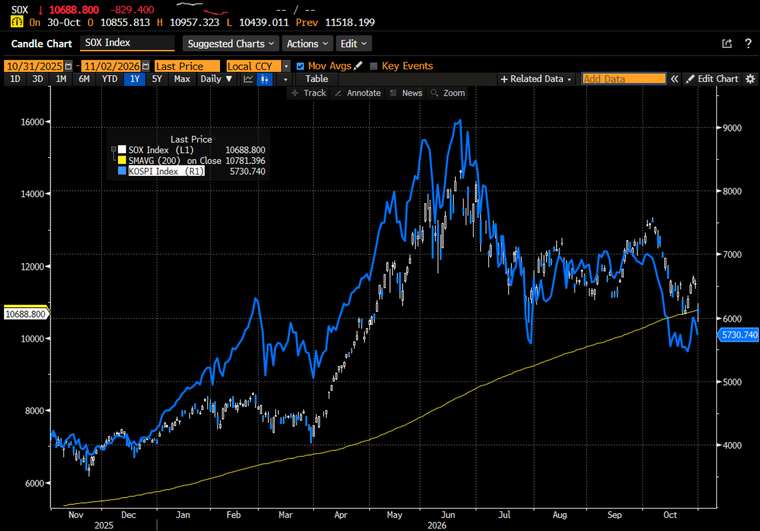
The chips are back on their 200-day line, and Korea is falling with them: the SOX (white candles) bounced off its 200-day average when Anthropic filed its prospectus, then tested a new low on Friday and closed right on the line, with the KOSPI (blue) tracking it lower. October took about 15.5% off the SOX and more than 16% off the KOSPI, though both remain up sharply for the year. Source: Bloomberg.
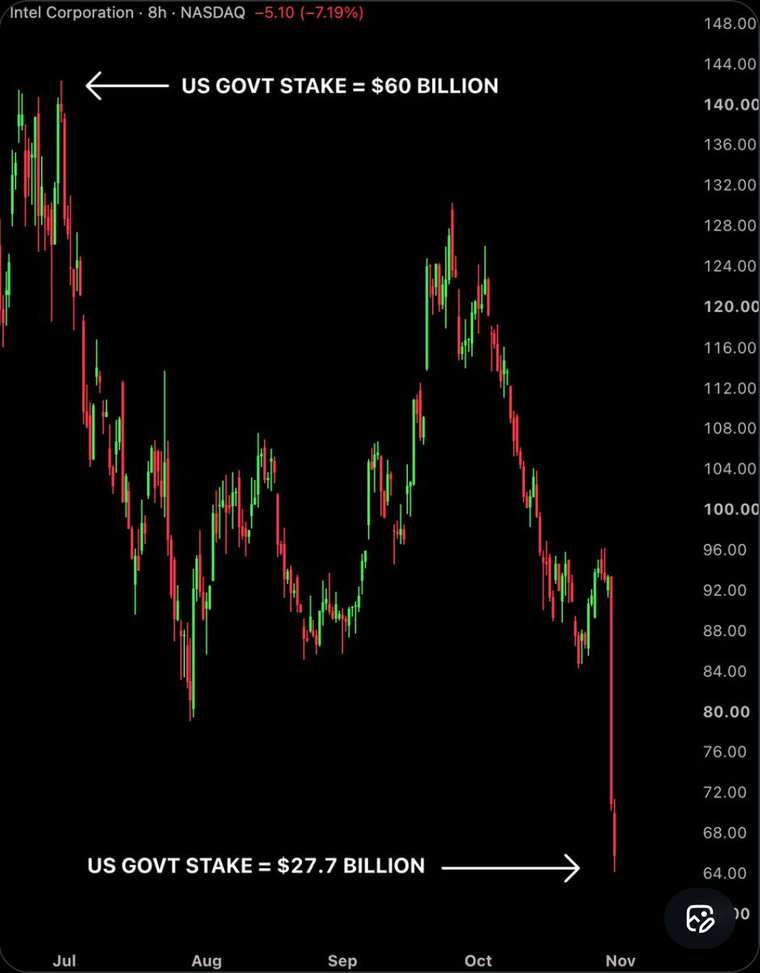
Washington is now a shareholder in the selloff: Intel fell about 30% after guiding the fourth quarter below estimates on memory shortages, and the US government's stake, worth about $60 billion at the summer high, is now worth about $27.7 billion. The state's bet on a national chip champion has become a mark-to-market loss of about $33 billion. Source: Bull Theory.
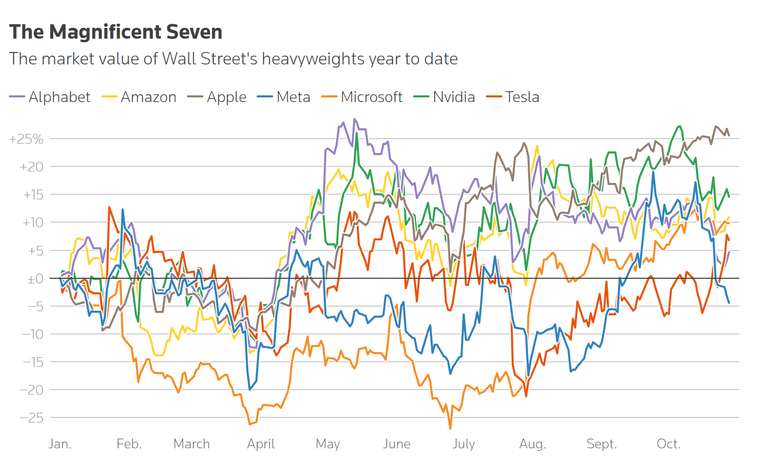
The Magnificent Seven are no longer one trade: Apple ends October near the top of the group, Microsoft spent most of the year in the red, and Alphabet gave back much of its lead in a week. Investors now reward the frugal and punish the spenders, and Apple reports on Monday into that split. Source: LSEG / Reuters.
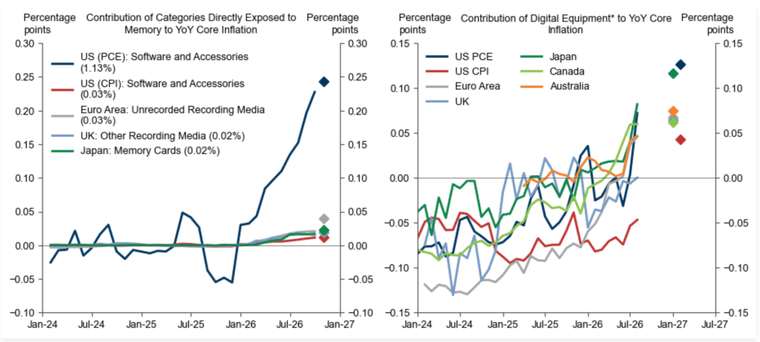
AI is now in the inflation numbers: data centres are buying so much memory that prices of memory cards and consumer electronics are rising everywhere, and Goldman estimates AI is adding about 23bp to US PCE inflation. The Fed's hawks are making the same argument: AI investment is demand-side inflation. Source: Goldman Sachs.
PMIs and a new PBOC rate Monday
China opens the week with a new policy anchor: from Monday the PBOC steers by a 1.25% overnight rate, below the old seven-day benchmark, as Saturday's official PMIs fell below 50 on both counts. The RatingDog PMI at 9:45am tests whether exporters are still carrying the economy, Korea's October trade data land, and the NPC Standing Committee sits all week. In New York, the ISM at 11pm is the first test of a slowing factory sector before the vote.
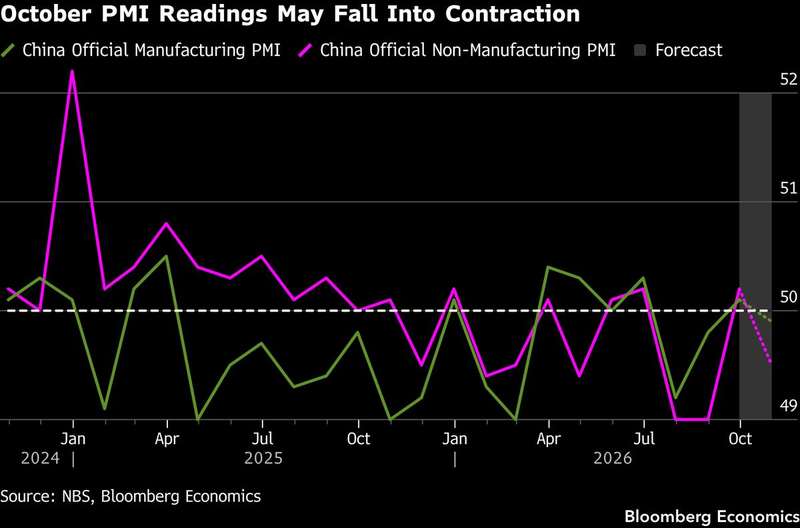
China's services are weakening for real: the official manufacturing PMI was seen slipping to 49.9, a seasonal dip after the National Day holiday, but the non-manufacturing gauge was seen falling to 49.5 on weak spending and a slumping stock market. Both came in weaker: manufacturing fell to 49.3 and non-manufacturing to 49.7. Source: NBS / Bloomberg Economics.
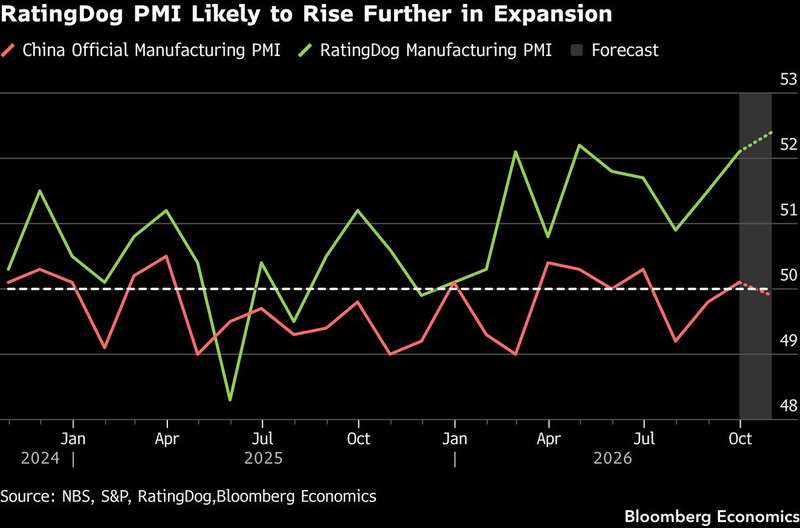
The exporters tell a different story: the RatingDog PMI, weighted to exporters, is seen rising to 52.4. Container tonnage to the US rose 20% in the first three weeks of October and export freight prices are up 85% on a year ago. China's surplus is still being earned abroad. Source: NBS, S&P, RatingDog / Bloomberg Economics.
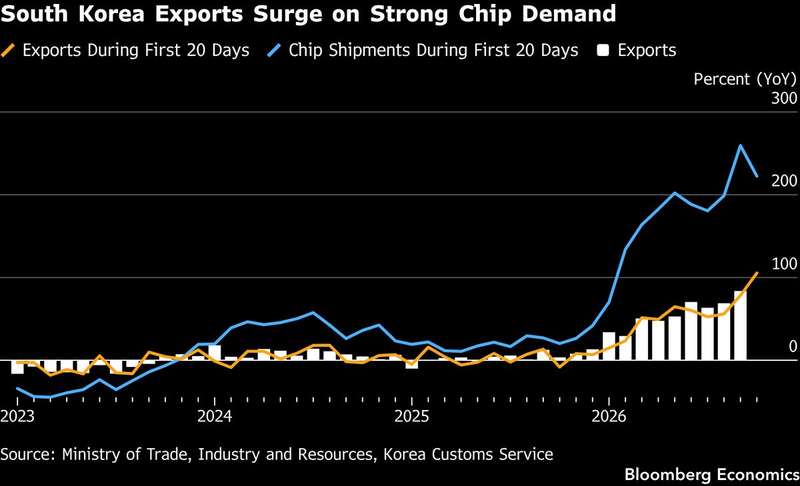
Korea's exports nearly doubled on chips: October exports were seen up about 88% on a year ago, with chip shipments up 222% in the first 20 days. The AI boom is still being shipped, even as the KOSPI sells it. Source: MOTIE, Korea Customs Service / Bloomberg Economics.
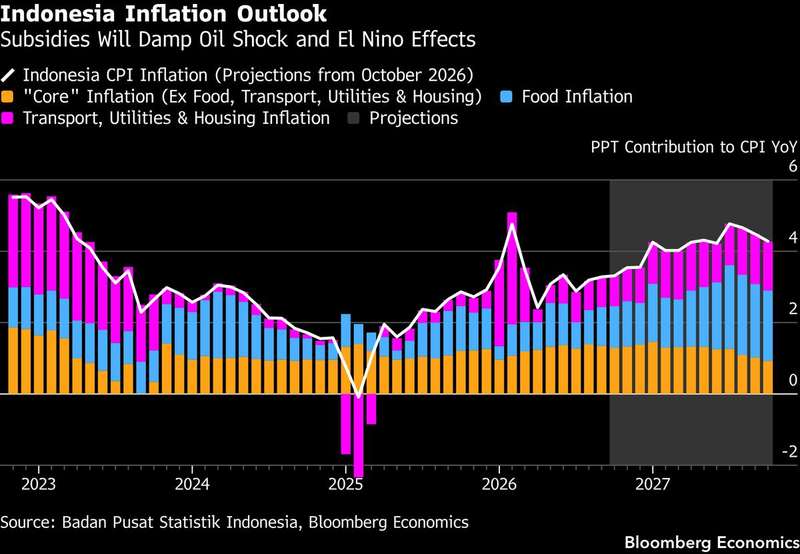
Indonesia's inflation is about to break the band: CPI is seen steady at 3.3%, but food prices from El Niño and oil working through supply chains should push it above BI's 1.5-3.5% target by year end, with subsidies only softening the blow. The rupiah is near record lows, and Thursday's GDP is next. Source: BPS / Bloomberg Economics.
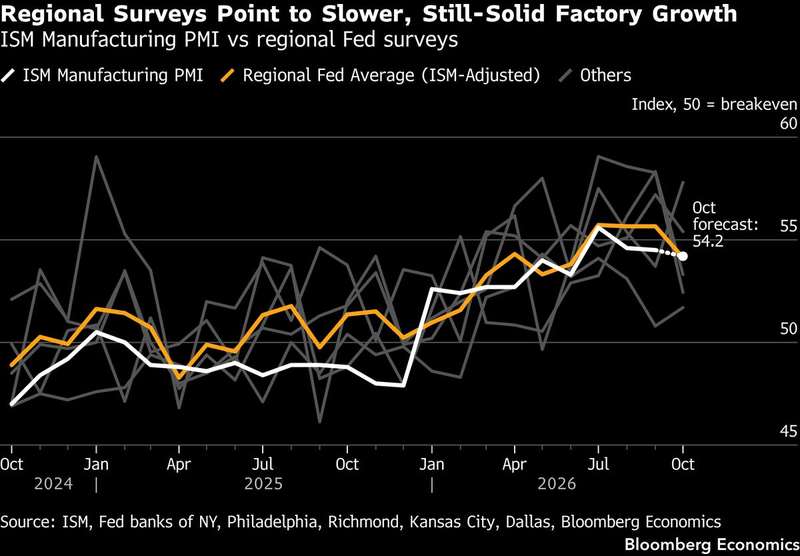
America's factories are slowing, not stopping: the ISM is seen easing to 54.2 as new orders weaken in four of five regional Fed districts, all still above 50. Prices paid surged in September; another high reading means growth is still coming with heavy cost pressure. Source: ISM, regional Fed banks / Bloomberg Economics.
The vote and the RBA Tuesday
Tokyo is shut for Culture Day. Apple and Palantir report early in the morning, Korea's CPI at 7am, then the RBA at 11:30am, expected to hike to 4.85% with a new Statement on Monetary Policy, and Governor Bullock at 12:30pm. Americans vote all day; job openings land at 11pm, and AMD reports after the close.
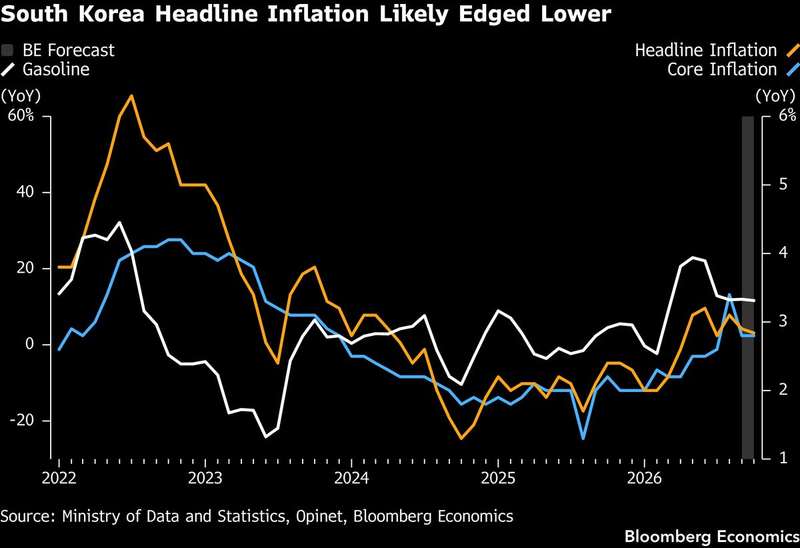
Korea's inflation is sticky underneath: headline CPI is seen easing to 2.8% on a Chuseok base effect, but core is stuck near 2.8% as chip-boom costs and services hold up. With growth at 1.0% last quarter, a third BOK hike on November 26 is the base case. Source: Ministry of Data and Statistics / Bloomberg Economics.
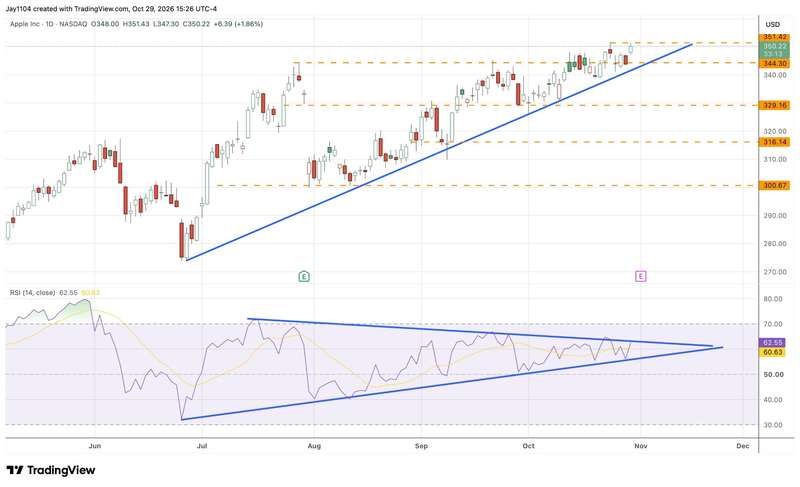
Apple is the frugal giant the market still rewards: the shares are pressing against the top of their range near $350 on a rising trend line into results early on Tuesday our time. The questions are iPhone Duo screen complaints, memory costs and reported cuts to component orders. Source: TradingView / CMC Markets.
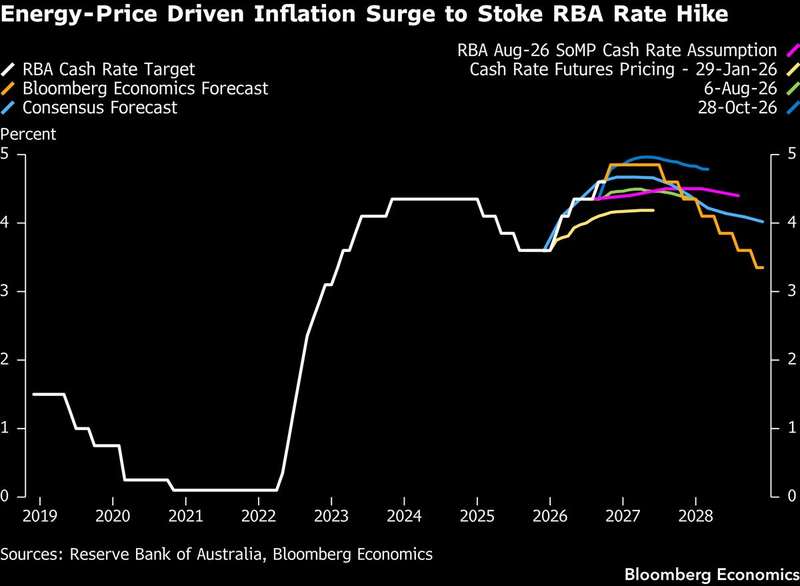
The RBA's fifth hike of the year: a move to 4.85% would take the cash rate to its highest since 2008, after the trimmed mean rose 1.0% last quarter against the RBA's own 0.8% forecast. House prices are falling at the fastest pace on record, so the hike lands on a weakening household. Source: RBA / Bloomberg Economics.
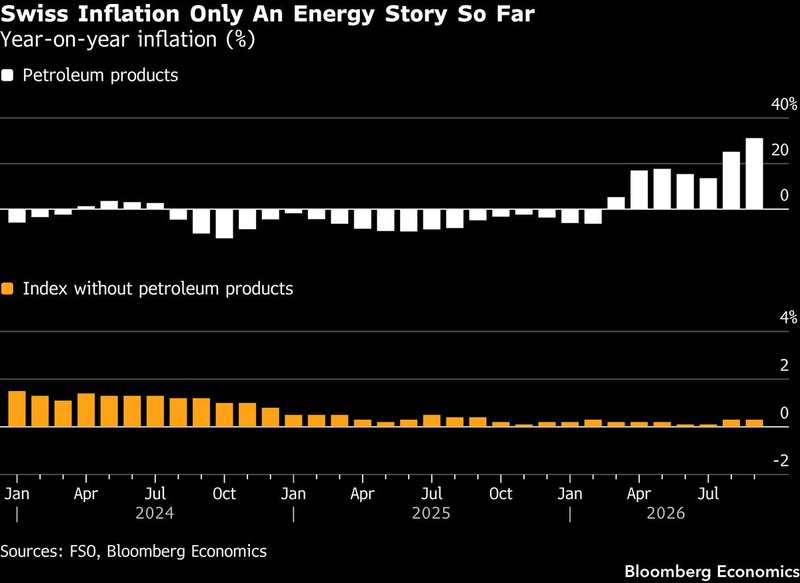
Swiss inflation is only an energy story: petroleum prices are up more than 20% while everything else barely moves. CPI is seen at 1.2%, and the franc's rebound keeps the SNB on hold. The funding currency is doing the SNB's work. Source: FSO / Bloomberg Economics.
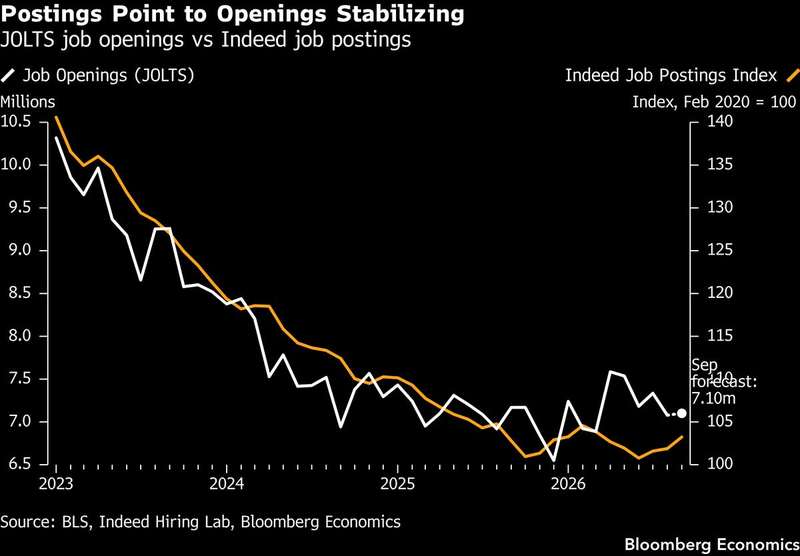
Job openings have stopped falling, barely: JOLTS is seen steady at 7.1 million, about one vacancy per unemployed worker. Quits near 1.9% and layoffs at 1.0% describe workers who will not move and firms that will not hire. Source: BLS, Indeed / Bloomberg Economics.
The most expensive midterms ever
Tuesday's vote is already the most expensive midterm on record, with political advertising heading for $11.6 billion. The money is lopsided at the top, and much of it comes from the industries the next Congress will regulate: tech, crypto and private equity.
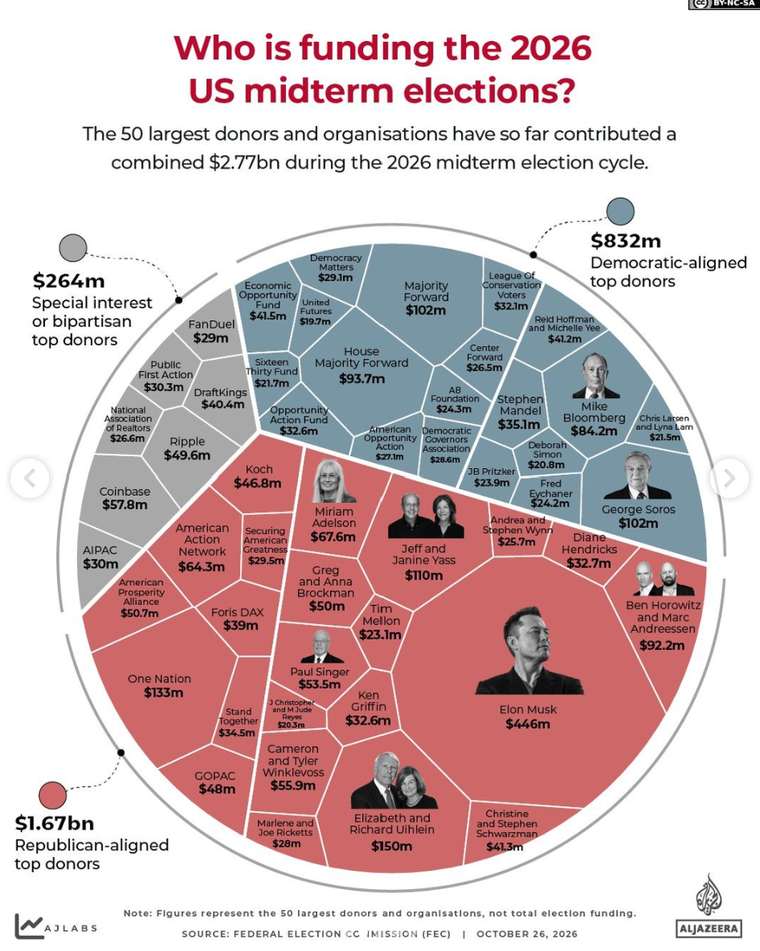
$2.77 billion from just 50 donors: Republican-aligned top donors have given $1.67 billion against $832 million on the Democratic side, with Elon Musk alone at $446 million. Political advertising is heading for a record $11.6 billion. Source: FEC / Al Jazeera.
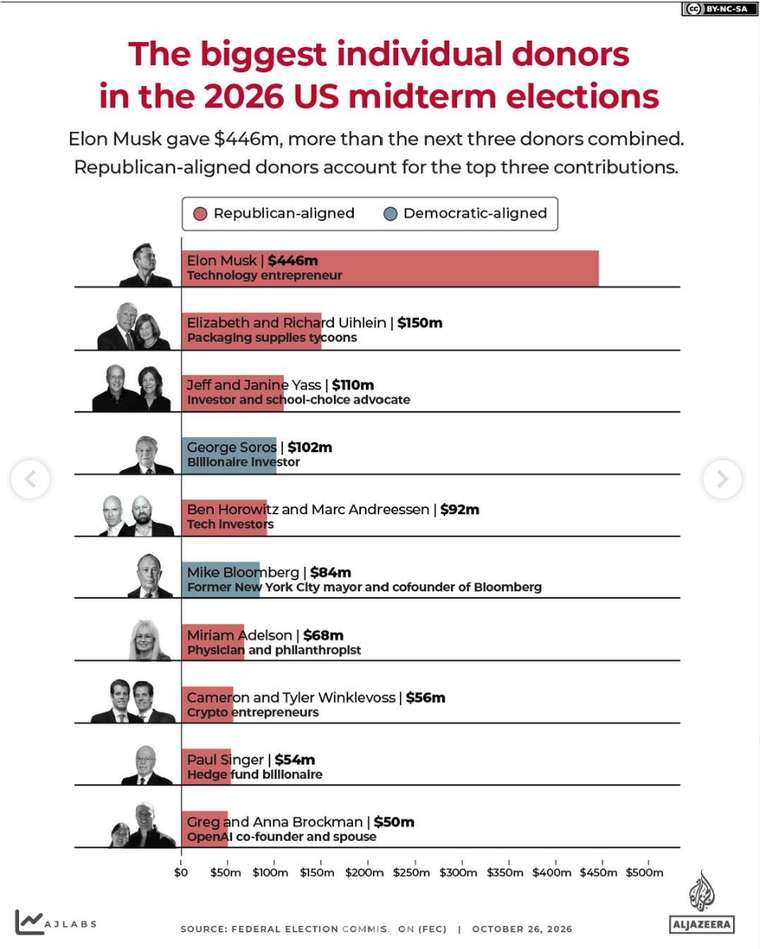
Musk gave more than the next three donors combined: the Uihleins at $150 million and the Yasses at $110 million follow. George Soros at $102 million and Michael Bloomberg at $84 million lead the Democratic side. Source: FEC / Al Jazeera.
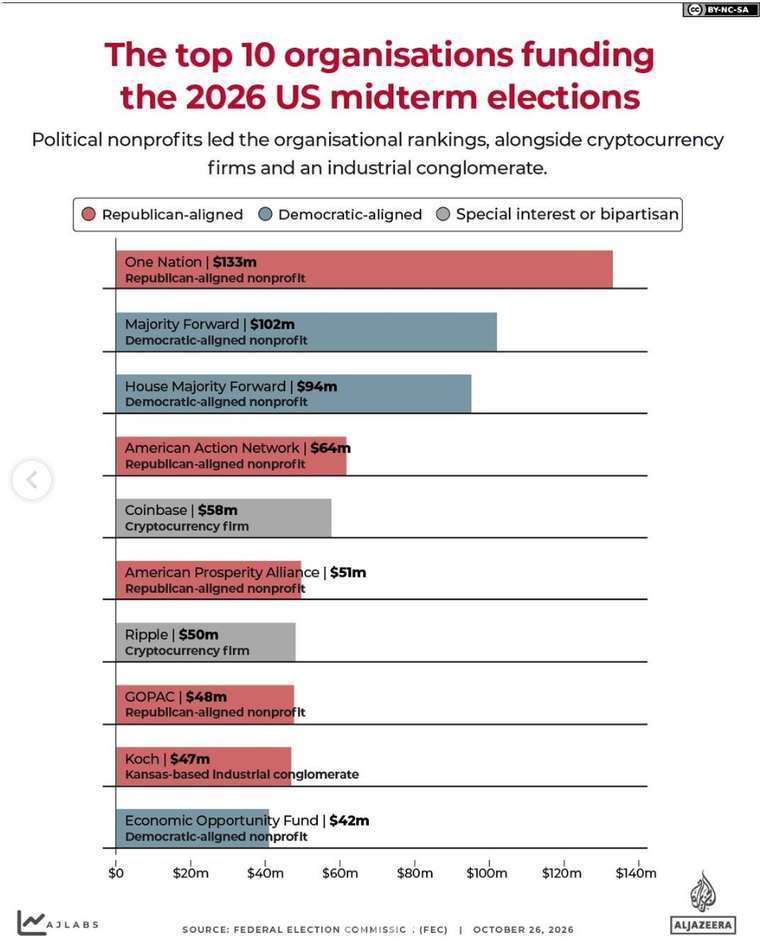
Crypto firms are among the biggest organisational spenders: Coinbase ($58 million) and Ripple ($50 million) sit in the top ten alongside the party-aligned nonprofits, in the same week as the largest crypto heist on record. Source: FEC / Al Jazeera.
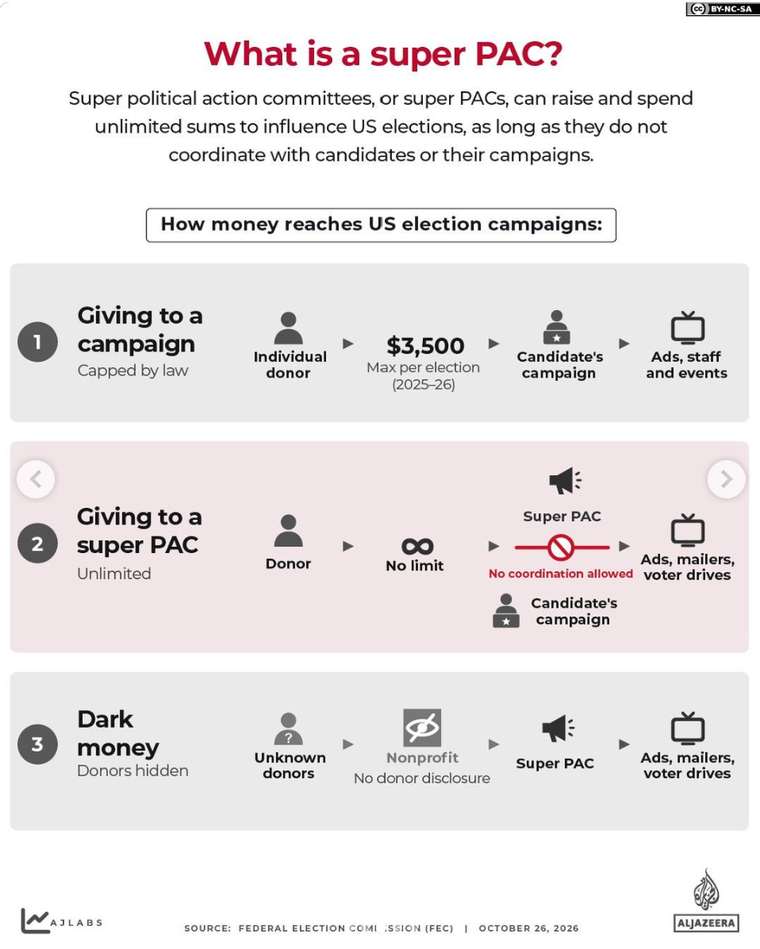
How the money gets in: a donor can give a candidate only $3,500 per election, but a super PAC can raise and spend without limit as long as it does not coordinate, and nonprofits can pass on money without naming donors. Source: FEC / Al Jazeera.
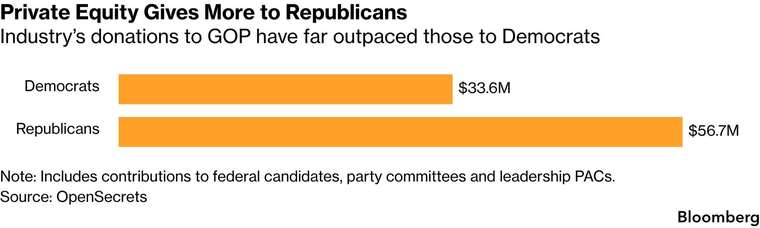
Private equity is betting on the Republicans: the industry has given $56.7 million to the GOP against $33.6 million to the Democrats, the first tilt that way since 2016. It fears scrutiny of its reach into housing, healthcare and elder care. Source: OpenSecrets / Bloomberg.
Results and the refunding Wednesday
The results arrive in our morning: polls close in Georgia and Virginia at 8am, Pennsylvania and most of Texas at 9am, and California at noon. New Zealand's jobs data come first at 5:45am. Europe follows with the Riksbank at 4:30pm and euro-area inflation at 6pm. In New York, ADP at 9:15pm, the Treasury's refunding statement at about 9:30pm and ISM services at 11pm, before Brazil's central bank decides at 5:30am on Thursday.
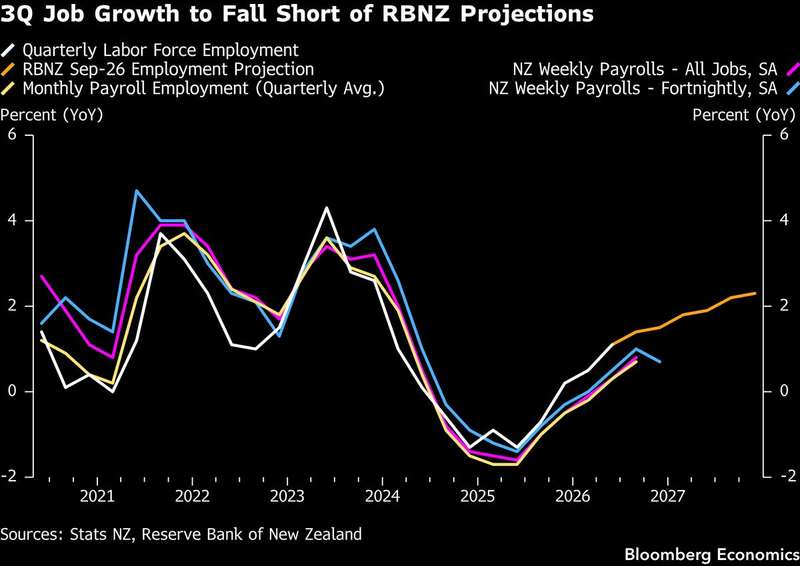
New Zealand's jobs are falling short: employment is seen up only 0.2% in the third quarter with unemployment rising to 5.7%, below the RBNZ's own path. That is the slack the RBNZ pointed to when it held last week. Source: Stats NZ, RBNZ / Bloomberg Economics.
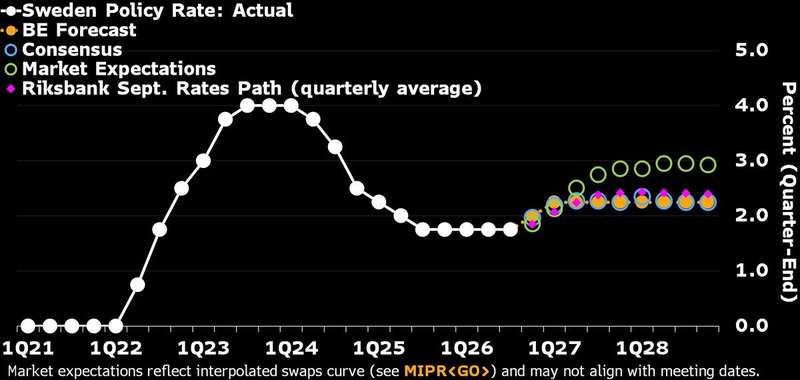
Sweden starts a short hiking cycle: the Riksbank is seen raising its rate to 2.00%, its first move since cutting to 1.75% in September 2025, with a final hike to 2.25% in March. Swaps price more than that. Source: Riksbank / Bloomberg Economics.
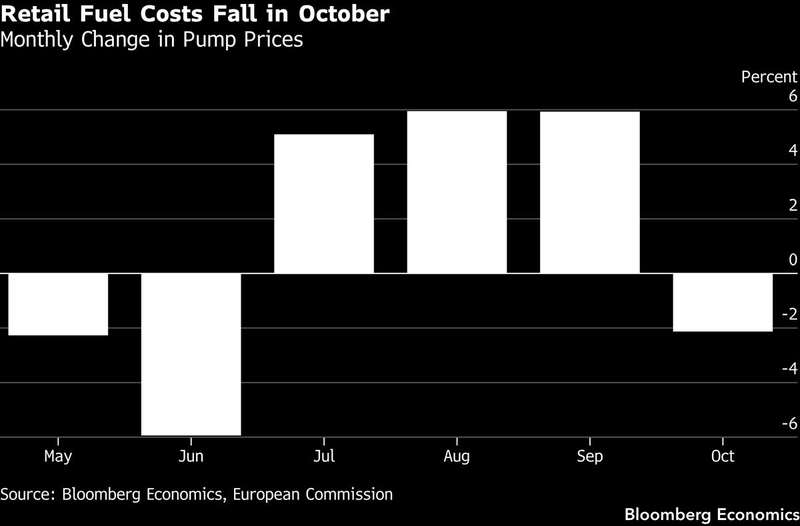
Europe's pump prices finally fell: fuel fell about 2% in October, but euro-area inflation is seen rising to 3.9% on household energy bills, led by a sharp jump in Italy, while core eases to 2.4%. The ECB's case for one last hike in December rests on that core. Source: European Commission / Bloomberg Economics.
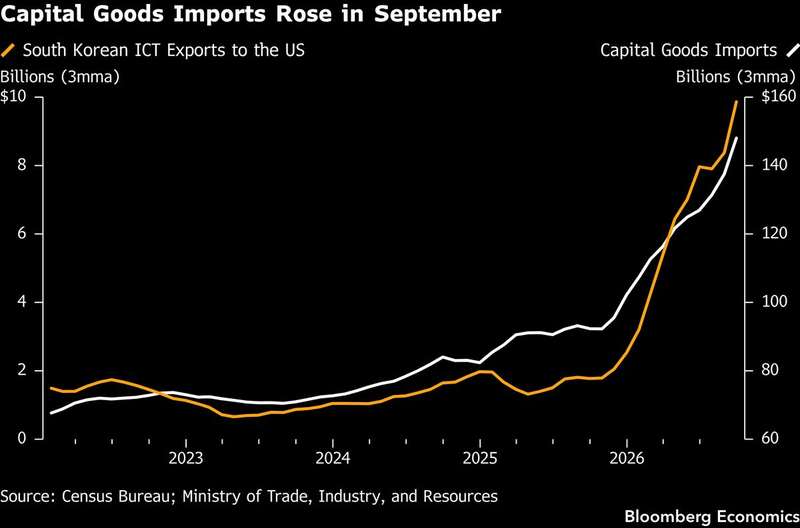
America is importing the AI build-out: capital goods imports are running near $150 billion a quarter, alongside Korea's chip shipments to the US. The September trade deficit is seen at $107 billion, the widest since the front-running before Liberation Day. Source: Census, MOTIE / Bloomberg Economics.
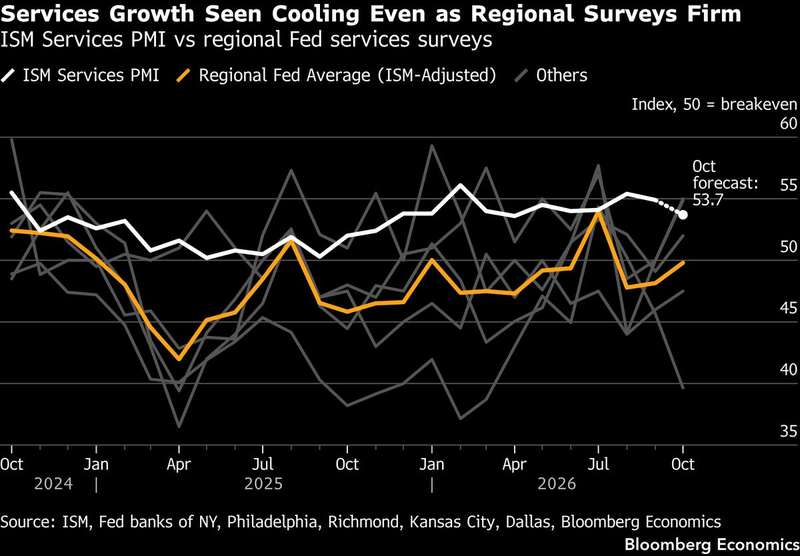
Services are cooling, prices are not: the ISM services index is seen easing to 53.7 and hiring slipping back below 50, while prices paid stay near September's four-year high. That is the mix the Fed's hawks are watching. Source: ISM, regional Fed banks / Bloomberg Economics.
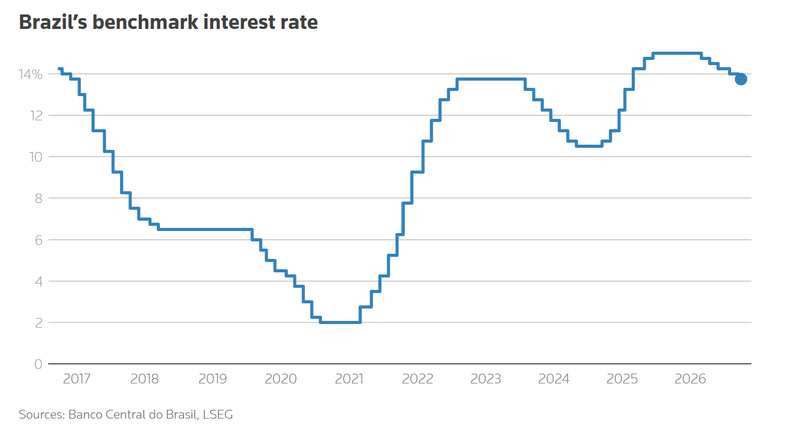
Brazil's easing cycle meets Lula's win: the Selic has come down to 13.75%, and a sixth cut to 13.50% is now less certain after the rout. The real rate would still be about 8.5%, and the market wants a finance minister before it wants a cut. Source: Banco Central do Brasil, LSEG / Reuters.
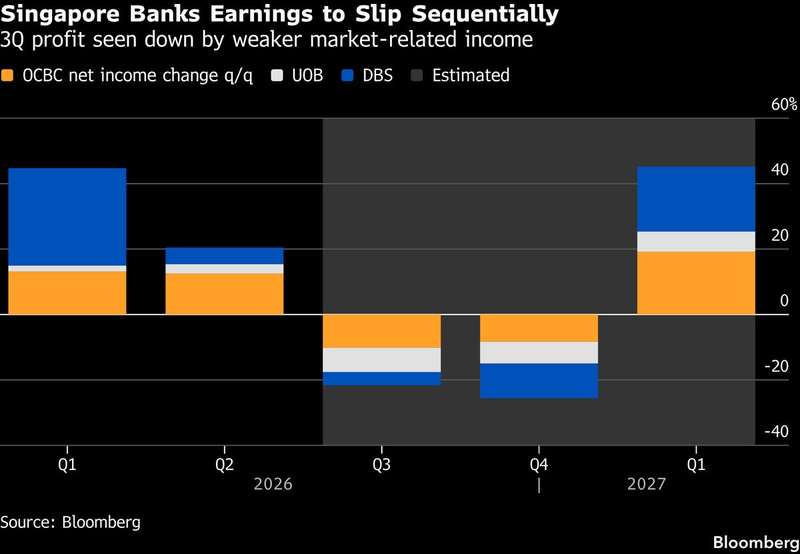
Singapore's banks are past the best: DBS, UOB and OCBC are expected to report lower profits than last quarter as fees normalise and market income weakens, with the benefit of higher rates arriving only next quarter. UOB reports Wednesday, DBS Thursday and OCBC Friday. Source: Bloomberg.
The BoE and ASEAN Thursday
Asia's inflation day: CPI from the Philippines, Taiwan and Thailand, Indonesia's GDP, and Bank Negara at about 3pm. China's import expo opens in Shanghai. Norges Bank decides at 5pm and the Bank of England at 8pm, with new forecasts and Bailey at 8:30pm. US claims and productivity at 9:30pm, then Hammack and Barkin. DBS and Sony report.
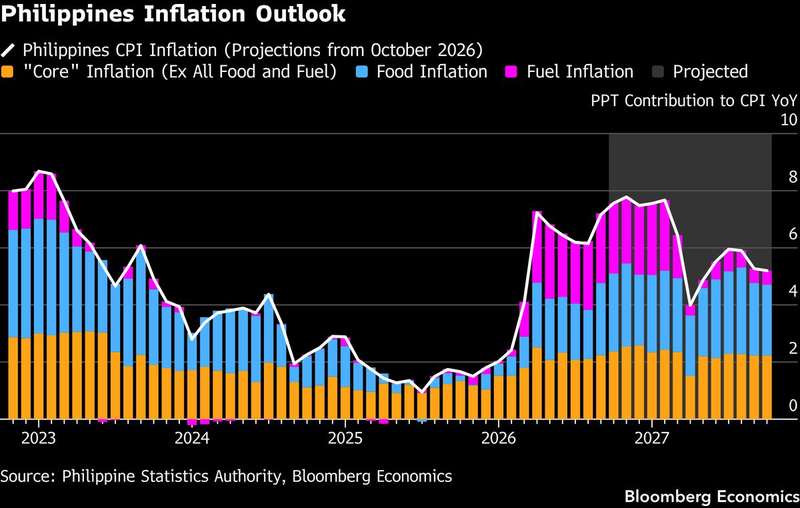
The Philippines is losing the inflation fight: CPI is seen at 7.6%, up from 7.2%, with food, fuel and a weak peso all pushing. Big minimum-wage rises are coming, so the BSP has more to do. Source: PSA / Bloomberg Economics.
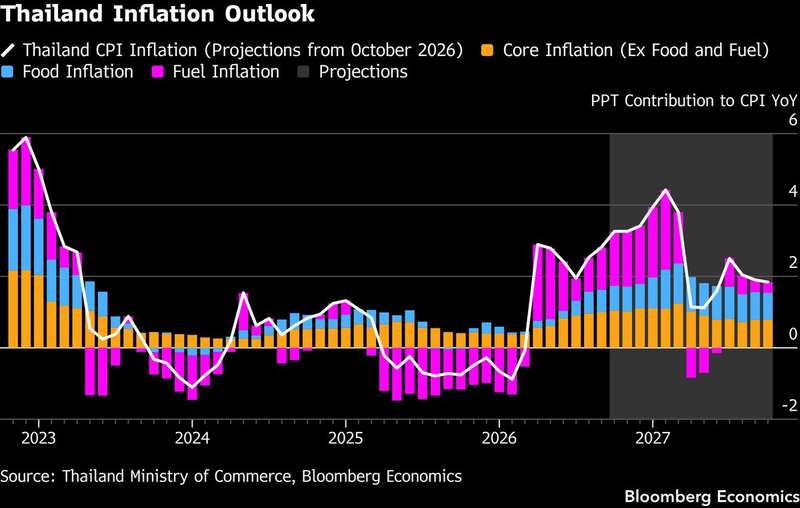
Thailand breaks its target: inflation is seen at 3.25%, above the BOT's 1-3% band for the first time in this shock, as oil and El Niño food prices spill over. With growth low, the BOT is expected to look through it. Source: Thailand Ministry of Commerce / Bloomberg Economics.
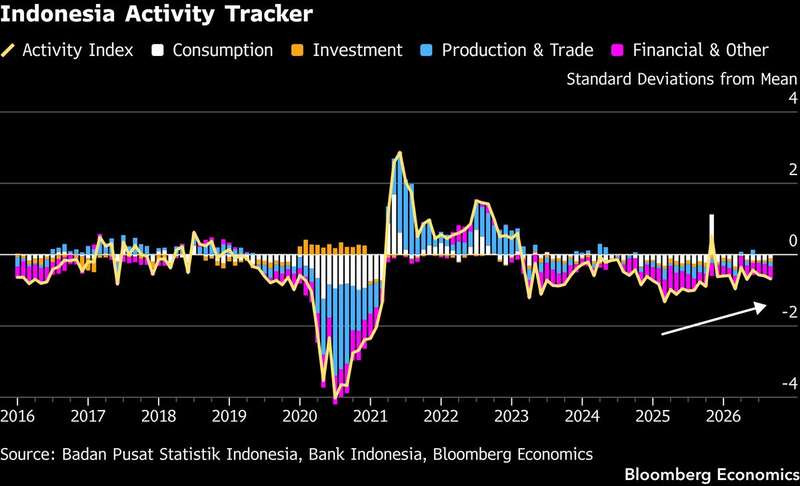
Indonesia is slowing: growth is seen easing to 5.1% from 5.29%, as investment and government spending soften and the weak rupiah hurts trade. Prabowo's 8% target looks further away. Source: BPS, Bank Indonesia / Bloomberg Economics.
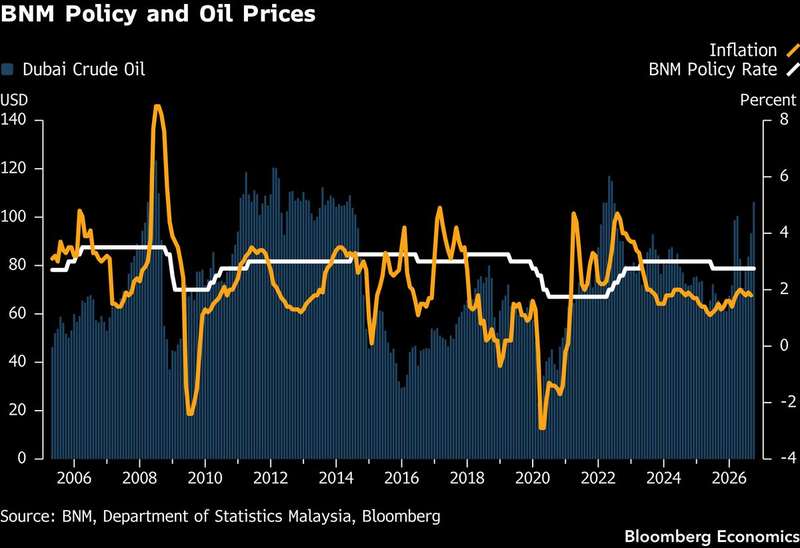
Malaysia can afford to wait: inflation is only 1.8% and oil revenues fund the fuel subsidies, so Bank Negara is expected to hold at 2.75%. It is one of the few central banks in Asia the oil shock is paying. Source: BNM, DOSM / Bloomberg.
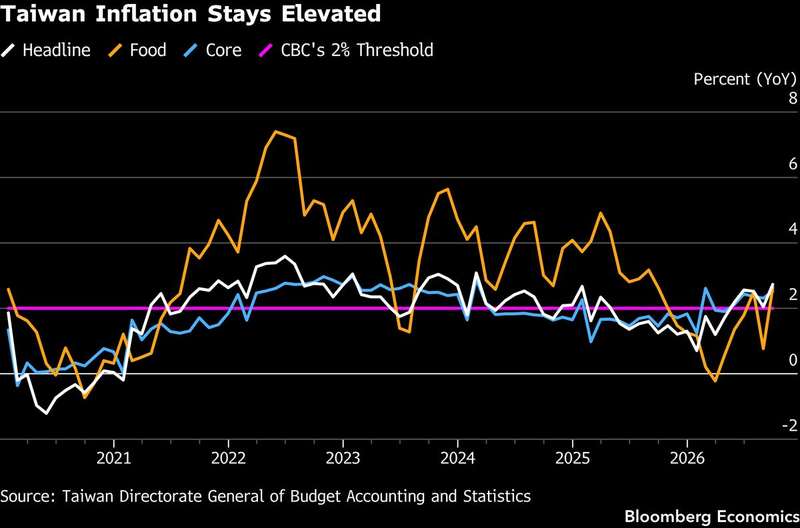
Taiwan stays above its alert line: CPI is seen at 2.6% from a 31-month high of 2.73%, still above the central bank's 2% threshold as the AI boom feeds services prices. A 12.5bp hike in December is the call. Source: DGBAS / Bloomberg Economics.
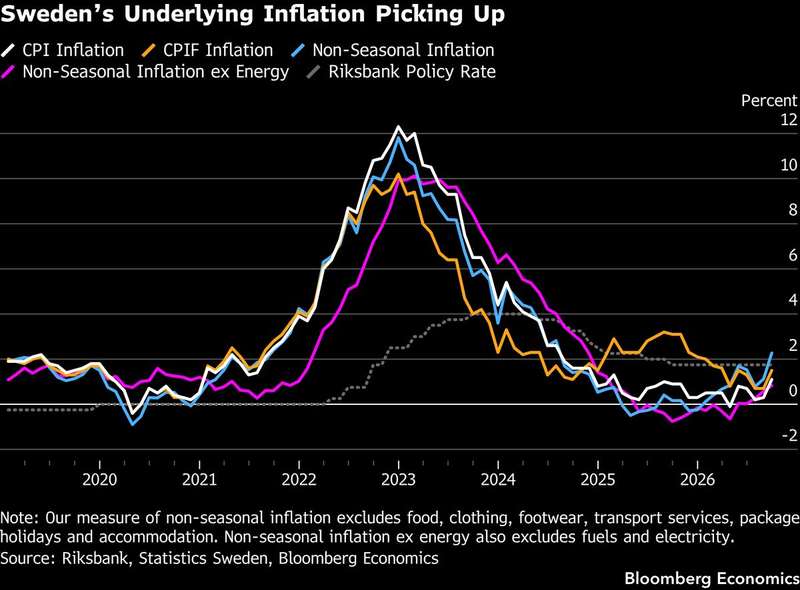
Sweden's underlying inflation is turning up: CPIF is seen at 1.6%, with price pressure building in core categories, not just energy. That is why the Riksbank moves a day earlier. Source: Riksbank, Statistics Sweden / Bloomberg Economics.
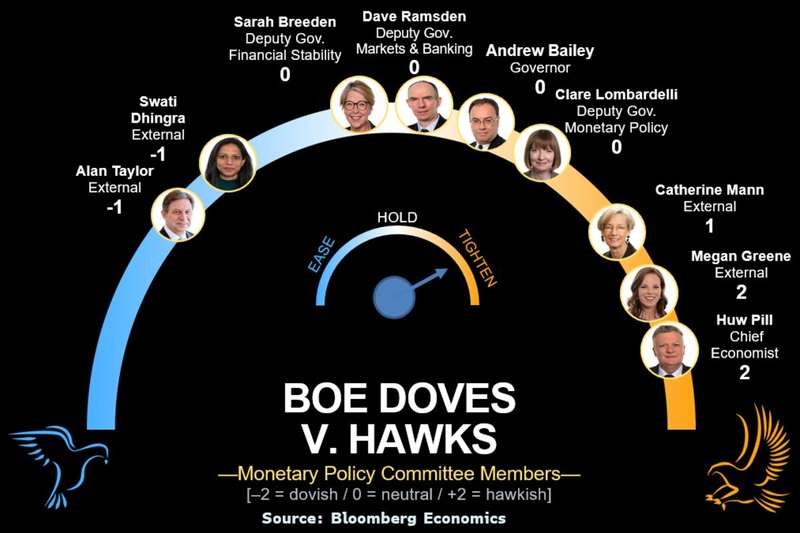
The Bank of England's doves and hawks: a 7-2 vote for a hike to 4.00% is expected, with Taylor and Dhingra voting to hold and Pill and Greene the most hawkish. New forecasts are seen showing CPI peaking near 4.5% early next year. Source: Bloomberg Economics.
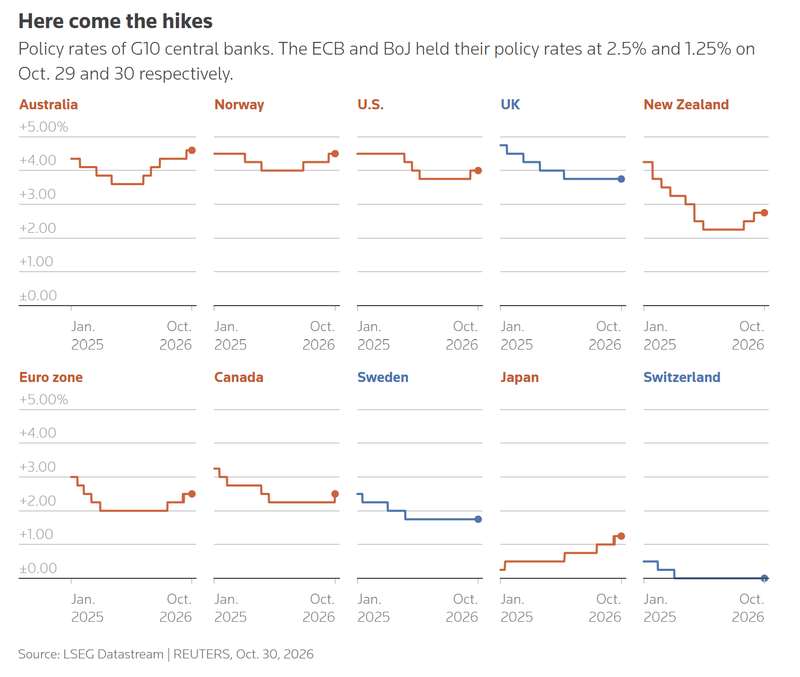
Here come the hikes: the Fed, ECB and BOJ held last week, but Australia, Sweden and Britain are expected to hike this week, the first move for the last two. Norway, with the highest rate in Europe, has already hiked twice. Source: LSEG Datastream / Reuters.
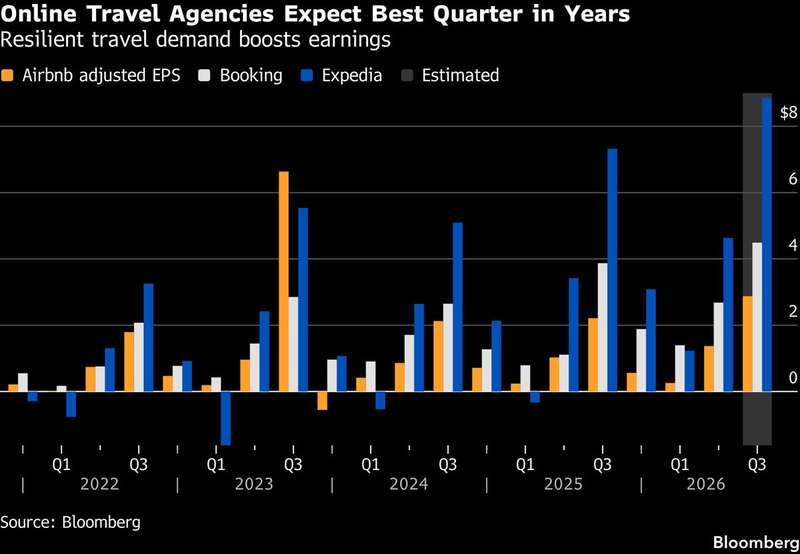
Travel had its best quarter in years: Airbnb, Booking and Expedia are seen posting record earnings on summer travel and the World Cup. The question is 2027, with airfares high and unrest in Paris. Source: Bloomberg.
Payrolls Friday
Lagarde speaks in Milan just after midnight, Banxico decides at 3am and Canada's budget lands at 5am. Japan's wages at 7:30am and OCBC's results follow. Lane and Williams share a stage at 5:30pm and Pill speaks at 8:15pm, before October payrolls at 9:30pm and Michigan sentiment at 11pm. Ueda gives the IMF's Camdessus lecture at midnight, and New Zealand votes on Saturday.
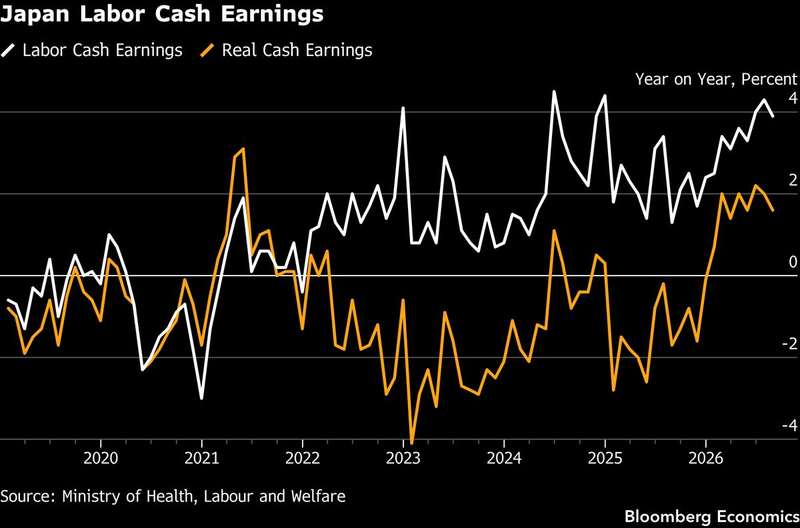
Japan's pay is still rising: labour cash earnings are seen at 3.5%, slowed by fewer working days, but the BOJ's preferred measure of full-time pay holds near 2.8%. Real wages are positive, which is what lets Ueda hike in December. Source: MHLW / Bloomberg Economics.
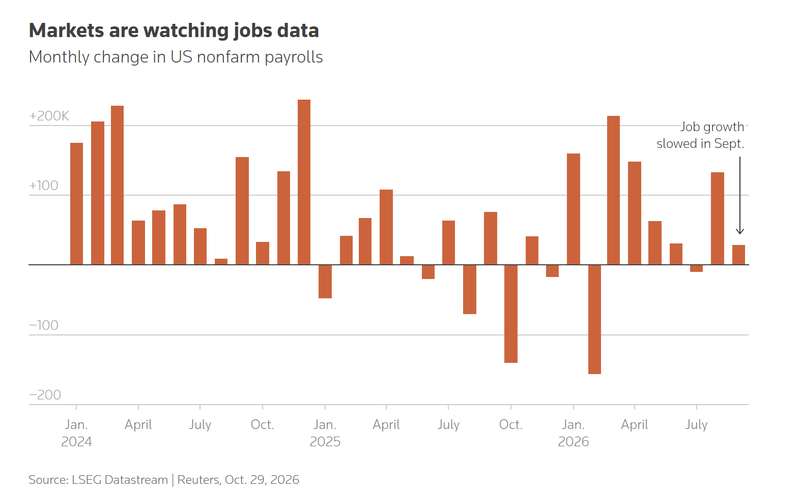
Job growth slowed sharply in September: payrolls rose 29,000 after a run of soft months and a few outright declines. Unemployment is seen holding at 4.2%, and the market will read Friday's number straight into December. Source: LSEG Datastream / Reuters.
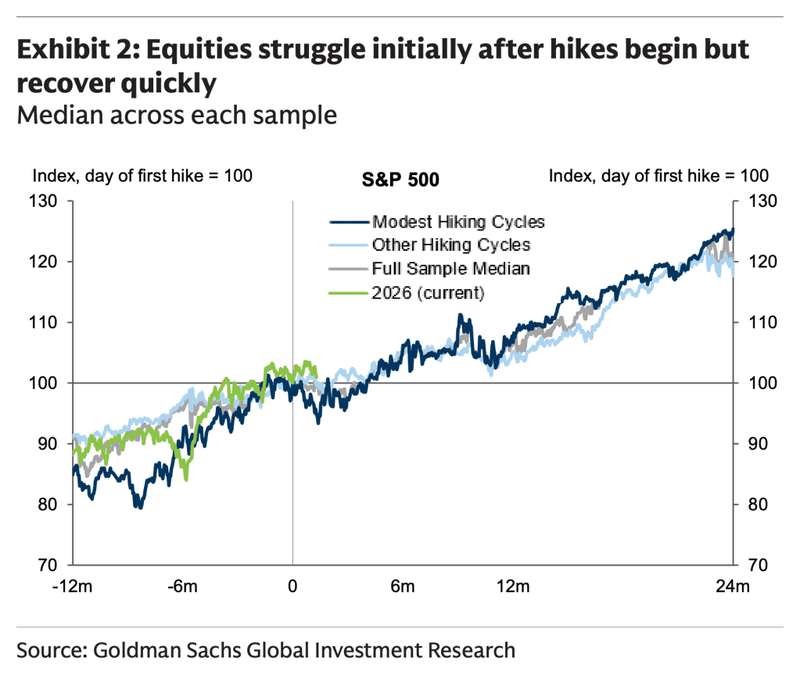
Stocks dip after the first hike, then recover: in past tightening cycles the S&P troughed within two months of the first hike and recovered within four. This cycle is tracking the pattern so far. Source: Goldman Sachs Global Investment Research.
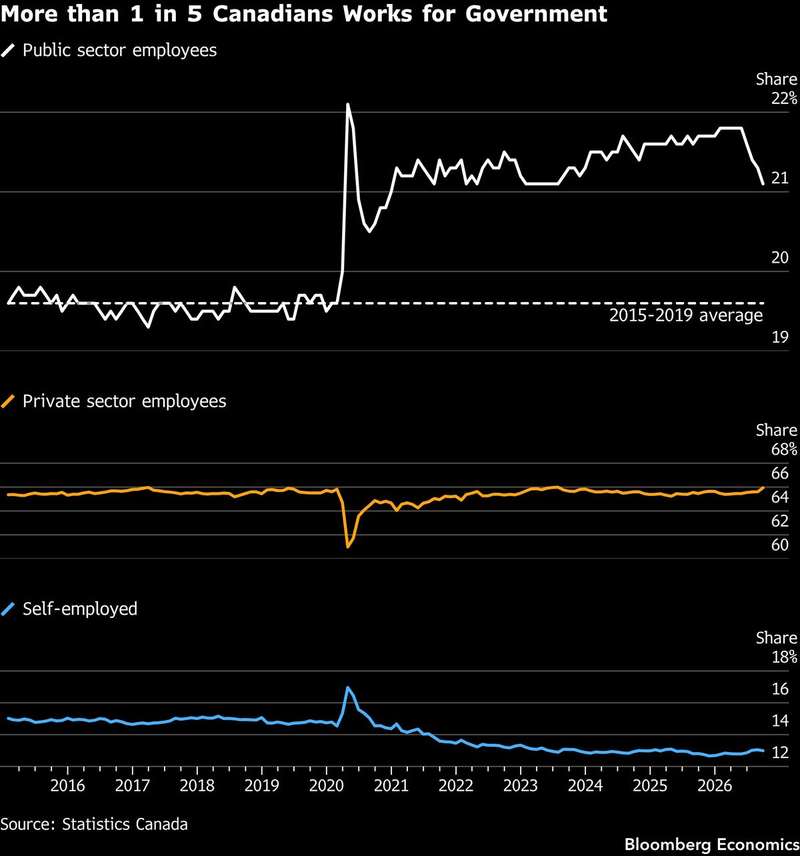
More than one in five Canadians works for the government: Ottawa is shrinking the public service, which explains most of the 110,000 jobs lost in August and September. October is seen at +18,000, and the federal budget lands the day before. Source: Statistics Canada / Bloomberg Economics.
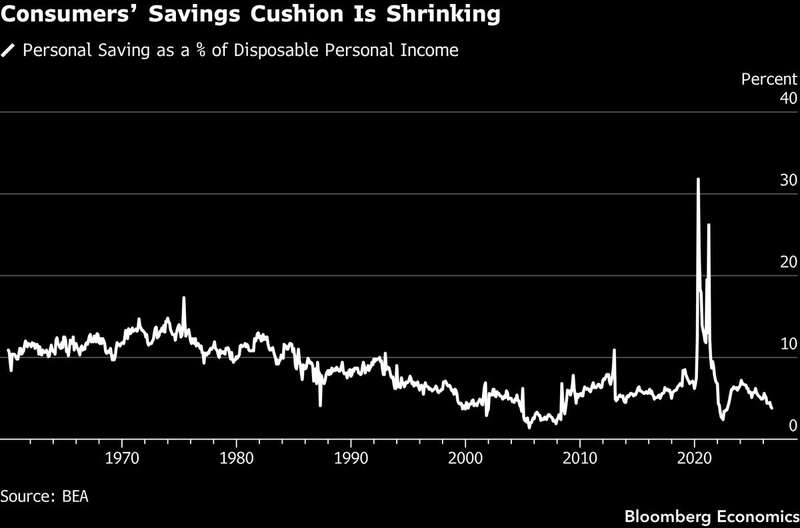
Americans are spending their cushion: the saving rate is near its lowest in years, so spending now depends on income growth. Michigan sentiment is seen near 48.5, close to its lows. Source: BEA / Bloomberg Economics.
Anthropic's prospectus
Anthropic's prospectus is the first full look inside a frontier AI lab, and it landed in the worst week for AI stocks this year. It targets a Nasdaq listing in the week of November 16, and its founders urge buyers not to think of their purchase in purely transactional terms.
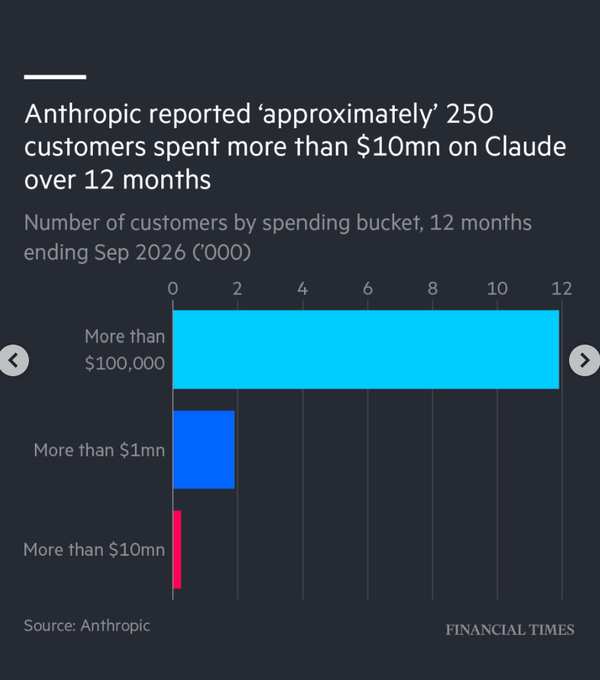
About 12,000 customers spend more than $100,000 a year on Claude, about 2,000 spend more than $1 million and around 250 more than $10 million. Revenue is concentrated in big business, the opposite of a consumer app. Source: Anthropic / Financial Times.
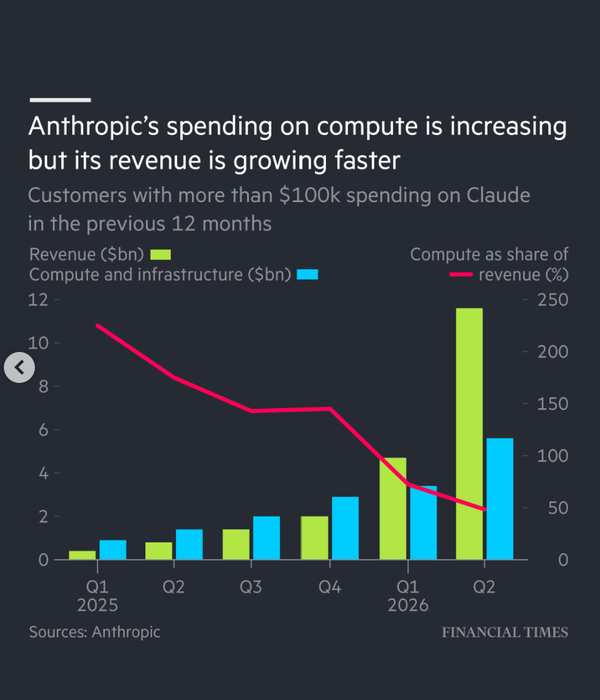
Revenue is growing faster than the compute bill: compute has fallen from more than 200% of revenue in early 2025 to about 50%, but the absolute spend keeps rising and the founders expect losses to continue. Source: Anthropic / Financial Times.
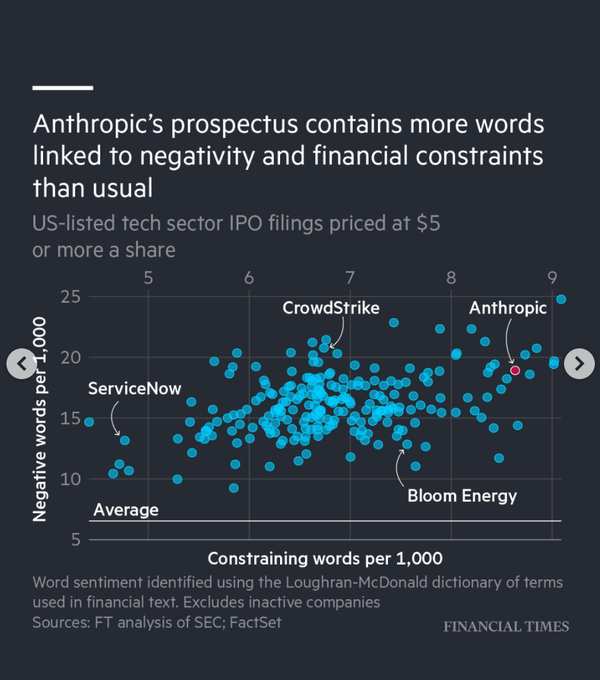
The prospectus warns more than most: it uses more negative and constraining words than almost any recent tech filing, and the founders ask buyers not to think of their purchase in purely transactional terms. Source: FT analysis of SEC filings, FactSet.
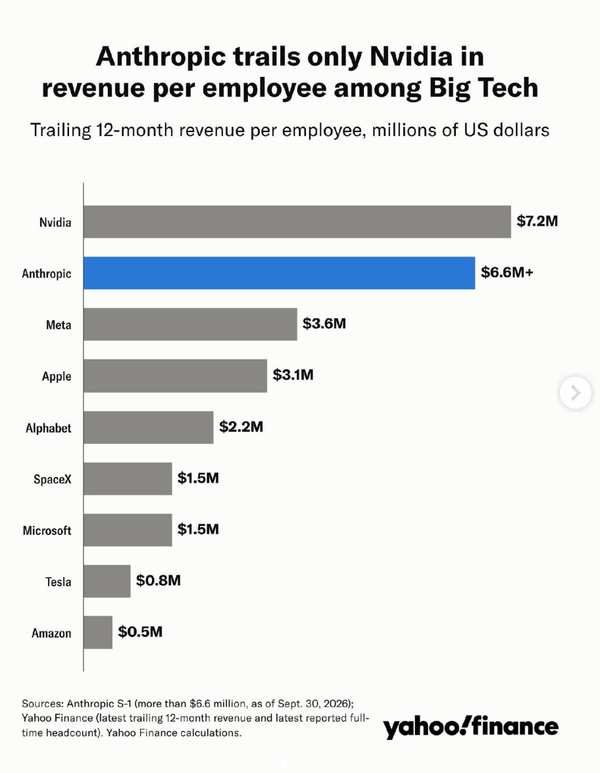
More than $6.6 million of revenue per employee, second only to Nvidia among the big names. At the reported IPO valuation, each worker would be worth $283-377 million. Source: Anthropic S-1, Yahoo Finance.
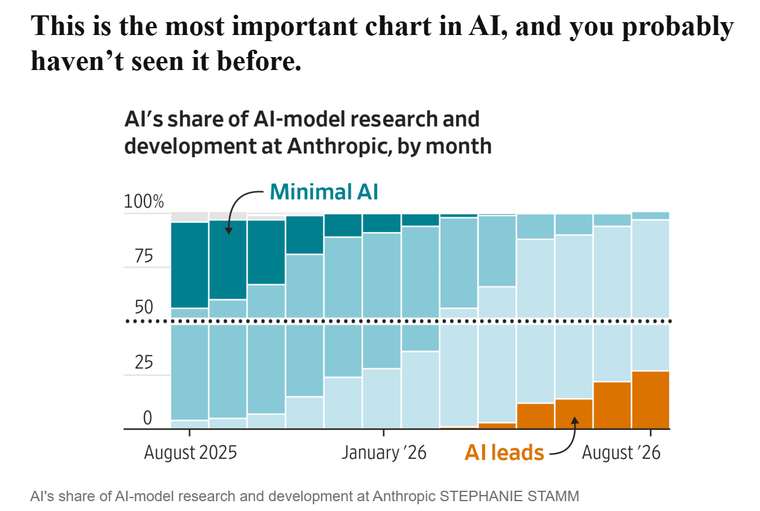
The most important chart in AI: AI led 1% of Anthropic's own AI research and development in March and 26% by August. As the technology starts to build itself, the question is whether we can keep pace and keep it under control. Source: Anthropic / The Wall Street Journal.
Crypto: the largest bank robbery
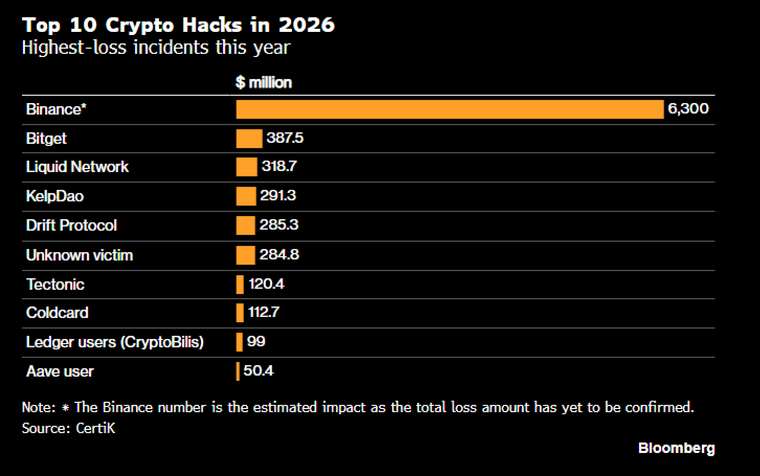
Binance lost about $6.3 billion in one attack, more than the other nine biggest crypto hacks of 2026 combined and four times the previous record, Bybit's $1.5 billion in 2025. The hackers tested their code with $2 runs before draining wallets across four blockchains. Bitcoin, meant to be digital gold, has failed as a hedge along with gold itself. Source: CertiK / Bloomberg.
Emerging markets are now an AI bet
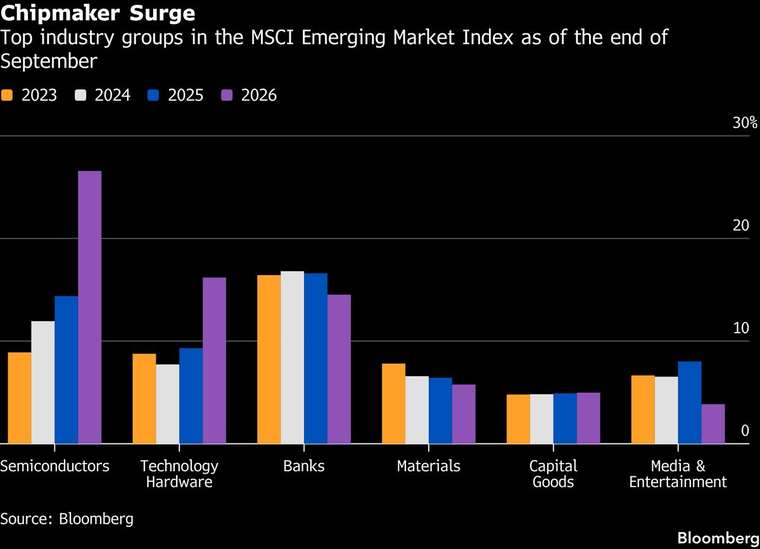
Semiconductors are now more than a quarter of the MSCI EM index, more than double their weight in 2023, while banks and consumer names have been diluted. TSMC alone weighs about twice as much in EM as Nvidia does in the S&P 500. Source: Bloomberg.
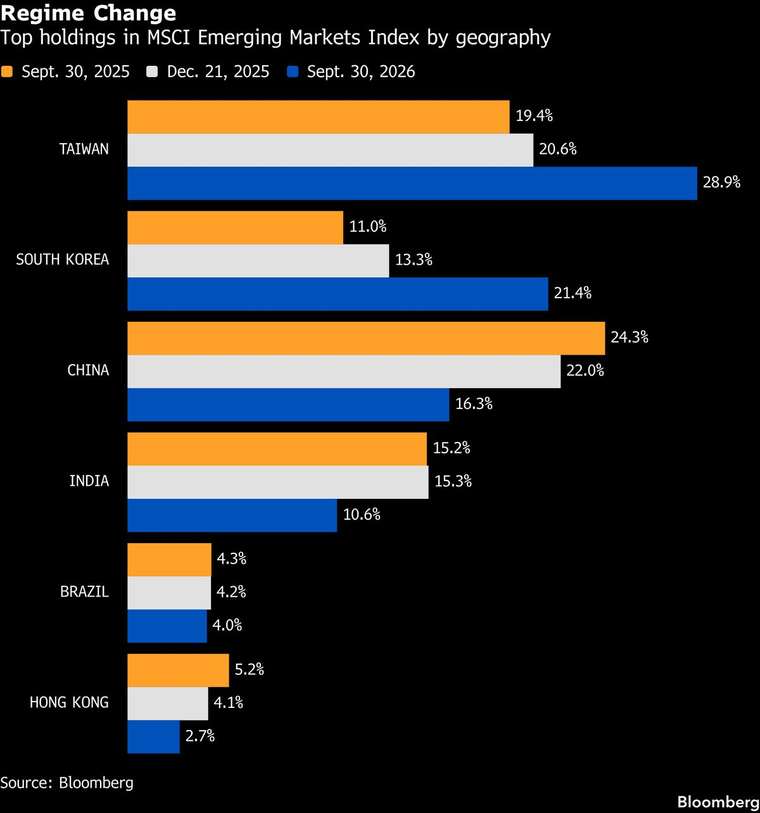
Taiwan and Korea are now half the index: Taiwan rose to 28.9% and Korea to 21.4% in a year, while China fell to 16.3% and India to 10.6%. Buying EM passively now means buying chips. Source: Bloomberg.
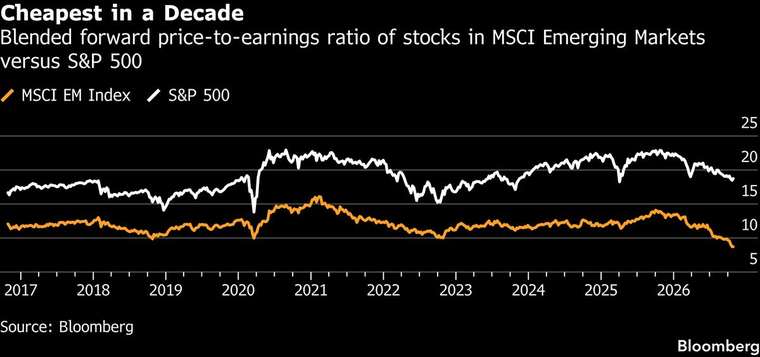
The cheapest in a decade: MSCI EM trades at its lowest forward multiple against the S&P 500 in ten years, but it is not the same index it was. Realised volatility is the highest since the pandemic. Source: Bloomberg.
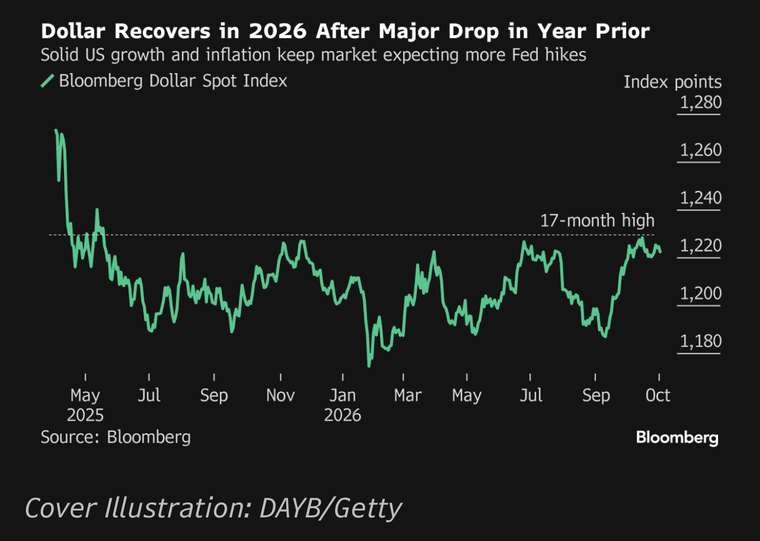
The dollar may shrug off the midterms: the Bloomberg Dollar index hit a 17-month high in October on solid growth and expectations of more Fed hikes. High rates and AI spending should keep drawing capital even under gridlock. Source: Bloomberg.
China: discipline and a new policy rate
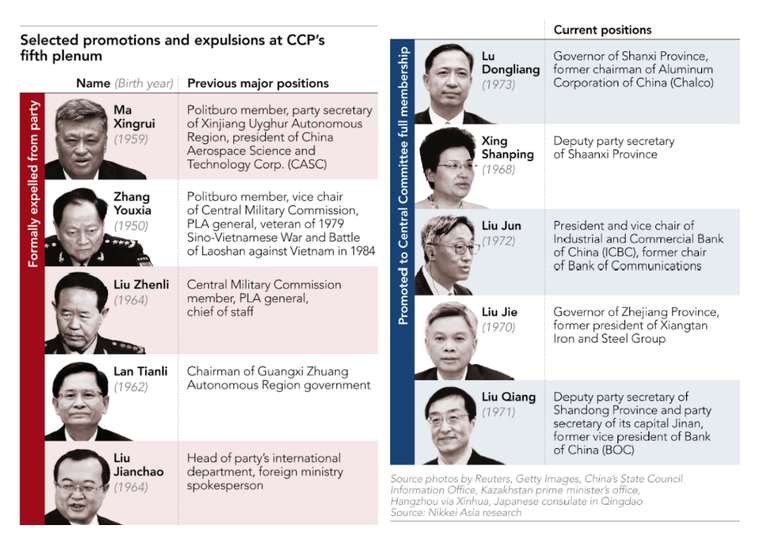
Who fell and who rose at the plenum: Ma Xingrui, Zhang Youxia, Liu Zhenli, Lan Tianli and Liu Jianchao were formally expelled. Two bankers, ICBC's Liu Jun and former Bank of China vice president Liu Qiang, were among those promoted to full membership of the Central Committee. Source: Nikkei Asia.
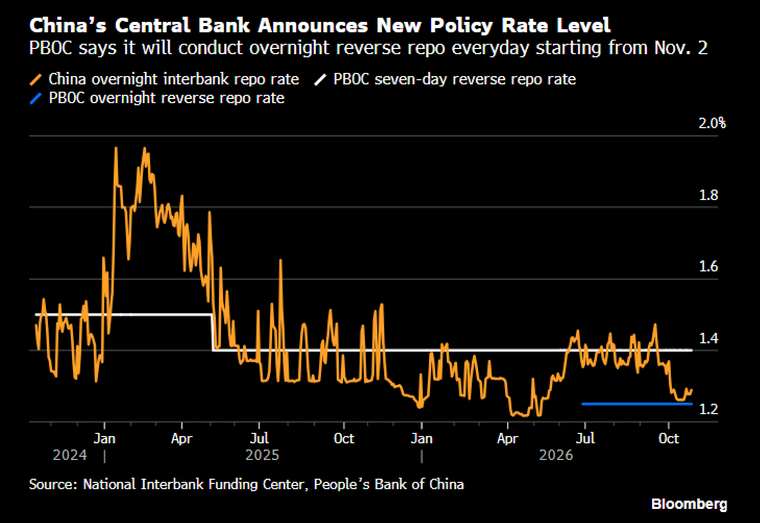
The PBOC has a new policy rate: it disclosed the overnight reverse repo rate as its key benchmark for the first time, at 1.25%, below the old seven-day rate, and will run overnight operations every day from November 2. It is a quiet way to ease without announcing a cut. Source: National Interbank Funding Center, PBOC / Bloomberg.
War: the bill comes home

Iran has been hitting where American troops sleep: satellite images show hundreds of damaged buildings at more than two dozen US installations since Tehran shifted tactics in July, billions of dollars of damage the Pentagon has said little about. Source: The Wall Street Journal.
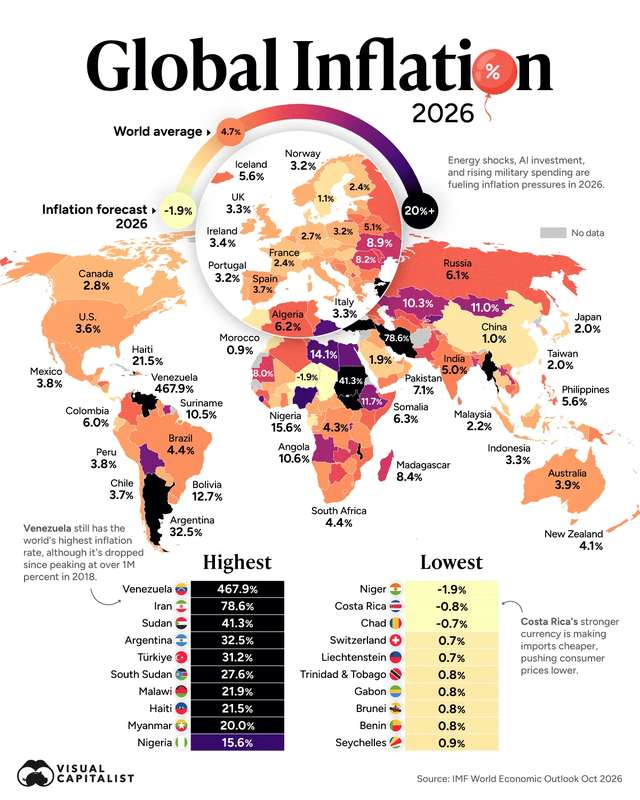
The world's inflation bill: global inflation is projected at 4.7% this year, with the US at 3.6% and China at 1.0%. The highest rates sit where energy, war and weak currencies meet. Source: IMF World Economic Outlook / Visual Capitalist.
Visual Capitalist: How America Has Changed, Part 1
This week's special dispatch looks at the country choosing its Congress on Tuesday: older, less married, more dependent on immigrants, and building data centres rather than factories.
Infographic 1 - America's Senior Boom
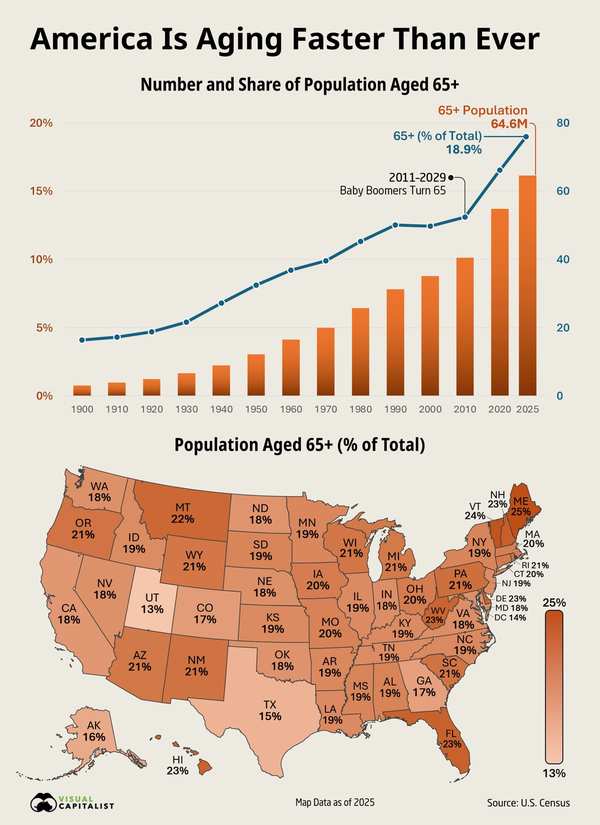
18.9% of Americans are now 65 or older, up nearly 6 points since 2010, more than in the previous five decades combined, as the baby boomers turned 65. Maine is the oldest state at about a quarter; Social Security's retirement fund runs dry in late 2032. Source: US Census / Visual Capitalist.
Infographic 2 - The New American Household
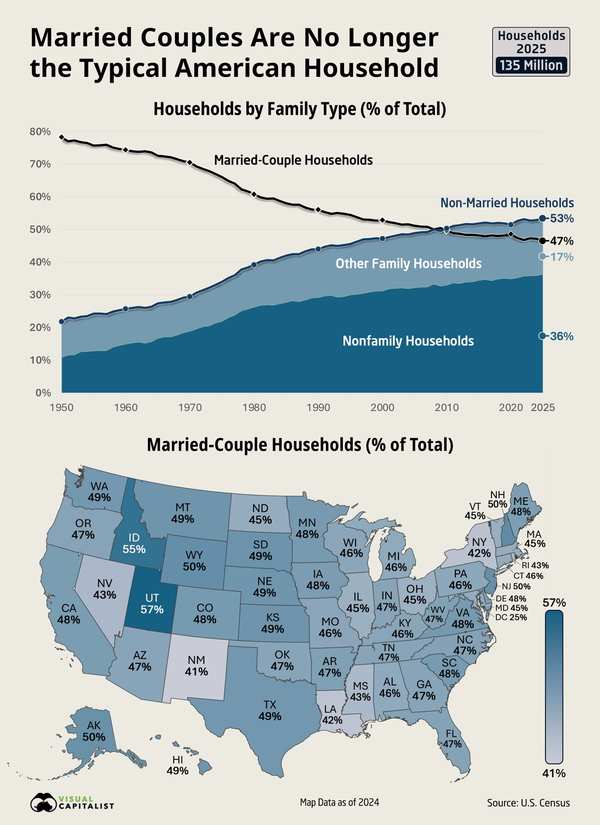
Married couples are now 47% of households, down from 78% in 1950, while people living alone have risen to 29%. The median age at first marriage is 30.8 for men and 28.4 for women. Source: US Census / Visual Capitalist.
Infographic 3 - Immigrants and the Workforce
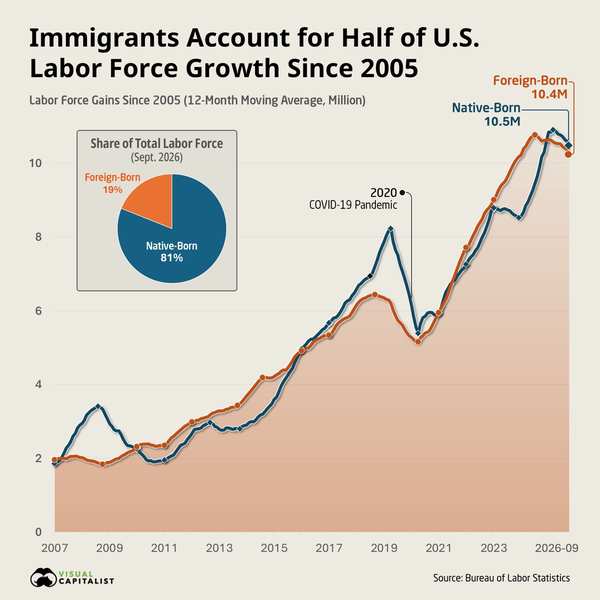
Immigrants supplied half of labour force growth since 2005: 10.4 million foreign-born workers against 10.5 million native-born, from a group that is about 19% of workers. Net migration more than halved to 1.3 million and is expected near 321,000 this year. Source: BLS / Visual Capitalist.
Infographic 4 - Manufacturing's Long Retreat
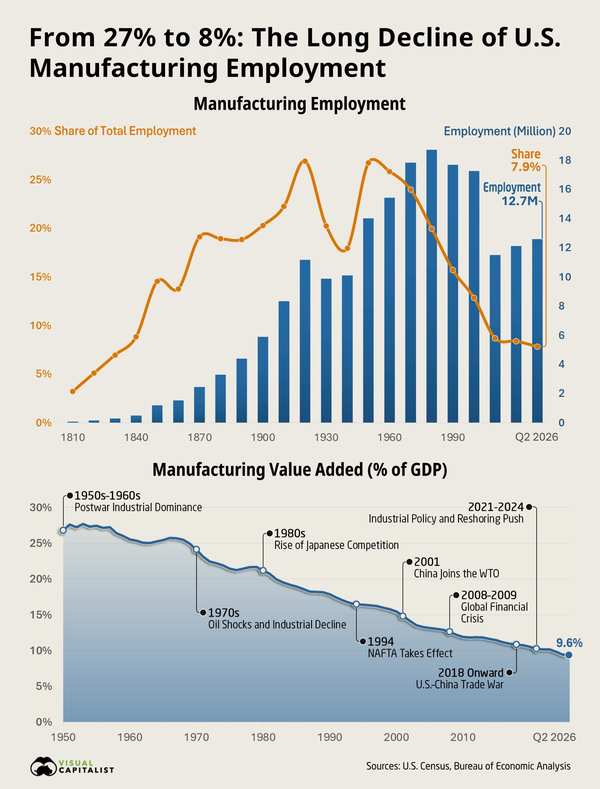
From 27% to 8% of jobs: manufacturing now employs 12.7 million, or 7.9% of workers, and adds 9.6% of GDP, down from about 27% in the early 1950s. Tariffs since 2018 have not reversed the slide. Source: Census, BEA / Visual Capitalist.
Infographic 5 - Chips Soar as Factory Output Stalls
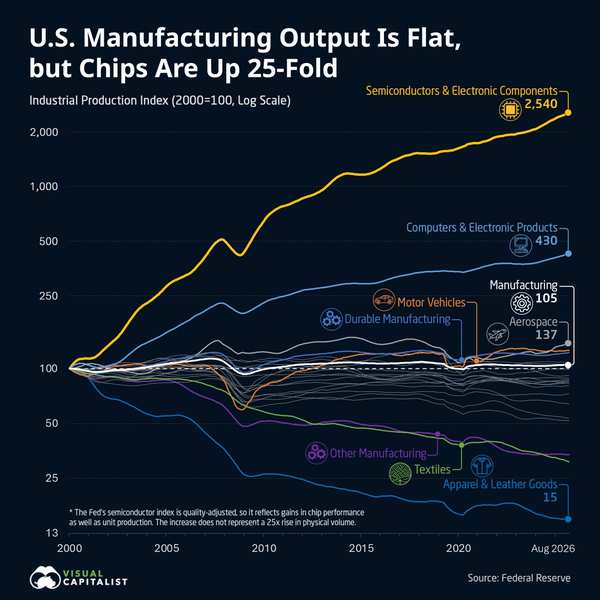
Factory output is flat since 2000, but chips are up 25-fold, largely because better chips count as more output. Textiles have fallen two-thirds and apparel 85%; about 97% of clothes and shoes are now imported. Source: Federal Reserve / Visual Capitalist.
Infographic 6 - Data Centers Overtake the Factory Boom
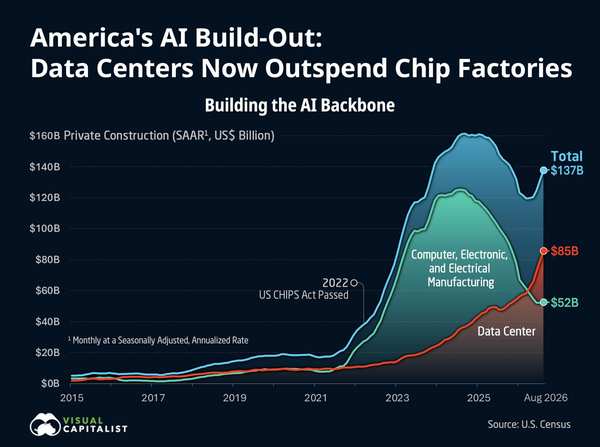
Data centre construction hit a record $85 billion a year, overtaking chip and battery factories in April, whose building fell by more than half from its 2024 peak. The buildings are the small part: the four hyperscalers plan about $700 billion of capex this year. Source: US Census / Visual Capitalist.
Infographic 7 - America's Energy Flip
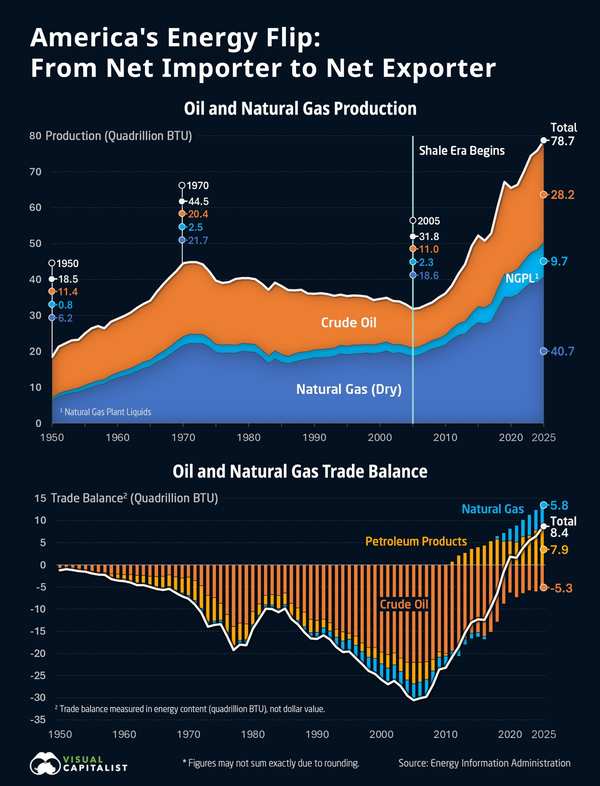
Oil and gas output is at a record, 77% above the 1970 peak and nearly two and a half times its 2005 low, and America has exported more energy than it imports every year since 2019. It is the one big economy the oil shock pays. Source: EIA / Visual Capitalist.
Infographic 8 - The Trade Deficit Moved Across Asia
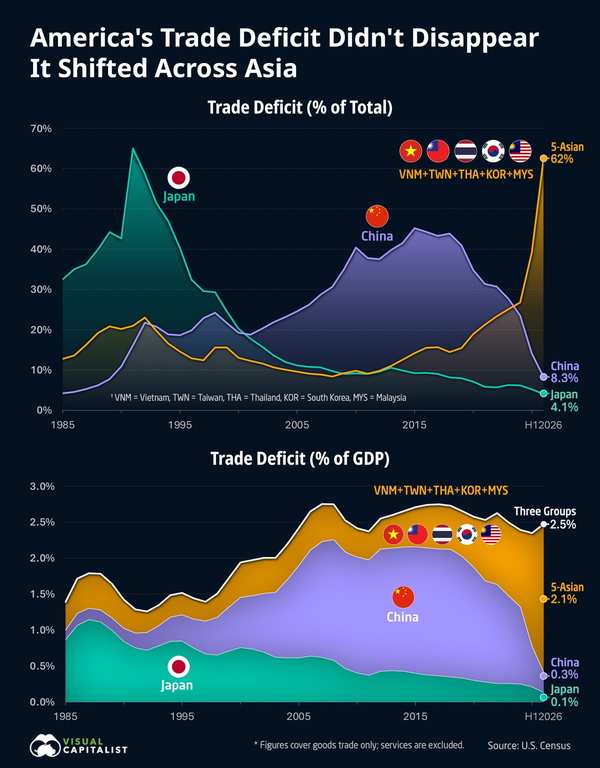
Five Asian economies now account for 62% of the goods deficit, Vietnam, Taiwan, Thailand, South Korea and Malaysia, while China's share fell to 8%. The combined gap is still about 2.5% of GDP: tariffs moved the deficit, they did not shrink it. Source: US Census / Visual Capitalist.
The Good Wrap
What is left at the close: a new series for the Good Wrap, starting with the ingredient that goes into the pan first and gets the least credit.
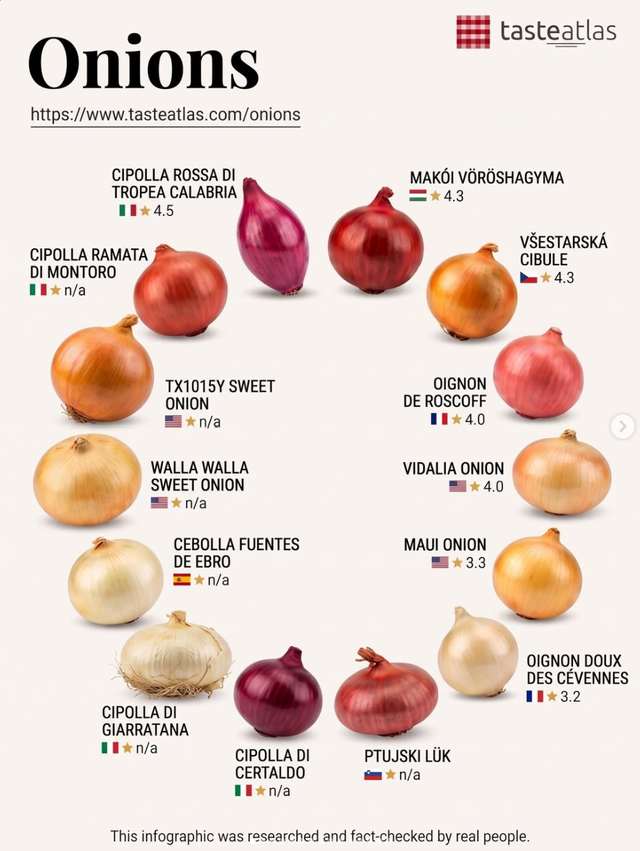
Onions, the first thing into the pan, they build the flavour of countless dishes, yet some are worth eating on their own: Calabria's red Tropea onion is mild enough to slice into a salad, while others give their best only after a long, slow cook. This week's market is a pan of onions on the heat: the sharp ones are being cooked down slowly, and the sweetness only comes with patience. Turn the heat up too fast and they burn. Source: TasteAtlas.
Best,
Hoelon
WITPTW is a personal publication. Everything here is personal opinion and market commentary, written in a personal capacity. It is not investment advice and not a recommendation to buy or sell any security. It is not associated with, endorsed by, or representative of any employer, fund or company. Charts and images are reproduced from their original publishers, credited to their sources for commentary and discussion; all rights remain with the respective copyright holders.