Too Big to Fail
Personal views and market commentary. Not investment advice. Not associated with any employer or firm.
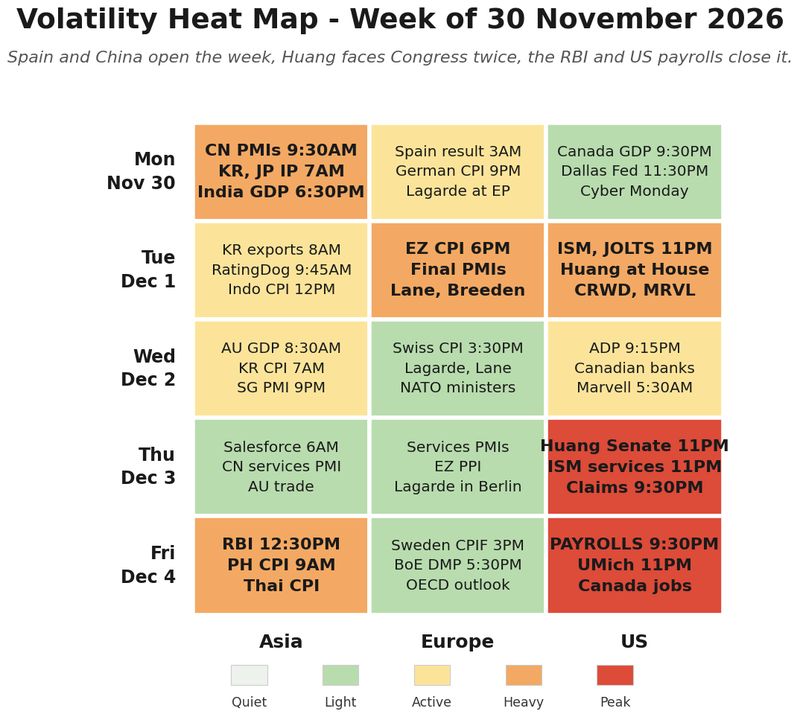
Volatility heat map for the week ahead, in Singapore time. No coupon auctions this week, only bills, and the earnings land in our mornings: Marvell and CrowdStrike on Wednesday, Salesforce and Snowflake on Thursday, with Canada's banks through the week. Thursday night and Friday night are the peaks. The S&P starts near 7,297, the 10-year near 4.94% and Brent near $95.
"When the music stops, in terms of liquidity, things will be complicated. But as long as the music is playing, you've got to get up and dance. We're still dancing." — Chuck Prince, Citigroup's chief executive, to the Financial Times in July 2007. I was working in London that September when the queues formed outside Northern Rock, the first run on a British bank in over a century. Bear Stearns was sold for parts six months later, and Lehman failed six months after that, a year to the day from the queues. Subprime took a year to become a crisis because everyone had a reason not to let it unwind. The chip trade feels like it has just had its Northern Rock moment. Nvidia beat and still fell, data-centre deals are stalling, and Washington helped put the founder back in his chair. There will be many too big to fail reasons to keep it from blowing up, but leverage does not unwind without someone getting hurt. Michael Burry was early last time and sat through two years of losses and an investor revolt before he was paid. This time he sold half his Nvidia puts into the rout, then three quarters, and hedged the rest before the 31% rally on Huang's return. Keep dancing, but dance near the door.
"骐骥一跃,不能十步;驽马十驾,功在不舍。" — Xunzi, Encouragement of Learning (劝学). The thoroughbred's leap cannot cover ten paces. The plodding horse goes the distance because it does not stop. Markets reward the leap and forget the pulling, until the leapers need rescuing. I am off to my first Hyrox race after sending this out!
"Being right about the long run did not protect us in the short term." — Leopold Aschenbrenner, Situational Awareness LP, in his latest letter to investors. Everyone is still waiting for the AI bubble to burst. By his count, it already has. His fund lost 65% in the third quarter and was still up 88.5% for the year. Since September, Kioxia, one of his largest positions, has more than halved and Sandisk is down 60%. Maybe the Anthropic stake he kept saved the day. Lose roughly half again and he is back to flat for the year. What a ride.
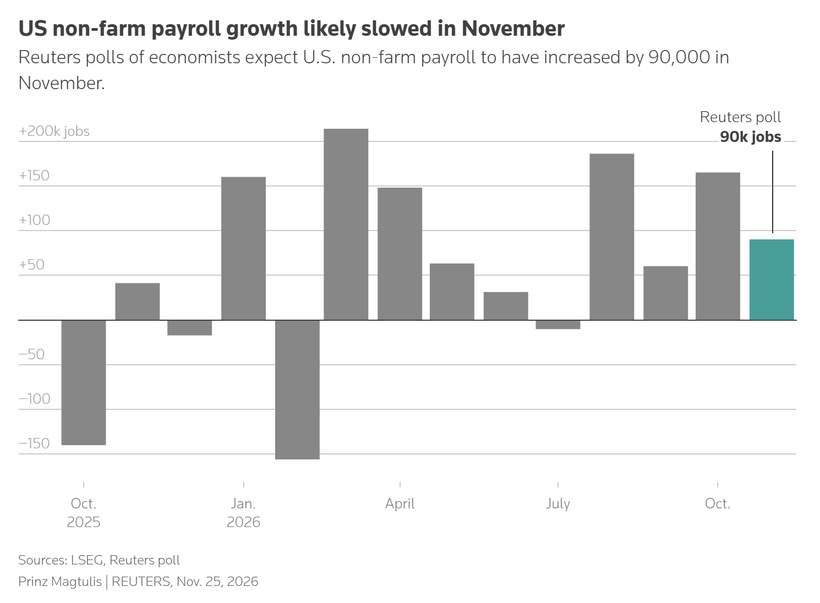
Friday's payrolls are the last word before the Fed: the Reuters poll sees 90,000 after October's 165,000, but this year's monthly prints have swung from a loss of about 160,000 to a gain of about 225,000, so the consensus says little about the range. A hike on 9 December is priced at 94-99% whatever Friday brings. Unemployment at 4.1% and hourly earnings at 0.3% matter as much as the headline. Source: LSEG, Reuters poll.
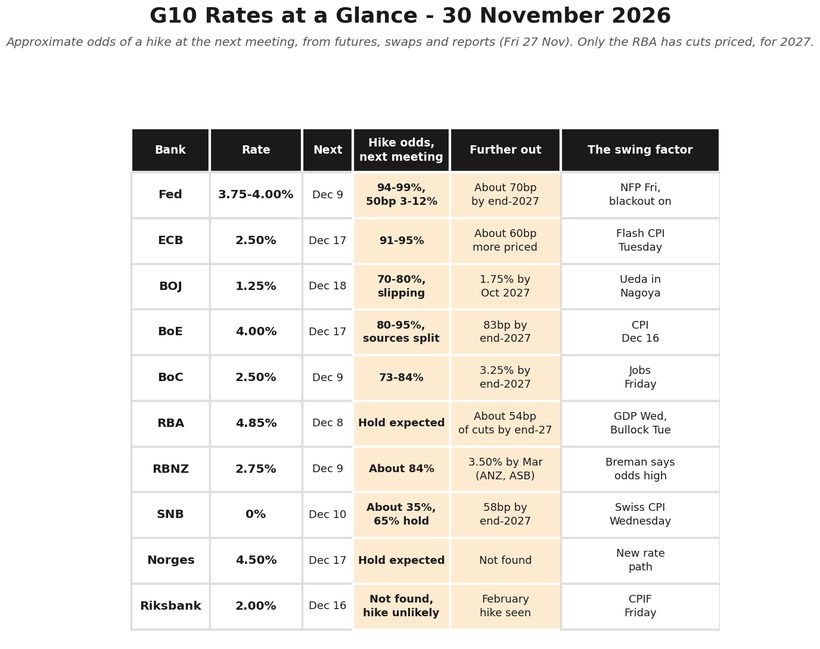
Six of the G10 are priced to hike in December: the Fed, the ECB, the BoE, the Bank of Canada and the RBNZ are all priced at 73% or more, and the BOJ at 70-80% after Tokyo's miss. Since last week Canada's odds jumped from 46% and the SNB's hold odds fell from 84% to 65%. Only the RBA has cuts priced, for 2027. Who clearly needs to hike? The banks with core inflation still rising and jobs still holding, which is the Fed, the ECB and the BoE. If six banks hike into a correction, which one blinks first in 2027? Source: CME FedWatch, swaps and central bank statements as reported, Bloomberg Economics.
What is the plan this week?
Last week probably brought mixed feelings to the market, and coupled with America's Thanksgiving, it was a good time out after all. Upon sobering up, where are we now? I think it largely depends on how long or short you are, and the time frame your views lie in. In terms of positioning, the bulk of the carry trades has unwound; the dollar held up, and Latin America unwound far more than Asia. In equities, the last leg of the unwind was systematic selling while hedge funds bought, and retail, which sold earlier, is buying now. US equity positioning has fallen to levels seen only nine times since 2010, and historically stocks cannot fall a lot more from there unless the market is calling a recession. We start the week with Spain's count overnight and China's PMIs at 9:30am on Monday.
This week the data are important: the PMIs, the ISM and the US jobs report, the last big prints before the Fed decides on 9 December, with officials in their blackout since Saturday. Above 150,000 payrolls with hourly earnings at 0.4%, the debate moves to 50bp and a January hike, and the dollar runs; below 75,000, the 2-year rallies and the dollar loses its haven bid. Prices paid in both ISMs, 75.2 for factories and 73 for services last month, decide whether January stays live. Jensen Huang faces three House committees on Tuesday and testifies to the Senate on Thursday, on export controls rather than his private life. There are a few crucial moving parts in December. Half the G10 is priced to hike, although the pricing has retreated as stocks fell. The stopgap funding runs out on 11 December, and Trump has a lame-duck Congress for only a few more weeks before the Democrats take both chambers on 3 January. Then there is the G20 in Florida on 14-15 December, which might not matter.
In Europe, S&P moved France's outlook to negative after the economy slipped into recession, so all three big agencies now lean toward a cut, with the presidential election in April. The new man at the ECB from February, Hernández de Cos, is seen as dovish, but the euro has been beaten very hard already, to a year low of $1.088. Tuesday's flash inflation should ease to 3.8-3.9% on cheaper fuel. A core reading of 2.5% or lower would make December's hike look like the last one and could take the euro through $1.088; 2.7% or higher would put another hike back into 2027. Spain's count arrives overnight: a right-wing majority promising tax cuts would put Spain under the market scrutiny it has so far avoided.
India has the strongest currency in the world and the Nifty rose from the ashes, up 11-12% in November, especially relative to the KOSPI, as foreigners bought a record of nearly $16 billion of Indian stocks. The RBI decides on Friday and is expected to hike to 5.75% after inflation broke 6%. China's government gave some verbal support late in the week, promising to strengthen the national team that holds up its stock market, but November was a depressed month for Asia. I am very worried about China's response to a hawkish Democratic Congress, with the truce expiring on 10 January. Korea is where the opportunity is. The KOSPI is well beaten, and whether it bottoms here or keeps dying with the AI valuation, I think USDKRW goes lower into year-end, as exporters sell the dollars they have been holding all year. At home, Singapore's PMI lands on Wednesday night after third-quarter growth was revised up to 6.1%, while Singapore and Malaysia sit on Washington's new Section 301 list.
The plan this week is to decide whether markets stabilise here after a very rushed capitulation in equities and commodities over the last two weeks. The too-big-to-fail mentality has been installed since Jensen's return, and there could be a few more episodes before the circular financing breaks, so the core view stays bearish on AI valuations. Long the yen against the crosses as the hedge, with the FX market's positioning for a bearish turn heavily exposed on the wrong side. Start building short USDKRW into year-end. The dollar selling in December can be very strong.
What did I learn last week?
Mon Nov 23: Nvidia's board reinstated Jensen Huang after "input from senior levels" of the US government; the S&P rose 4.7% and the SOX 14%. Euro-area PMI held at 51.7 with Germany at a 56-month high and France at 46.2; the US composite fell to 54.6. Singapore's CPI was 1.9%, core 1.5%.
Tue Nov 24: Singapore's GDP was revised up to 6.1% and its 2026 forecast to about 6%. US confidence jumped to 103.3 against 92.1. HPE's margin warning took Dell down 11.8% before its results, and Anthropic closed below its $83 offer.
Wed Nov 25: Australia's CPI hit 4.9%, trimmed mean 3.8%. Core PCE was 3.3% against 3.2%, third-quarter GDP was revised to 4.3% and claims fell to 189,000. Dell beat and lifted its AI-server guide to $78 billion. The Nasdaq 100 traded more than 20% below its high before closing down 0.6%, the 10-year closed at 4.85% after a 1bp tail at the 7-year auction, and S&P put Nvidia on watch for a cut. Washington proposed Section 301 tariffs on 14 economies, Singapore and Malaysia among them.
Thu Nov 26: The Bank of Korea hiked to 3.25% on a 5-2 vote, with most dots at 3.5%. Singapore's output jumped 6.1% against 2.2%. Euro-area leaders backed Hernández de Cos to succeed Lagarde and the ECB's account showed a large number could have backed an October hike. The BoE called AI financing "circular and opaque," China's cabinet promised to strengthen the "national team," and the rupiah hit another record low.
Fri Nov 27: Tokyo's core CPI rose to 2.9%, a tenth short of forecast, and the yen weakened. China's industrial profits rose 20.1%. France's GDP fell 0.2%, a technical recession, and its HICP slowed to 3.2% against 3.6%, Spain's to 4.1% against 4.7%. S&P moved France's outlook to negative and upgraded South Africa. Anthropic jumped 11% to $91.88, back above its offer.
Weekend: Taiwan's local elections ended KMT 11, DPP 10 with one independent, the DPP flipping Taichung in its best local result in a decade. Spain's count and the OPEC+ outcome land overnight.
All week: The S&P rose 5.6% to 7,297, its best week since April 2025, the Nasdaq 6.7% and the Dow 5.5%; the VIX fell to 23.8 from 35.9. The 10-year ended up 2bp at 4.94%. The DXY closed at 104.04, USDJPY 159.5 and EURUSD 1.094. Gold rose 3.3% to $3,653, Brent 3% to $95.44; bitcoin stayed below $60,000.
What to look out for next week?
Mon Nov 30: Spain's count from 3am, with PP and Vox seen near 190 of 350 seats, and the OPEC+ outcome. Korea's and Japan's industrial output at 7am and 7:50am, then China's official PMIs at 9:30am, manufacturing seen at 49.4. India's GDP at 6:30pm, seen at 7.6-7.7%, Germany's CPI at 9pm and Canada's GDP at 9:30pm, seen at 1.4%. Ueda is due in Nagoya and Lagarde at the European Parliament; Nvidia's GTC in Washington runs to Thursday.
Tue Dec 1: Korea's exports at 8am, seen up 95-99%, RatingDog at 9:45am, seen at 51.7, and Indonesia's CPI at noon. Euro-area flash CPI at 6pm, seen at 3.8-3.9% with core at 2.6%. ISM manufacturing at 11pm, seen at 55.0, with prices paid after 75.2, and JOLTS at 7.42-7.45 million. Huang sits with three House committees behind closed doors and Senate Democrats choose their leader. Bullock, Lane and Breeden speak; Marvell, CrowdStrike and Okta report after the US close.
Wed Dec 2: Korea's CPI at 7am, core seen at 3.0%, and Australia's GDP at 8:30am, seen at 0.5% on the quarter. Swiss CPI at 3:30pm. Singapore's SIPMM PMI at 9pm and ADP at 9:15pm, seen at 80,000. Nvidia's general counsel faces the House committees, Scotiabank and BMO report, and Salesforce and Snowflake follow after the US close. Lagarde, Lane and Vujcic speak, and NATO foreign ministers meet in Brussels.
Thu Dec 3: RatingDog services at 9:45am and Australia's trade. Euro-area services PMIs and producer prices. Challenger at 8:30pm, claims at 9:30pm and ISM services at 11pm, seen at 54.5-54.7, with prices paid after 73. At 11pm Huang testifies publicly to the Senate Banking Committee on export controls, with Lutnick also summoned. RBC, TD and CIBC report, and Tesla holds its annual meeting.
Fri Dec 4: Philippine CPI at 9am, seen at 7.4%, Thai CPI, and the RBI at 12:30pm, with 56 of 61 economists expecting a hike to 5.75%. Sweden's CPIF at 3pm, the BoE's Decision Maker Panel at 5:30pm and the OECD's outlook. The US 15% polysilicon tariff takes effect. Payrolls at 9:30pm, seen at 90,000, unemployment 4.1% and hourly earnings 0.3%, with Canada's jobs at the same time and Michigan sentiment at 11pm. Trump speaks at the Reagan defence forum on our Saturday morning.
Beyond next week
Dec 6-7: Israel's deadline to form a government on the 6th; 23-hour trading in US stocks starts at 10am our time on Monday the 7th, pending final sign-off.
Dec 8-11: The RBA on the 8th; the RBNZ and the Bank of Canada on the 9th; the Fed at 3am on the 10th, with Broadcom three hours later and the SNB and US CPI that day; government funding runs out on the 11th.
Dec 14-18: The G20 in Miami on the 14th and 15th; Bank Indonesia and the Riksbank on the 16th; the ECB, BoE, Norges Bank and BSP on the 17th; the BOJ and triple witching on the 18th.
Jan 3-13: The new Congress sits on the 3rd with Democrats in both chambers; the US-China truce expires on the 10th; USMCA review comments are due on the 12th.
Feb 2027: The debt ceiling is expected to bind, with X-date estimates clustering in November and December 2027.
Regimes
The AI fracture, week twenty-two: too big to fail. Nvidia's board reinstated Jensen Huang after the White House said he was no security risk, Trump offered a pardon if needed, and the stock jumped 31% in a day before giving back half. The Nasdaq rose 6.7%, its best week since April. Washington has shown it will not let the trade fail, but S&P has put Nvidia on watch for a cut, Blackwell chips turned up in Shanghai, and Huang faces Congress twice this week. changed, week 22
The capital shortage, week sixteen: the IPO window holds, at a price. Anthropic broke its $83 offer price midweek and closed Friday at $91.88, while Aschenbrenner's fund reported a 65% third-quarter loss and still finished September up for the year. CrowdStrike is paying for Zscaler with $44 billion of its own stock, and private-equity borrowers are turning to the small Nordic bond market. Capital is still there; it now chooses its borrowers. changed, week 16
The dollar breaks out, week three: the haven holds into December. The DXY closed just above 104, with new highs for the year against most G10 and emerging currencies even as the 10-year fell toward 4.8% midweek. Latin America took the worst of the carry unwind; the rupee rose more than 2% and the yuan and the won were flat. December has a habit of reversing November: year-end conversion, hedge lifting and thin books can make the dollar selling very strong. changed, week 3
The hiking chorus, week five: half the G10 hikes into a correction. The Fed, the ECB, the BoE, the Bank of Canada, the RBNZ and the BOJ are all priced to hike in December, even as market rates fell. The Bank of Korea hiked to 3.25% on Thursday and the RBI is expected to follow on Friday. The RBA is the turn: after unemployment hit 4.9%, the market prices its next move as a cut. A chorus that sings louder as stocks fall is the policy mistake the market fears. changed, week 5
The funding-currency battle, week eleven: the yen holds the line at 160. The yen rivalled the franc as the best G10 currency in November, losing only about 1.2%, as Tokyo's warnings kept USDJPY below 160 and it closed near 159.5. A December BOJ hike is priced at about 70-80%, and board member Tamura says 50bp is possible if inflation risks materialise. The yen is the cheapest hedge left for a second leg of the selloff. changed, week 11
Europe's weak links, week four: France's slow downgrade. France fell into a technical recession and S&P moved its A+ outlook to negative, so all three big agencies now lean to a cut. Pablo Hernández de Cos, seen as more dovish, will succeed Lagarde, and the euro hit a new low for the year at $1.088 before closing near $1.094. Spain's vote on Sunday decides whether a second fiscal story joins France's. changed, week 4
The war is the inflation, week nineteen: the relief. Brent ended near $95 and WTI near $83, with oil on course for its worst month since the pandemic, and US gasoline is back near $3.50 a gallon. Fuel is flowing again through Hormuz and from record US refinery runs, and French inflation came in well under forecast. The risk has moved to the calendar: the war is not over, refiners skipped maintenance, and Washington chatter points to December for any renewed strikes on Iran. changed, week 19
Surplus versus deficit, week fourteen: the tariff wall goes up again. Washington proposed Section 301 tariffs on 14 economies it accuses of "structural excess capacity," Singapore, Malaysia, Korea and Taiwan among them: 20% on China, 40% if the truce fails, and not in force for a couple of months; a 15% duty on polysilicon starts on Friday. China's 12-month average trade surplus is a record and the PBOC holds the yuan near 6.66. The truce expires on 10 January, and a hawkish Democratic Congress makes China the risk for 2027. changed, week 14
The lame duck, week four: the President and the pardon. Trump pressed Nvidia to reinstate Huang, offered to pardon him and called the revised GDP numbers "fake." The stopgap funding runs out on 11 December with the Iran war and defence spending unresolved, and Senate Democrats vote on their new leadership on Tuesday. From 3 January the China hawks control both chambers. changed, week 4
Shifts (if then)
Last week core PCE printed 0.3%, so neither branch fired; Dell raised its outlook but broke $325 before its results, while the SOX held; the Bank of Korea hiked with its dots at 3.5%, not 3.75%; Tokyo's core CPI hit 2.9% but missed forecast and the yen weakened, so the call failed; S&P chose a negative outlook, a middle path the script missed; and the Nasdaq 100 held its 20% line on a close, so the rebound branch played out. This week the scripts are payrolls, the ISM's prices, Huang's testimony, euro core inflation, the RBI, USDKRW and Spain.
Payrolls above 150,000 with hourly earnings at 0.4% → a December hike becomes a debate about 50bp and January, the 2-year rises, the dollar runs to 105 and the Nasdaq loses 24,400 support; below 75,000, the 2-year rallies hard, the dollar loses its haven bid and the Nasdaq breaks out toward 27,300. new
ISM services prices paid at 73 or higher → January stays live whatever the payrolls say and bond shorts rebuild; a reading under 70 with employment below 50 says the Fed hikes into a slowdown, and the curve steepens. new
Huang's Senate testimony brings new export curbs → Nvidia gives back the rest of the reinstatement rally and the SOX retests its lows, with Korea and Taiwan first in line; a clean hearing lets the too-big-to-fail bid run into year-end. new
Euro-area core inflation at 2.5% or lower → December is priced as the ECB's last hike and the euro breaks $1.088 toward $1.0735; 2.7% or higher puts a second hike back in 2027 and the euro squeezes toward $1.106. new
The RBI hikes to 5.75% and signals more → the rupee extends its run as Asia's haven and Indian stocks keep outperforming the KOSPI; a hold costs the rupee its premium overnight. new
USDKRW breaks 1,330 → exporters sell into year-end and it heads toward 1,300; a close above 1,350 says the dollar's broad rally still overrides the seasonality. new
Spain's right wins a majority → Spanish bonds take on some of France's premium on promised tax cuts while the euro barely notices; a hung parliament adds a second political discount to the euro. new
Tails
Huang goes twice → S&P has put Nvidia's AA on watch for a cut over management and governance risk, while the SEC and California keep digging. The market paid about 30% for his comeback in a day. A second exit, or a finding against the board that reinstated him at Washington's urging, would hit the one stock the index cannot do without. new, week 1
China answers the new Congress early → with Democrats promising to be tougher on China and the truce expiring on 10 January, Beijing could move first: rare-earth licences slowed, a US chipmaker probed, the yuan's cap lifted. A pre-emptive strike on supply chains before 3 January would hit the AI build where it is already weakest. new, week 1
Strikes on Iran resume → Washington chatter points to a short air campaign as early as the second week of December, and oil is on course for its worst month since the pandemic. A strike would hit a market that has priced the war out. changed, week 2
Nvidia's probe reaches Singapore → Blackwell chips were found installed in Shanghai and Singapore-based Megaspeed is at the centre of the network, while data-centre deals in the region have stalled under the new chip curbs. A finding against Singapore intermediaries would hit the data-centre pipeline and the Singapore dollar's AI premium at once. changed, week 3
A cyber outage hits the payment rails → Britain's welfare department was hit by a cyberattack and hackers breached a US Air Force cloud platform last week, while rushed patches for AI-found flaws are causing outages of their own. One day of frozen settlement would leave solvent banks short of cash. changed, week 5
A neo-cloud defaults → CoreWeave's bonds still trade at distressed levels and the cost of borrowing against chips keeps rising. A missed payment by an AI borrower would reprice every data-centre bond at once. held, week 7
Russia tests NATO in space → allies reportedly warn Russia may launch a nuclear weapon into orbit as soon as December, and Poland has asked NATO to shoot down Russian missiles over Ukraine. Either would put European defence, the zloty and satellite-dependent markets in the war-risk bucket overnight. changed, week 4
The BOJ goes 50 → a December hike is about 70-80% priced, but Tamura says a 50bp move is possible if inflation risks materialise. A double step with USDJPY near 160 would force the carry trade to unwind at the worst moment. changed, week 4
Deposit flight from France → all three big agencies now have France on negative outlook and the economy is in recession. A visible run on French banks would turn a spread problem into a euro problem. changed, week 6
Strategy sells bitcoin → the stock now trades for less than the coins it holds. If the biggest buyer of the cycle starts selling coins to buy back shares, bitcoin, already below $60,000, loses its most reliable bid. new, week 1
A hit on Abqaiq → the Houthis have aimed at Saudi pipelines. A hit on the main processing plant would take millions of barrels a day offline in an afternoon, with oil down about a fifth in November and nobody hedged for it. held, week 8
AI: too big to fail
Last week the board of the world's most valuable chipmaker put its founder back in charge after the White House said he was no security risk, and the President offered to pardon him if needed. The market got the message: Washington will not let the AI trade fail on its watch. That is a support, not a solution, and the questions about who pays for the build, and who it was built for, are still open.
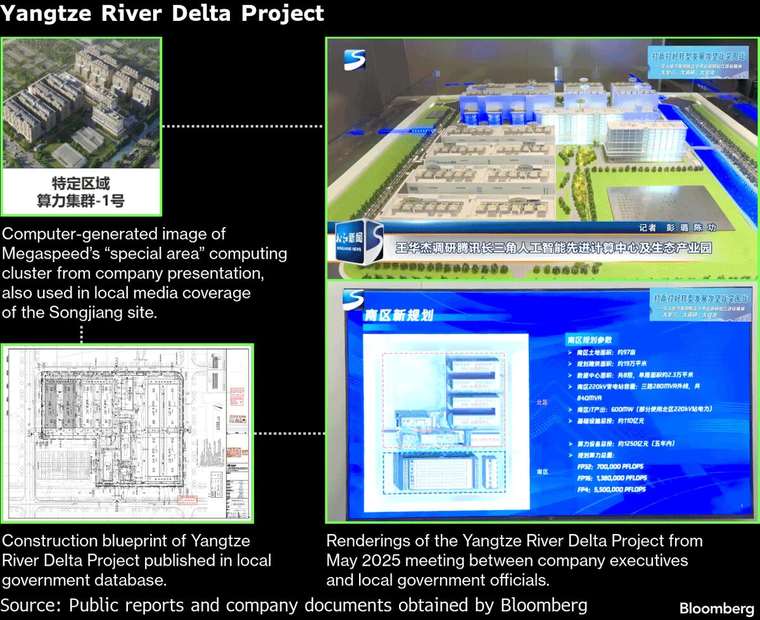
Blackwell chips turned up in Shanghai: a pair of Chinese firms installed Nvidia's Blackwell processors, including a GB300 NVL72 rack, in a data centre linked to Alice Huang and Megaspeed, according to filings with Chinese regulators, and pledged the hardware as collateral for a 96 million yuan loan from a Shanghai bank. Blackwell has never been legal to ship to China without a US licence. The shares shrugged it off on Friday, but Huang now faces three House committees on Tuesday and the Senate on Thursday. How do you reinstate a founder and tighten the export rules in the same month? Source: Public reports and company documents, Bloomberg.
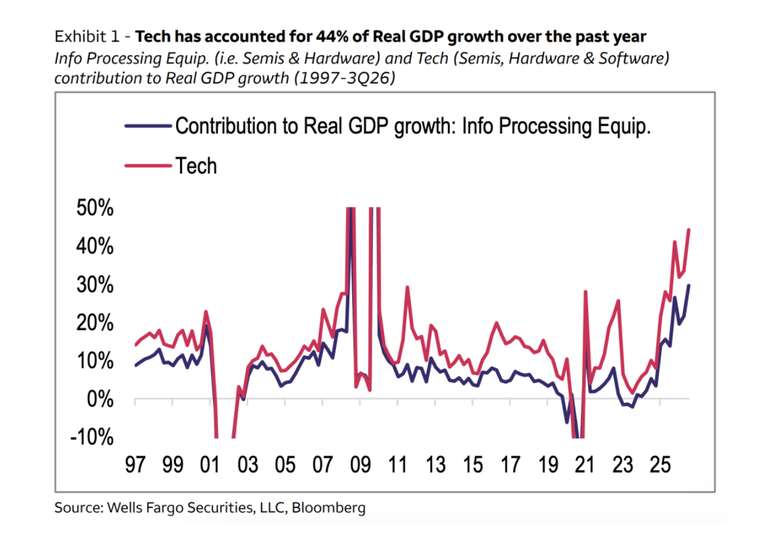
Tech has driven 44% of America's growth over the past year: information-processing equipment, chips and software made up that share of real GDP growth, more than in any year of the dot-com boom on this measure. That is what makes the economy look strong and why it is fragile: as capex slows, so does the growth it bought. With inflation at 3.7% driven by oil and chips, neither of which a rate hike can fix, the fear on Wall Street is a Fed that hikes into a slowdown. "The economy is super strong right now, but the Fed is about to kill it," as one adviser told Fortune. Source: Wells Fargo Securities, Bloomberg.
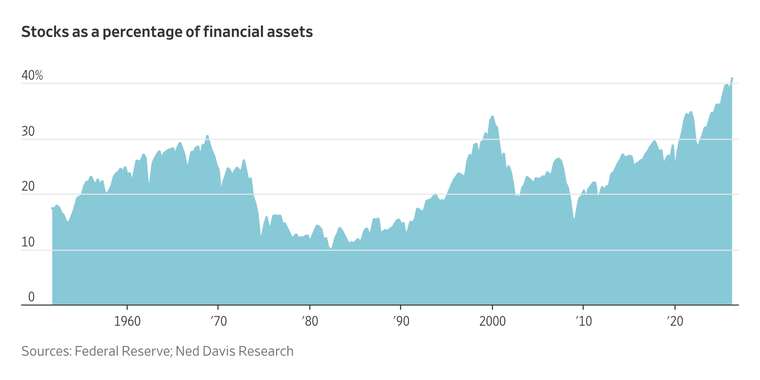
Stocks are now more than 40% of American households' financial assets: the highest share on record, going back to the 1950s, above the 2000 peak. More than $450 billion has poured into US stock funds this year, and households kept buying through November's fall while the Nasdaq still managed its best week since April, up 6.7%. That faith holds the market up, and it is also why a long selloff would reach consumer spending faster than in any previous cycle. Source: Federal Reserve, Ned Davis Research, The Wall Street Journal.
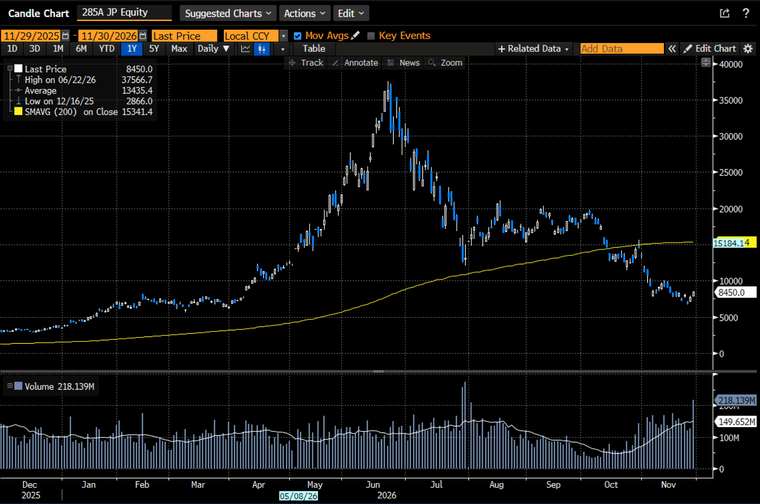
Kioxia, and a wild ride with Leopold: the NAND maker rose about 13 times from its low in December 2025 to its June peak, then fell to ¥8,450, almost 80% off the top. In his latest letter Aschenbrenner calls it "one of our largest positions," trading below one times his 2027 earnings estimate, with enough cash to buy back three quarters of the company by the end of next year. Either the stock goes up, he says, or he will be one of the last outside shareholders left. Source: Bloomberg.
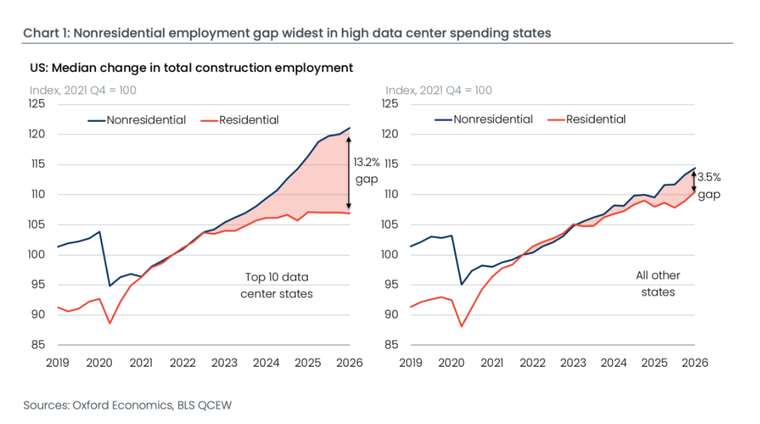
Data centres are poaching builders from homes: since late 2021, nonresidential construction jobs have outgrown residential by 13.2% in the ten states spending most on data centres, against 3.5% elsewhere. Had those states followed the rest of the country, up to 45,000 more people would be building houses. Part of America's housing shortage is the AI build-out, which is one reason data centres became a campaign issue. Source: Oxford Economics, BLS QCEW.
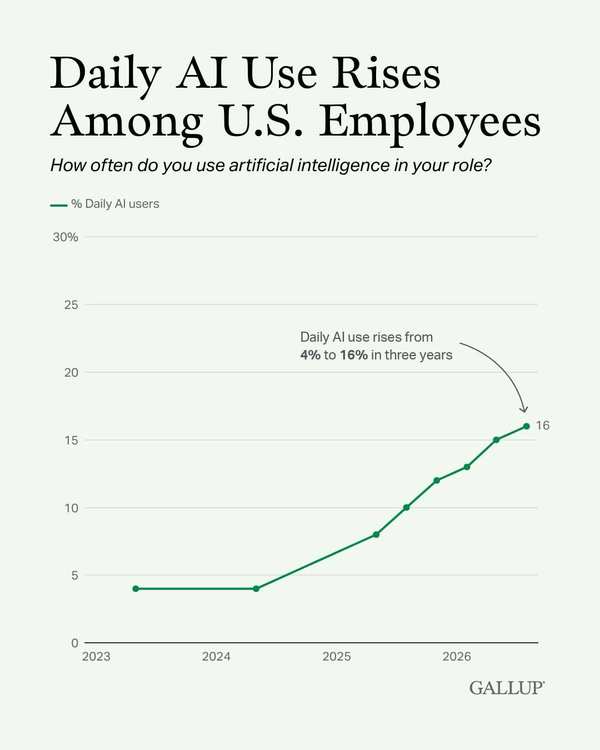
Daily AI use at work has quadrupled in three years: 16% of US employees now use AI every day in their roles, up from 4% in 2023, and the line has steepened through 2026. Gallup's research shows the adoption is real even as the market questions the returns. The bill for the capex and the benefit to users are two different stories. Source: Gallup.
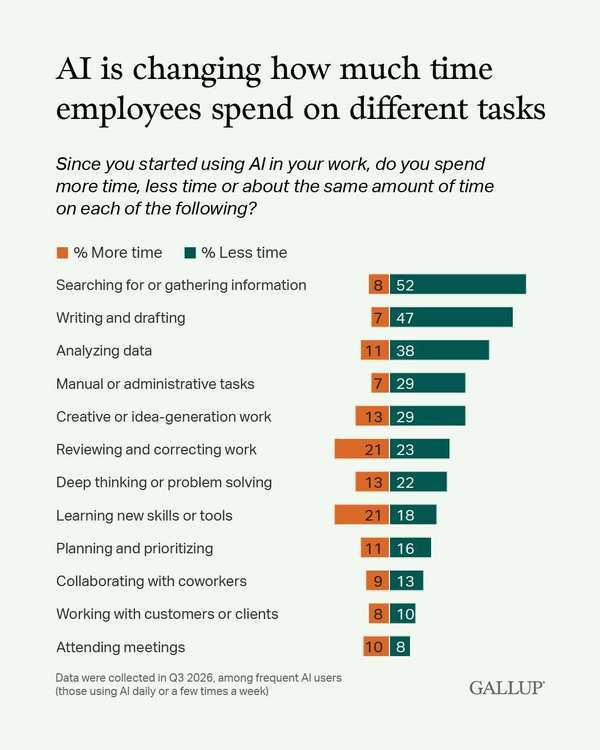
What AI saves, and what it costs: among frequent users, 52% spend less time searching for information and 47% less time writing. But 21% spend more time reviewing and correcting work, and as many spend more time learning new tools. The productivity gain is real but net, not gross; somebody still checks the machine's homework. Source: Gallup.
Korea: the KOSPI roller coaster, and the won
Few major indices have soared and crashed within a single year the way the KOSPI has in 2026. Samsung and SK hynix delivered nearly 80% of its first-half gains; Samsung has since lost about half its value from its June high and SK hynix about 62%. Retail investors chased it with leveraged ETFs and margin debt, foreigners sold month after month, and when the AI story wobbled there was nobody left on the other side. A record $154 billion of foreign money has left.
The won tells a different story. Exporters have piled up dollar deposits all year, and the foreign selling that pushed USDKRW higher into July has faded. December is usually kind to the won, with the trade surplus near record levels and most of its year-end gains coming in the week before Christmas. USDKRW closed near 1,338 in Seoul on Friday, and the path into year-end looks lower.
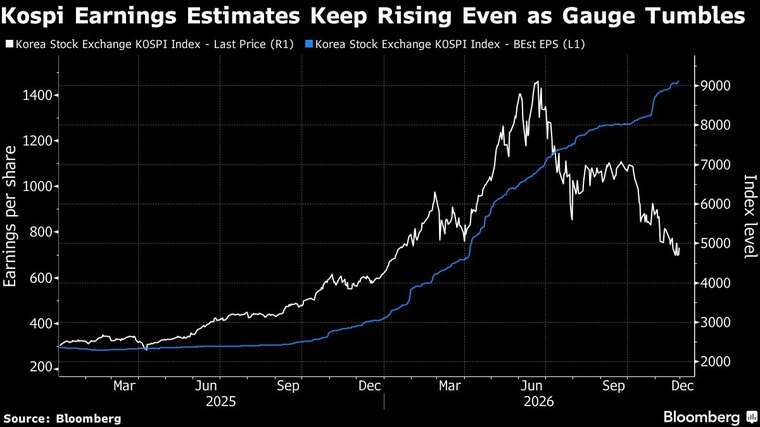
Earnings forecasts keep rising while the index falls: one-year forward earnings for KOSPI members have jumped nearly 32% since the end of June, while the index has fallen by almost half from its June peak. Either the analysts are late and prices already reflect a downturn the forecasts have not caught, or the market has thrown out a profit boom with the leverage. Memory makers at one or two times next year's earnings say the market has picked the first answer. Source: Bloomberg.
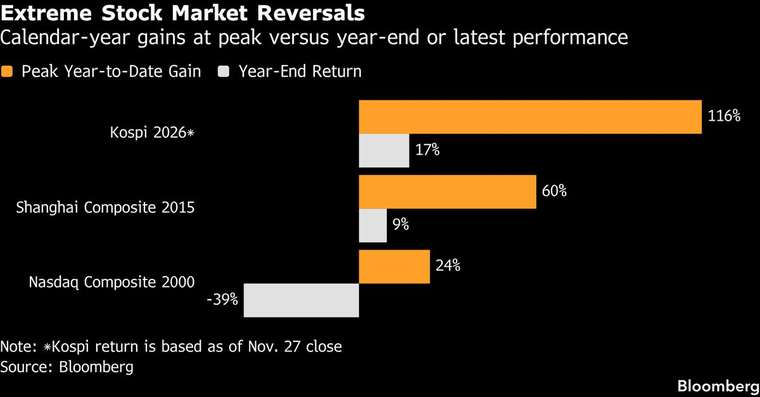
A reversal with few parallels: the KOSPI was up as much as 116% this year at its June peak and is now up 17%. Shanghai in 2015 rose 60% and finished up 9%; the Nasdaq in 2000 went from up 24% to down 39%. Korea is still in positive territory, which is either the cushion that ends the fall or the gain still left to give back. Is this a bottom, or a market that keeps dying with the AI valuation? Source: Bloomberg.
Fuel: relief for now, the bill in 2027
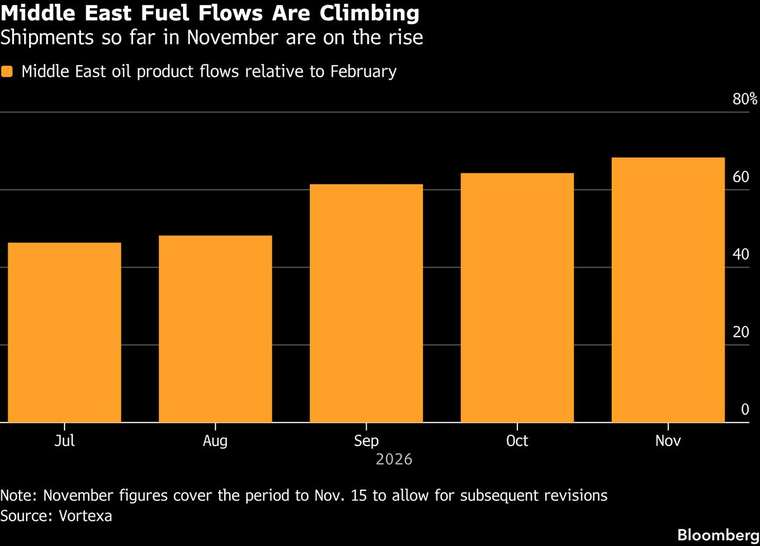
Middle East fuel exports are climbing back: about 5.3 million barrels a day of fuel left the region in the first half of November, through Hormuz and ports outside it, only about 30% below pre-war levels against a fall of about half over the summer. US Gulf Coast refiners ran a record 9.8 million barrels a day, as much as the whole Middle East would normally process, and Europe is releasing at least 15 million barrels of diesel from emergency stocks by February. Attacks around Hormuz have grown more intense this month, but the barrels keep flowing. Source: Vortexa, Bloomberg.
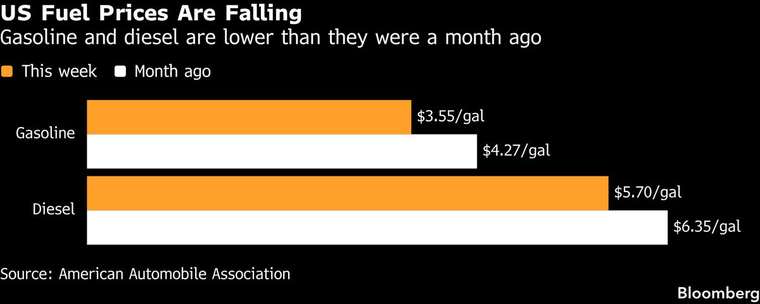
American drivers got their Thanksgiving break: gasoline is near $3.55 a gallon from $4.27 a month ago and diesel $5.70 from $6.35; European pump prices are down 15% after nine weekly falls. Crack spreads, the margin refiners earn over crude and the gauge central bankers watched all year, have reversed, and France's inflation came in 0.4 points under forecast. But refiners deferred maintenance to cash in, and one adviser warns the seeds of the next rally "have been planted here in the last few weeks." Cheaper fuel this winter may be borrowed from next summer. Source: American Automobile Association, Bloomberg.
Monday: Spain's count, China's PMIs and India's growth
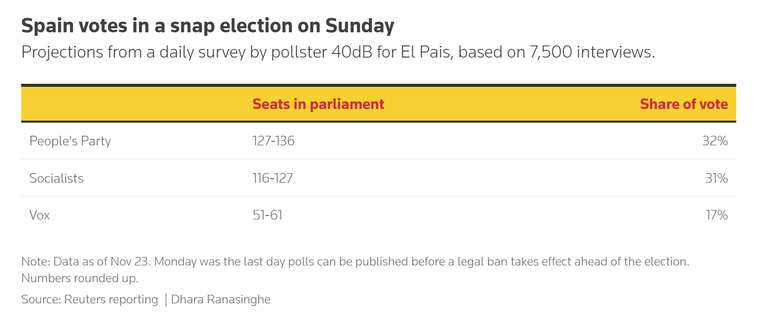
Spain votes on Sunday and the count runs into our Monday morning: the last polls had the conservative People's Party at 127-136 seats and the far-right Vox at 51-61, together above the 176 needed for a majority, with the Socialists at 116-127. Polls close at 3am our time. A PP-Vox government promising tax cuts and tighter migration would test Spain's fiscal record; an inconclusive result would add to the euro's French problem. Source: 40dB for El Pais, Reuters.
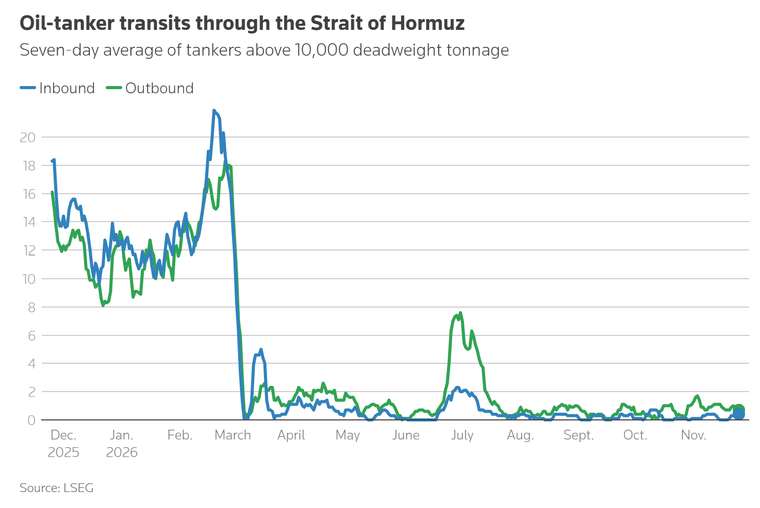
OPEC+ met on Sunday with Hormuz still half open: tanker traffic through the strait has stayed far below last year's levels since March, with only brief recoveries. The group was expected to keep its output targets unchanged for at least the first quarter of 2027, after its first ever review of how much each member can sustainably pump. Its quotas matter less than the strait it does not control. Source: LSEG, Reuters.
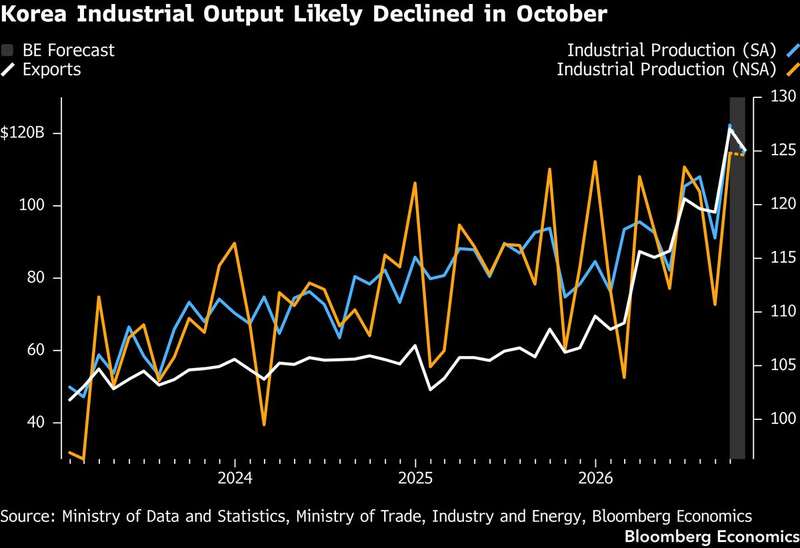
Korea's factories took a breath in October: output is seen down 2.2% on the month after September's 9% jump, as chip volumes eased even though chip export values were up 259% on the year. On the year it is still up 12-17%. The boom is in prices more than volumes, which is good for profits and bad for anyone hoping to see it in employment. Source: Korea Ministry of Data and Statistics, Bloomberg Economics.
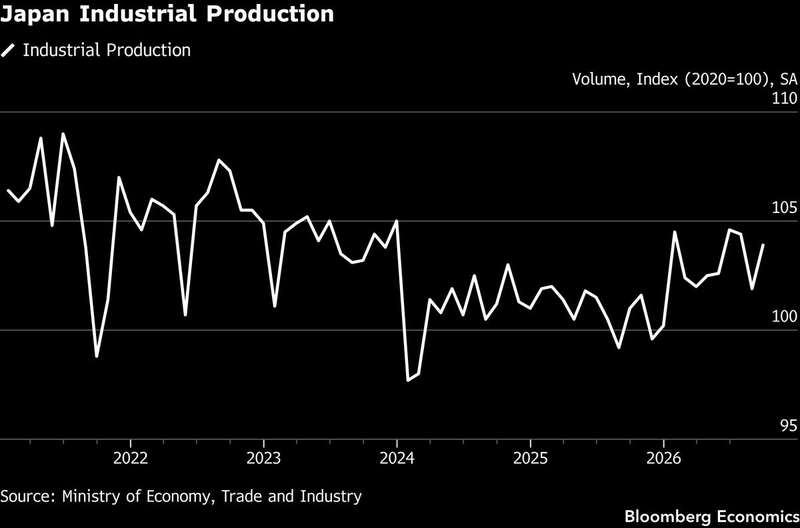
Japan's factories are running on AI and oil: production is seen up 2.0-3.5% in October, led by chips and chip-making equipment, with refiners helped by better crude supplies. That points to a fourth-quarter rebound after the third quarter's shallow dip, one more reason the BOJ can hike on 18 December. Source: Ministry of Economy, Trade and Industry, Bloomberg Economics.
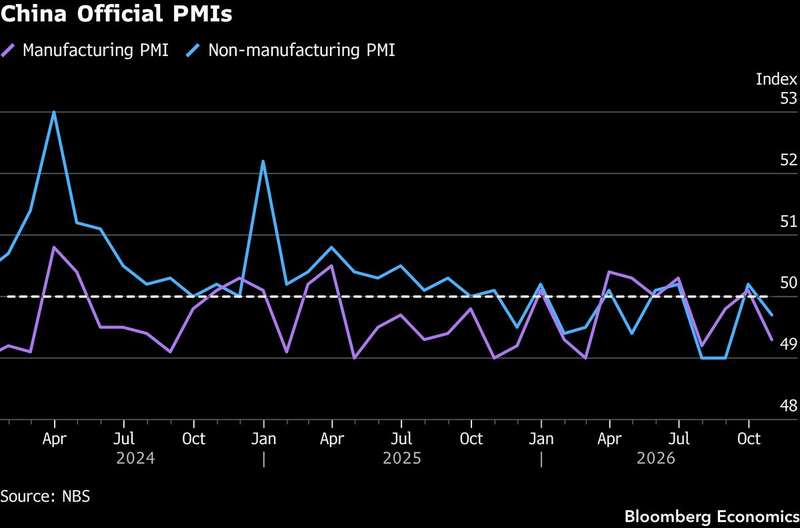
China's PMIs at 9:30am: manufacturing is seen at 49.4-49.5 and non-manufacturing at 49.4-49.6, both still contracting, with exports holding up factories while consumption drags services lower. The State Council promised on Thursday to strengthen the "national team" that props up stocks. Verbal support holds the index; only demand at home lifts the PMIs. Source: NBS, Bloomberg Economics.
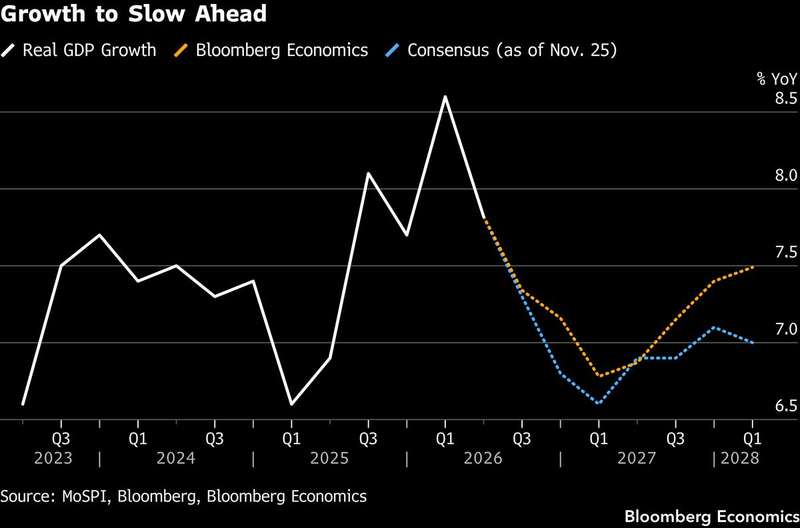
India's growth slows but stays strong enough to hike: third-quarter GDP at 6:30pm our time is seen at 7.3-7.7% after 7.8%, with the oil shock and poor rains weighing on government spending and farm incomes. That still clears the RBI's 7.2% forecast. India was the haven of November: the rupee rose more than 2%, the strongest currency in the world, and foreigners bought a record of nearly $16 billion of Indian stocks. Source: MoSPI, Bloomberg, Bloomberg Economics.
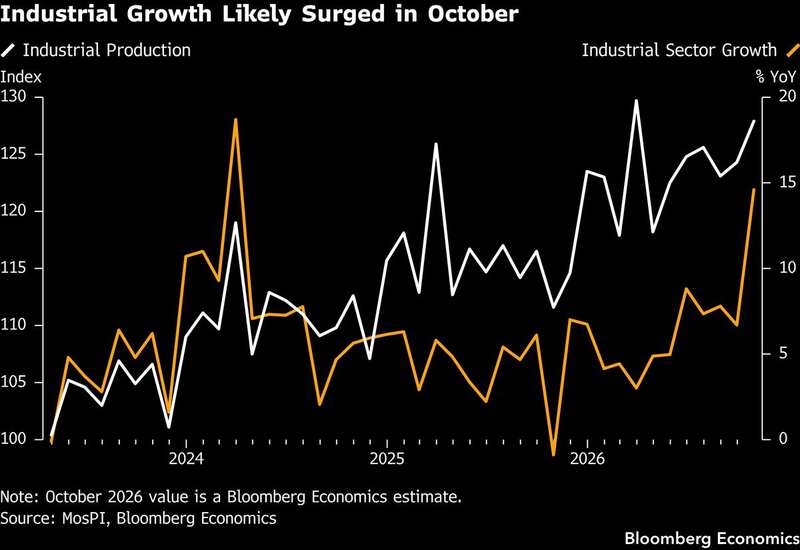
India's industry surged in October: industrial production is seen up 13.5-14.6% on the year from 6.7%, helped by the festive calendar moving production into October and non-oil exports up a third. The base effect flatters it, but core industries also accelerated to 10.9%. Strong data on the eve of a rate decision tells the RBI it can afford to hike. Source: MoSPI, Bloomberg Economics.
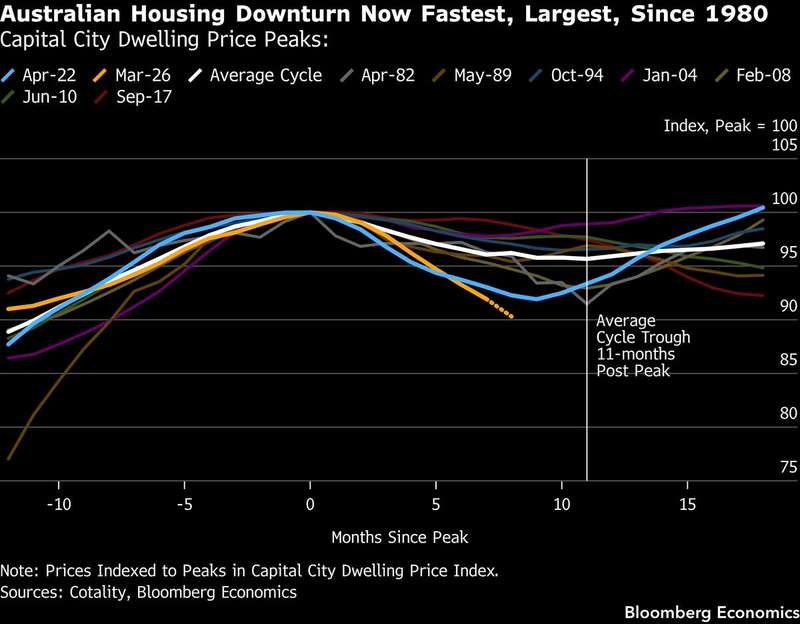
Australia's housing downturn is the fastest since 1980: capital-city prices are seen down 1.8% in November, the biggest monthly fall in 42 years, and the five-city daily index is almost 10% below its April peak. Rate hikes, cuts to investors' tax breaks and the war hit confidence at once. Unemployment is already 4.9%; the RBA meets on 8 December with inflation at 4.9% and its housing market falling, and it cannot fix both. Source: Cotality, Bloomberg Economics.
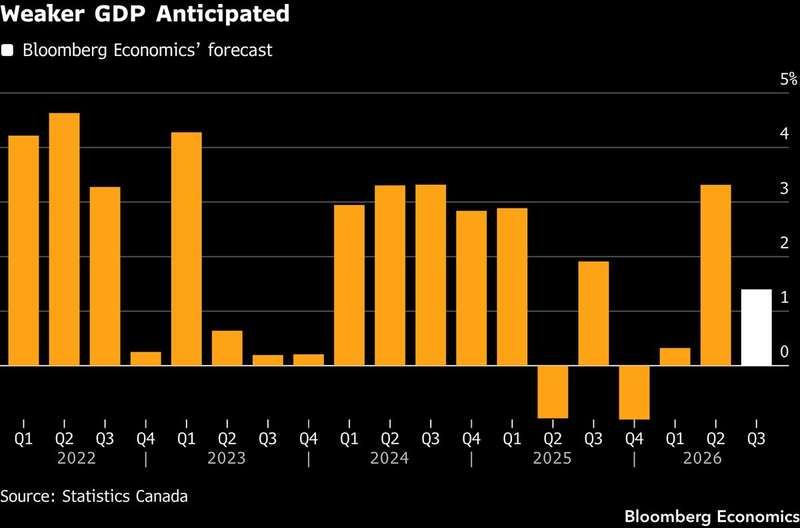
Canada's growth halves: third-quarter GDP at 9:30pm is seen at 1.4% annualised from 3.3%, with jobs falling every month since July and the US's 50% levy on part of its exports biting. A miss would make the Bank of Canada's December hike, priced at 73-84%, harder to justify a week before it meets. Source: Statistics Canada, Bloomberg Economics.
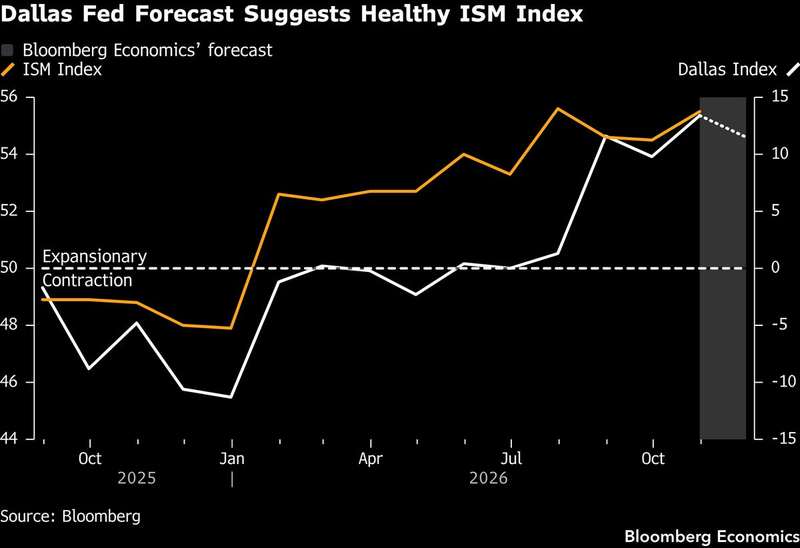
Texas factories stay busy: the Dallas Fed survey is seen easing to 11.9 from 13.4, still healthy, with backlogs high and inventories lean. Every regional Fed jobs gauge was positive in November. The factory data are not where the slowdown is showing. Source: Bloomberg, Bloomberg Economics.
Tuesday: Korea's exports, Europe's inflation and the ISM
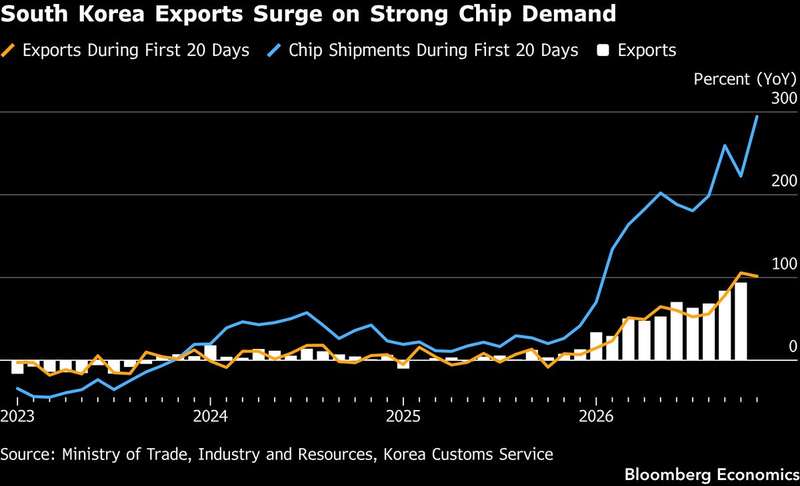
Korea's exports nearly doubled: November shipments are seen up 95-99% on the year, after 101.5% in the first 20 days, when semiconductors rose 294%. The surplus is seen near $50 billion. That is the dollar supply that underpins the won into year-end, whatever foreigners do with the KOSPI. Source: Korea Ministry of Trade, Korea Customs Service, Bloomberg Economics.
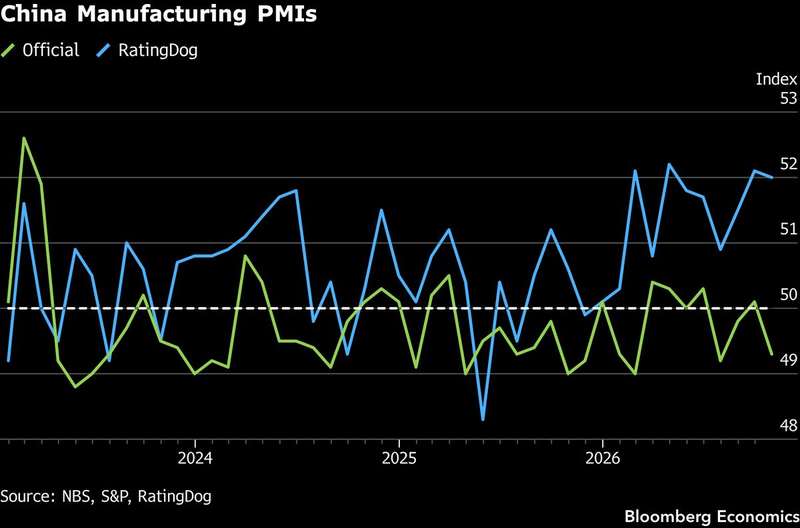
The private PMI still says expansion: the exporter-heavy RatingDog index is seen at 51.7-51.8 from 52.0, while the official PMI sits below 50. Port data show exports still above last year but slowing. The gap between the two surveys is the gap between China's exporters and everyone else. Source: NBS, S&P, RatingDog, Bloomberg Economics.
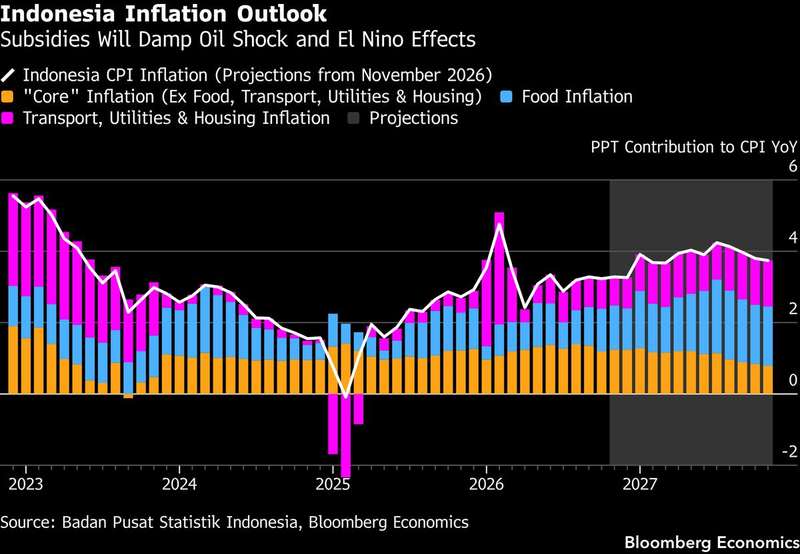
Indonesia's inflation is heading above target: the November print is seen at 3.24-3.28%, near the top of Bank Indonesia's 1.5-3.5% range, and El Nino should lift food costs above it in the first quarter. After November's surprise hike to defend a record-low rupiah, every tenth of a point matters to the bank's next move on 16 December. Source: Badan Pusat Statistik, Bloomberg Economics.
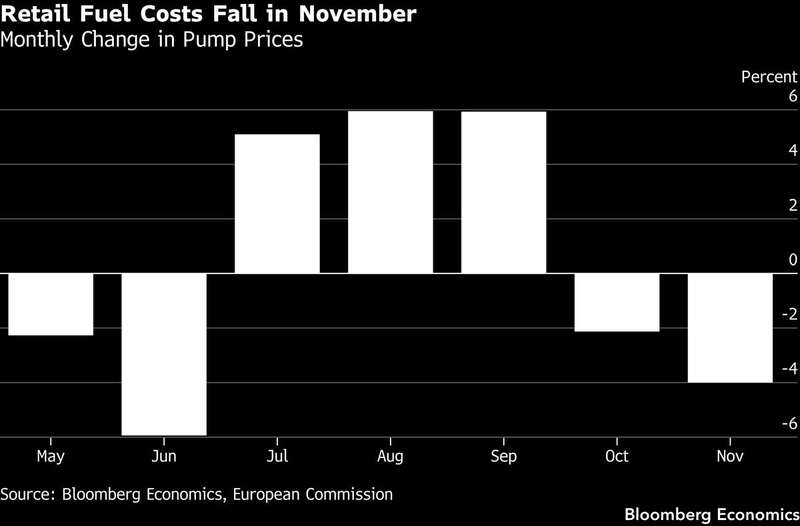
Cheaper fuel takes euro inflation down, for now: pump prices fell about 4% in November, taking about 0.3 point off the headline, which is seen at 3.8-3.9% from 4.0% at 6pm our time, with core steady at 2.6%. France and Spain both came in well below forecast on Friday. Gas bills still feed through into early 2027, so the ECB's December hike is safe; the question is whether it is the last. Source: European Commission, Bloomberg Economics.
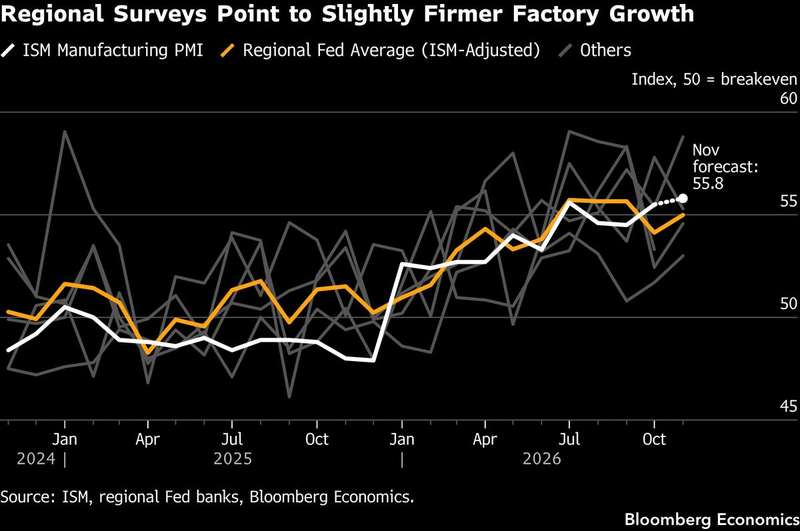
The regional surveys point to a firm ISM: the manufacturing index at 11pm is seen near 55-56, with three of four regional Fed surveys improving. October's prices paid was 75.2; another reading like that hands the hawks their case a week before the Fed meets. Source: ISM, regional Fed banks, Bloomberg Economics.
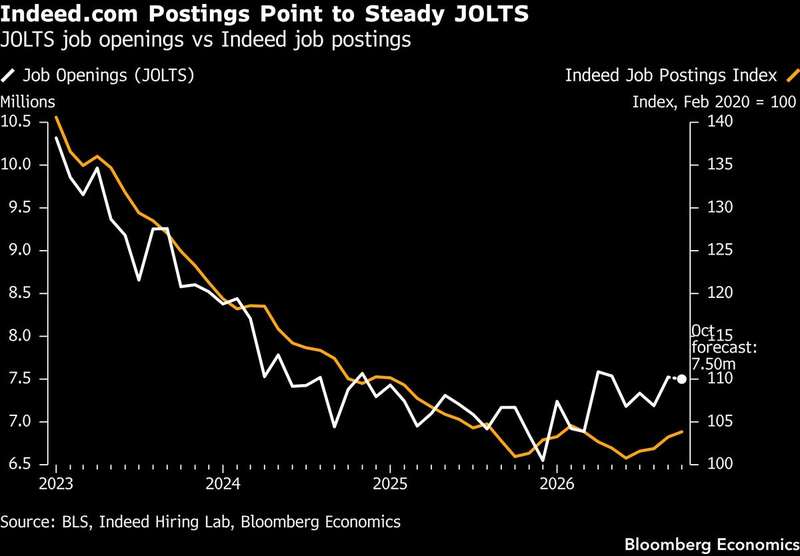
Job openings are holding steady: JOLTS for October is seen at 7.42-7.50 million from 7.52 million, with Indeed postings up and small firms reporting more jobs they cannot fill. Openings per unemployed worker stay near 1.06. That is a labour market cooling at the edges, not cracking. Source: BLS, Indeed Hiring Lab, Bloomberg Economics.
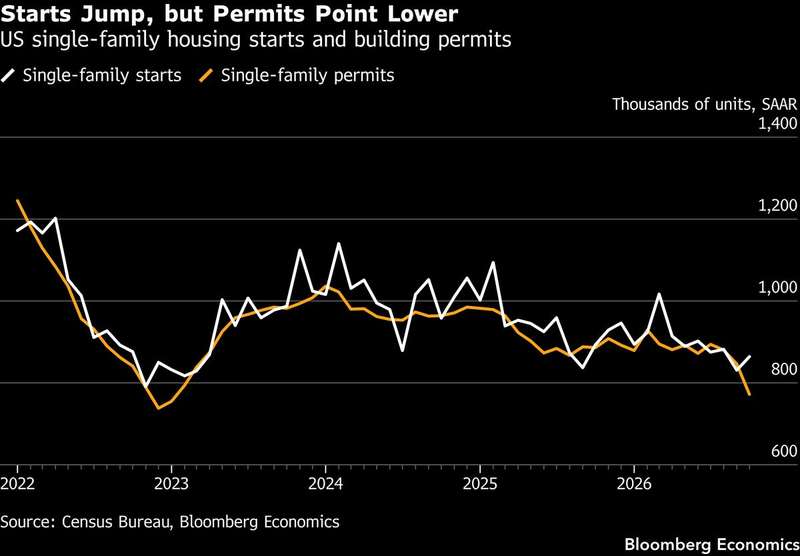
Starts jumped but permits point lower: construction spending is seen up 0.8% after a 1.9% fall, but permits dropped across every housing type in October with mortgage rates near 7.4%. A December hike keeps the pressure on, which is the point of hiking. Source: Census Bureau, Bloomberg Economics.
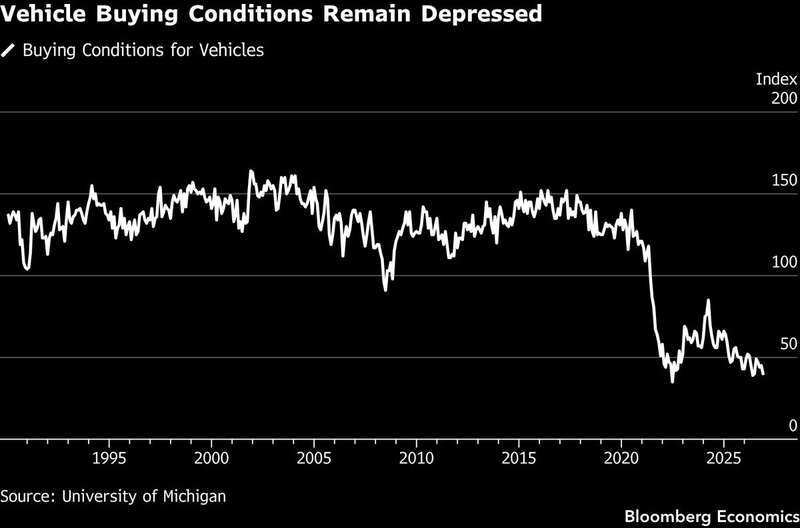
Car buyers have rarely felt worse: buying conditions for vehicles are near their lowest in 30 years, yet sales are seen at about 15.7 million annualised, held up by dealer incentives and loans of seven years or longer, now about 13% of new car loans at rates near 6.7%. Stretching the loan is how affordability gets hidden until it cannot be. Source: University of Michigan, Bloomberg Economics.
Wednesday: Australia's growth, Korea's prices and Canada's banks
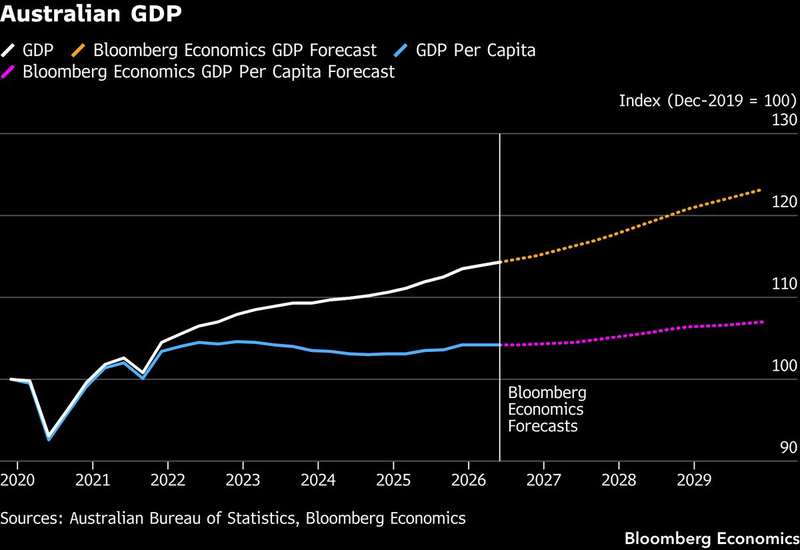
Data centres keep Australia growing, per head it shrinks: third-quarter GDP at 8:30am our time is seen at 0.3-0.5% on the quarter, lifted by machinery spending for data centres while housing slumps. Growth lags population, so output per person falls again. An RBA that hiked into that has little room to keep going. Source: Australian Bureau of Statistics, Bloomberg Economics.
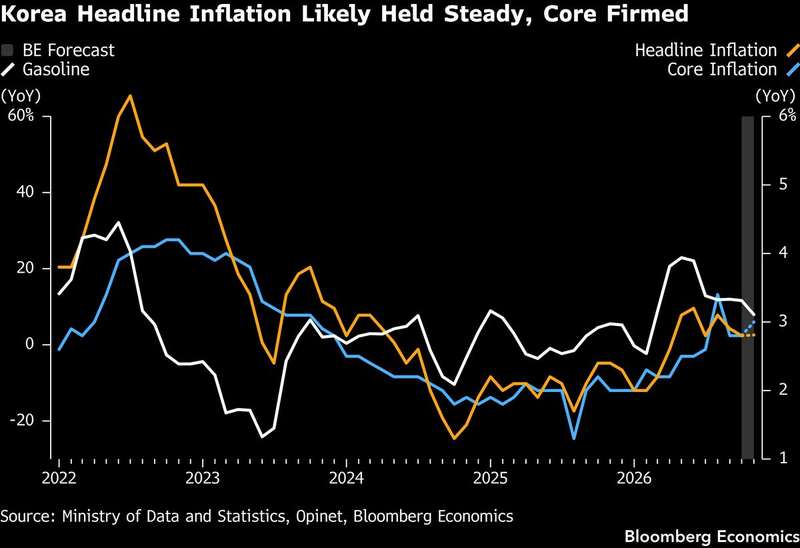
Korea's core inflation firms: the headline is seen at 2.7-2.8% but core rising to 3.0%, as dearer memory chips push up phone and PC prices and chip dividends and bonuses lift spending. The Bank of Korea hiked to 3.25% last week and is seen hiking again in the first quarter; a firm core keeps it on side for the won. Source: Korea Ministry of Data and Statistics, Opinet, Bloomberg Economics.
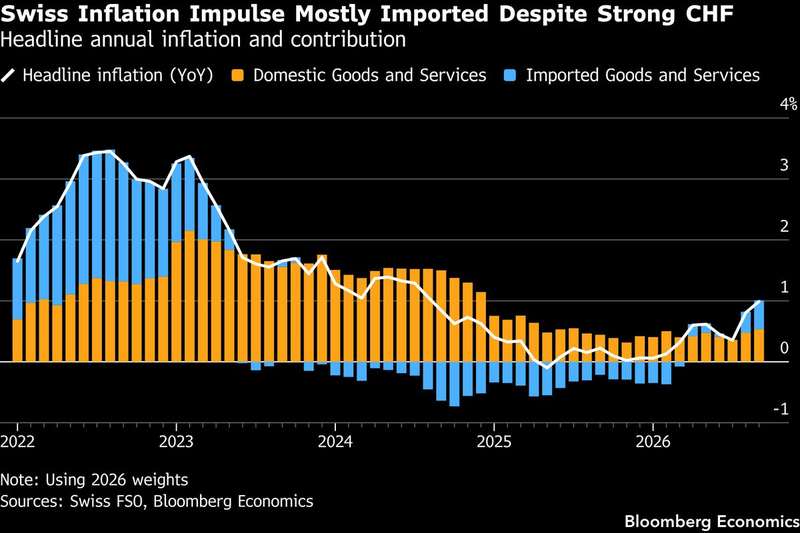
Switzerland's inflation is imported, despite a strong franc: November is seen at 1.4% from 1.5%, the last print before the SNB, which is expected to stay at 0% on 10 December. The franc was one of the two best G10 currencies in November. A central bank at zero with an imported energy shock is the one that does not need to hike. Source: Swiss FSO, Bloomberg Economics.
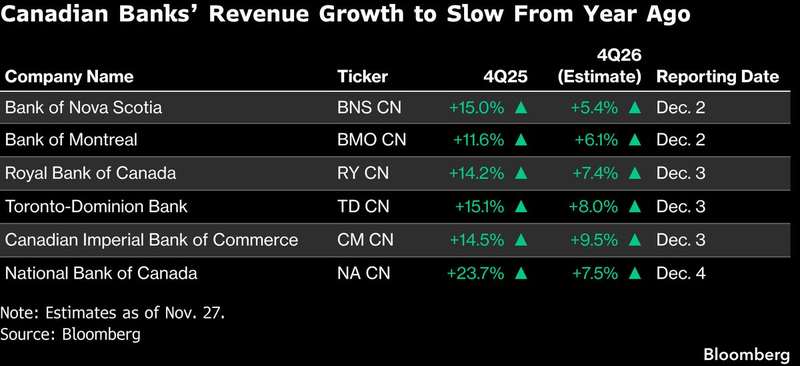
Canada's banks are slowing: revenue growth is seen falling to about 5-10% from 12-24% a year ago, as capital-markets businesses decelerate and the Bank of Canada's October hike raises funding costs. Scotiabank and BMO report on Wednesday, RBC, TD and CIBC on Thursday, National Bank on Friday. Provisions for credit losses are the line to watch. Source: Bloomberg.
Thursday: Salesforce, the ISM and Huang in the Senate
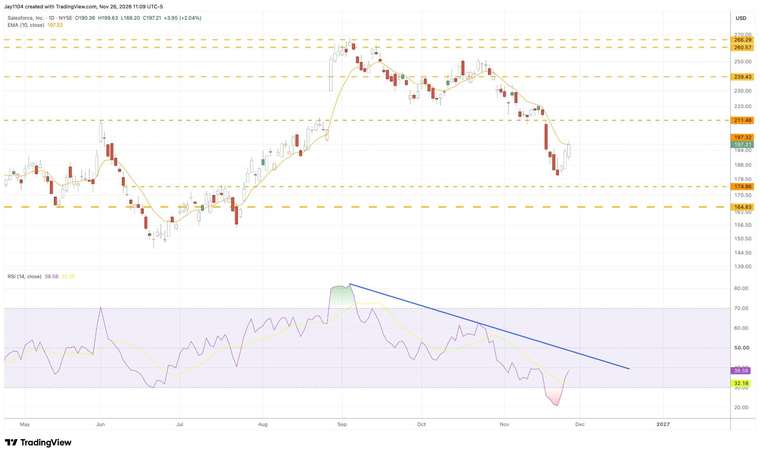
Salesforce lands in our morning: the stock bounced off $180 and stalled near $200, and options price a move of about 10%, with call interest capping $220 and puts clustered at $180. Revenue is seen up nearly 12% to $11.5 billion. Software has been sold as AI's victim all year, so the read here is whether AI agents add to its revenue or replace its customers' seats. Source: TradingView, Michael Kramer.
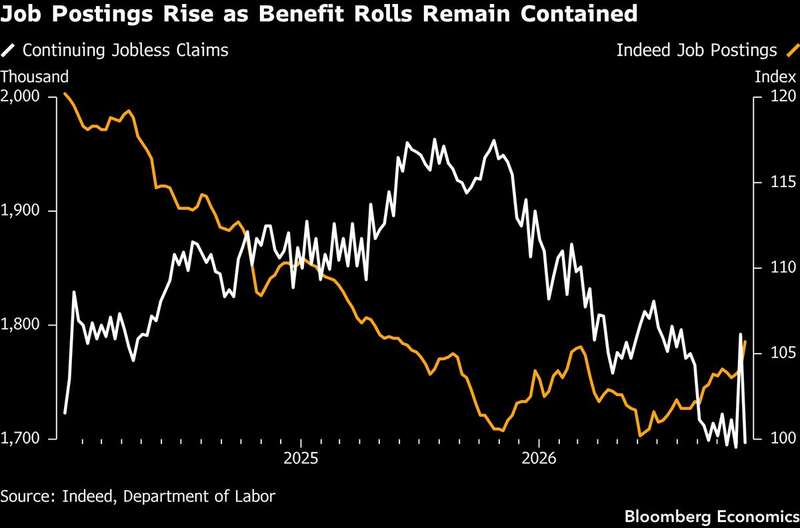
Layoffs are still rare: initial claims are seen near 180,000 in Thanksgiving week after 189,000, with Indeed postings rising and continuing claims contained. A labour market this tight is why the Fed hikes on 9 December whatever stocks do. Source: Indeed, Department of Labor, Bloomberg Economics.
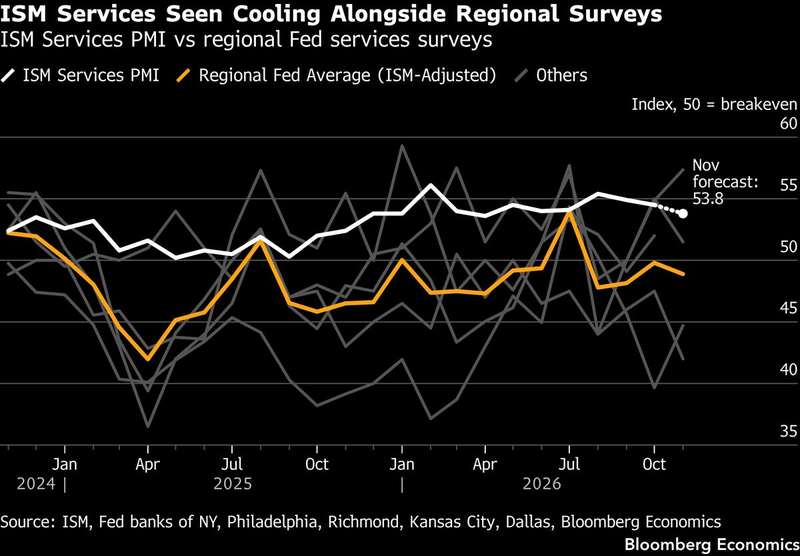
Services cool a little, prices do not: the ISM services index at 11pm is seen at 53.8-54.7, with employment slipping to about 50 and prices paid at 71-73, still very elevated. Backlogs are at a four-year high. Two of three regional price gauges softened, but a prices index above 70 keeps January live. Source: ISM, regional Fed banks, Bloomberg Economics.
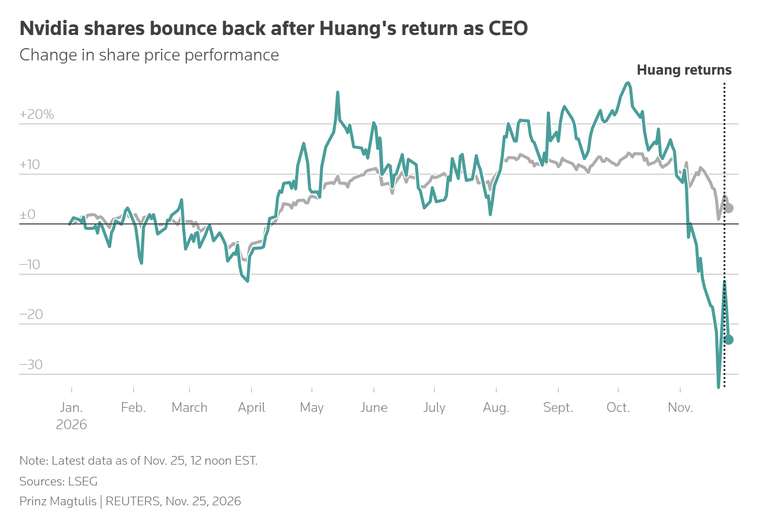
Nvidia got half its rally back, then half again: the shares jumped 31% in a day when the board reinstated Jensen Huang under White House pressure, then gave up nearly half of it in two days as S&P put the AA rating on watch for a cut. Huang testifies to the Senate Banking Committee on export controls on Thursday, two days after a closed-door interview with three House committees. The questions are about China, not the affair. Source: LSEG, Reuters.
Friday: the RBI, then America's jobs
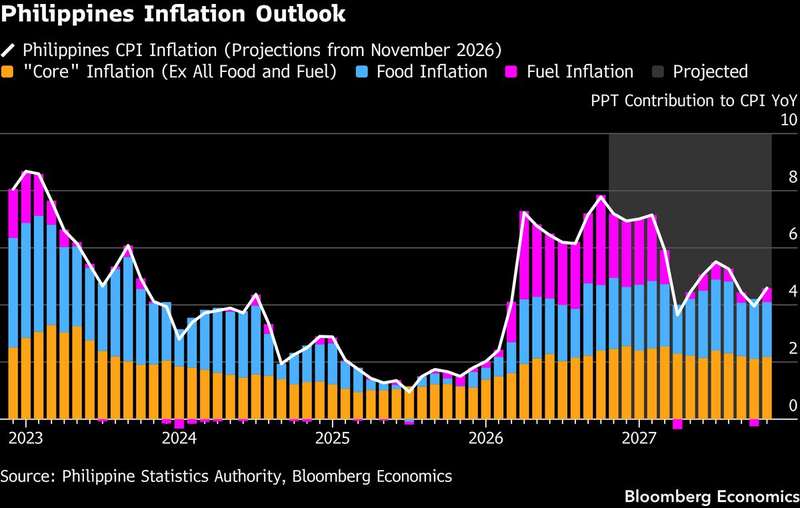
Philippine inflation eases but stays far above target: November is seen at 7.2-7.4% from 7.8%, as gasoline fell about 11% in the month, while food and services stay sticky. Inflation should stay near 7% until the oil base effect drops out in March. The BSP decides on 17 December. Source: Philippine Statistics Authority, Bloomberg Economics.
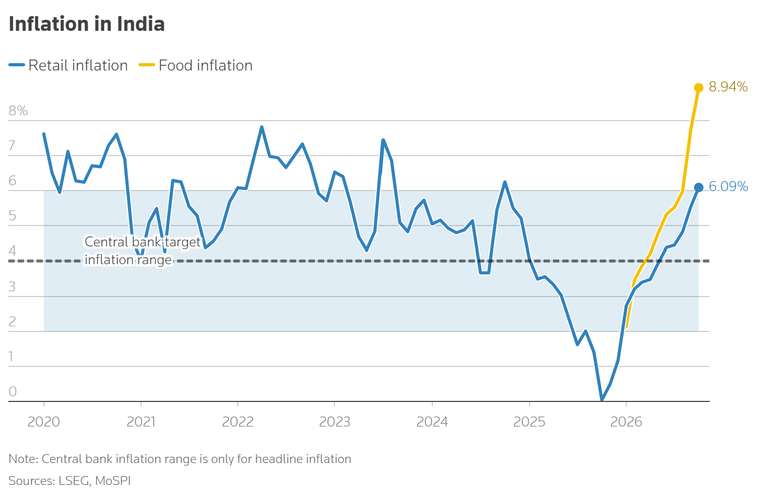
India's inflation broke the RBI's ceiling: retail inflation hit 6.09% in October, above the 6% upper limit for the first time in two years, with food at 8.94%. That makes a second hike all but certain, and a third in February likely. Source: LSEG, MoSPI, Reuters.
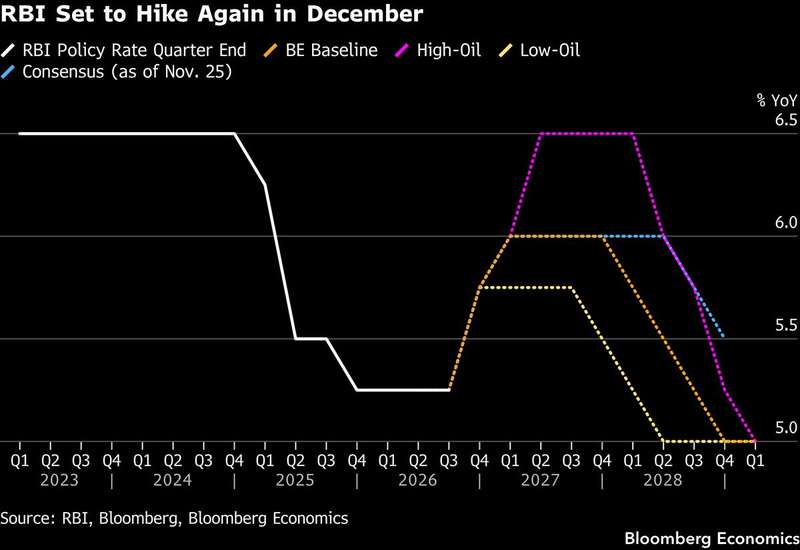
The RBI hikes at 12:30pm: to 5.75% from 5.5%, its first back-to-back hikes since 2022-23, with the path to 6% in February depending on oil and the harvest. A strong rupee, cheaper crude and a stock market that rose 11-12% in November give it the cover. A hold would be the surprise, and it would cost the rupee its haven bid. Source: RBI, Bloomberg, Bloomberg Economics.
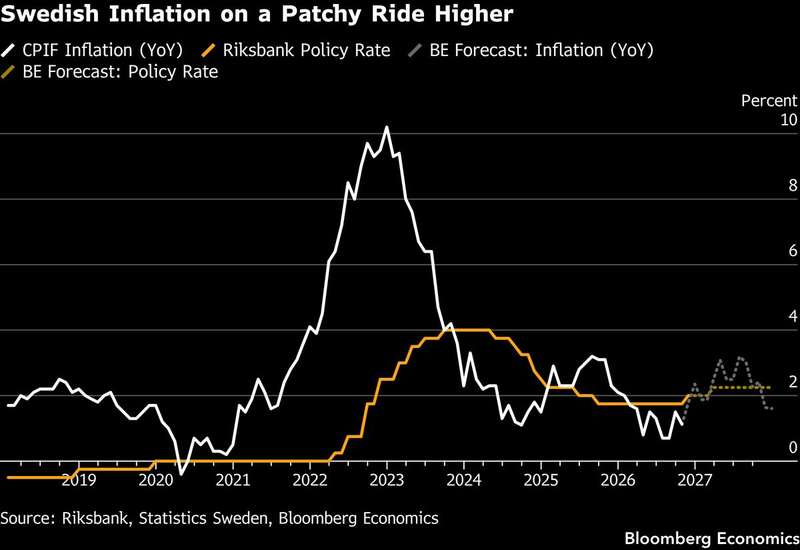
Sweden's inflation is on a bumpy ride back up: CPIF is seen at 1.8-2.0% from a surprisingly low 1.1% in October, heading above the Riksbank's 2% target in December. Bloomberg Economics expects one more hike to 2.25% in the first quarter. Even the low-inflation economies are drifting into the hiking club. Source: Riksbank, Statistics Sweden, Bloomberg Economics.
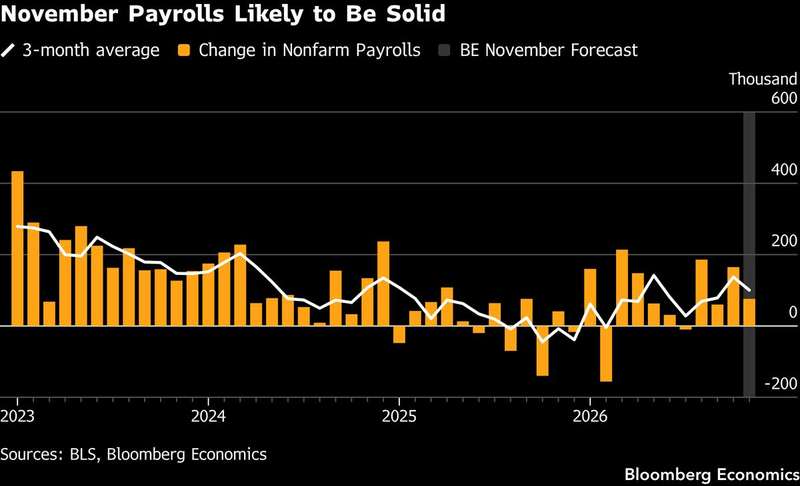
One economist house sees only 76,000 jobs: against a consensus of 90,000 and October's 165,000, with leisure, hospitality and information losing jobs to weaker spending and AI. Unemployment is seen rising to 4.16%, rounding to 4.2%. Even then, the report is unlikely to change December; it is January that the payrolls will decide. Source: BLS, Bloomberg Economics.
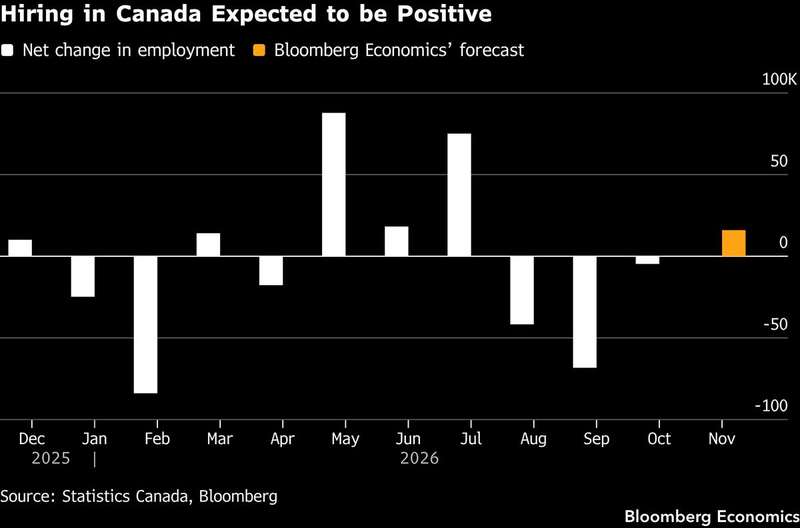
Canada's hiring may finally turn: November payrolls are seen up 16,000, the first gain since July, with unemployment at 6.6%. A fourth straight fall would be the first since early 2009 and would very likely stop the Bank of Canada hiking on 9 December. Canada is the one G10 bank where a single data point can still flip the decision. Source: Statistics Canada, Bloomberg Economics.
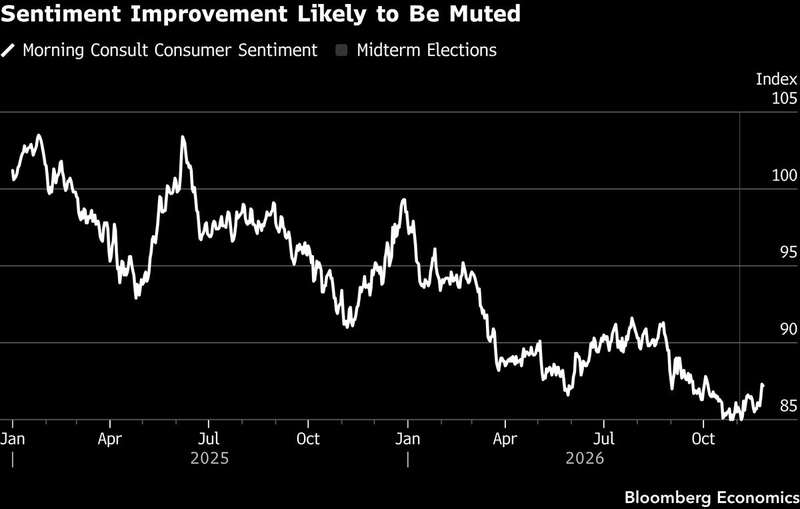
Sentiment may lift less than hoped: the University of Michigan reading at 11pm is seen near 53-57 from 51.5, but the daily surveys show only a muted improvement after the equity selloff, and dearer borrowing is coming. With stocks over 40% of household financial assets, sentiment now follows the S&P more than the jobs report. Source: Morning Consult, Bloomberg Economics.
Europe: dearer, poorer and more indebted
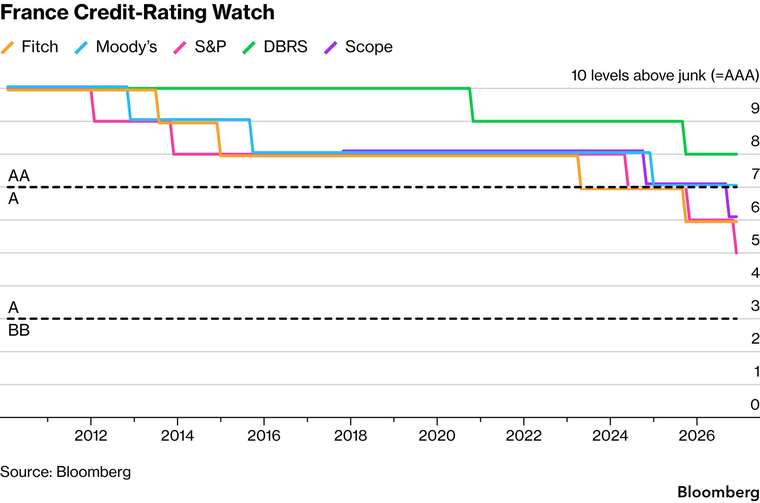
France is now on negative outlook at all three big agencies: S&P kept the rating at A+ on Friday, six notches above junk, but moved its outlook to negative on rising debt, weak growth and "weak political consensus" on the deficit. France slipped into a technical recession, with GDP down 0.2% in the third quarter. The presidential election is in April and May. The agencies are walking France down one notch at a time. Source: Bloomberg.
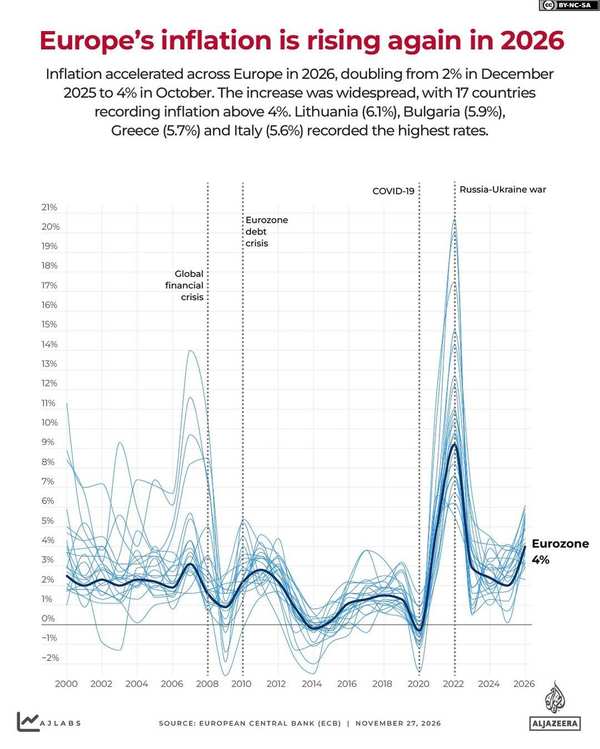
Europe's inflation doubled in 2026: from 2% last December to 4% in October, the highest in three years, with 17 countries above 4% and Lithuania, Bulgaria and Greece highest. Energy did it, as the war pushed up heating, transport and food. Al Jazeera's carousel maps the damage across the bloc. Source: European Central Bank, Al Jazeera.
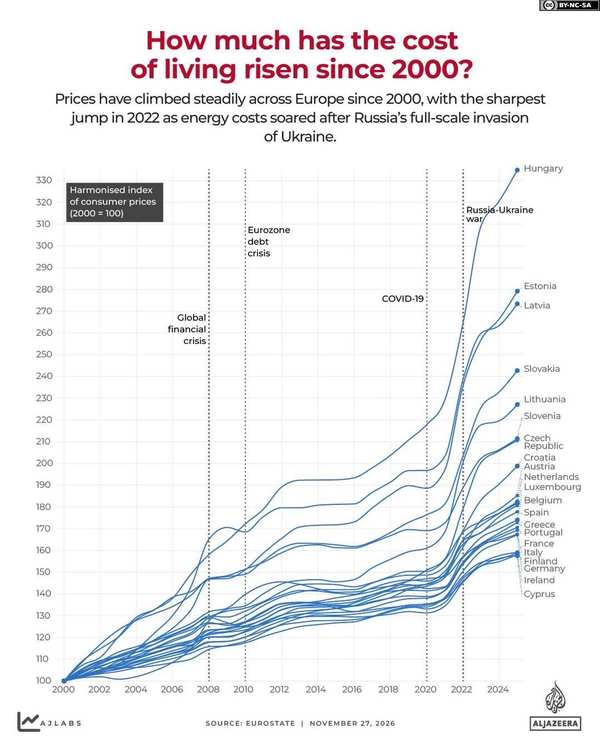
The cost of living has more than tripled in Hungary since 2000: prices in most of the euro area have risen between 40% and 80% since the euro began, with the sharpest jump after Russia's invasion of Ukraine in 2022. The Baltics and Central Europe caught up on wages, and on prices too. Source: Eurostat, Al Jazeera.
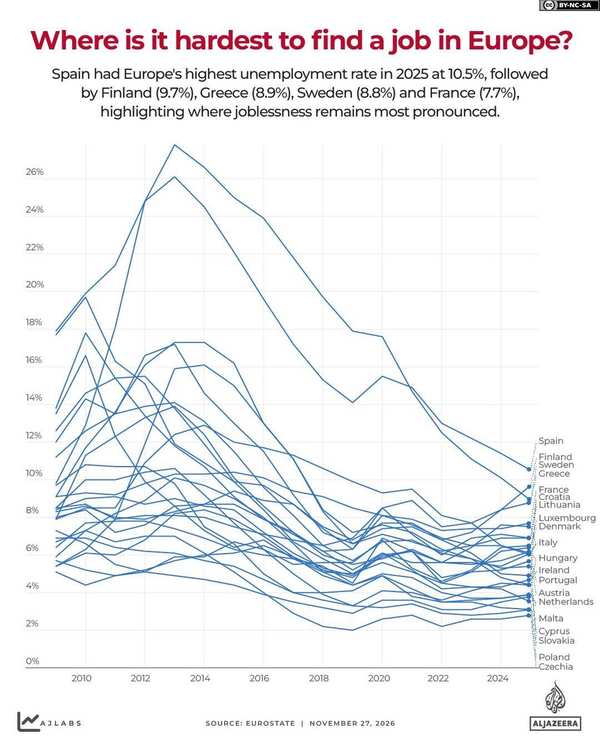
Spain had Europe's highest unemployment in 2025: at 10.5%, ahead of Finland, Greece and Sweden, even as its economy grew fastest among the big four. It votes on Sunday on housing and the cost of living, not on jobs. Joblessness has fallen almost everywhere since the euro crisis peak; what has not recovered is how far a pay packet goes. Source: Eurostat, Al Jazeera.
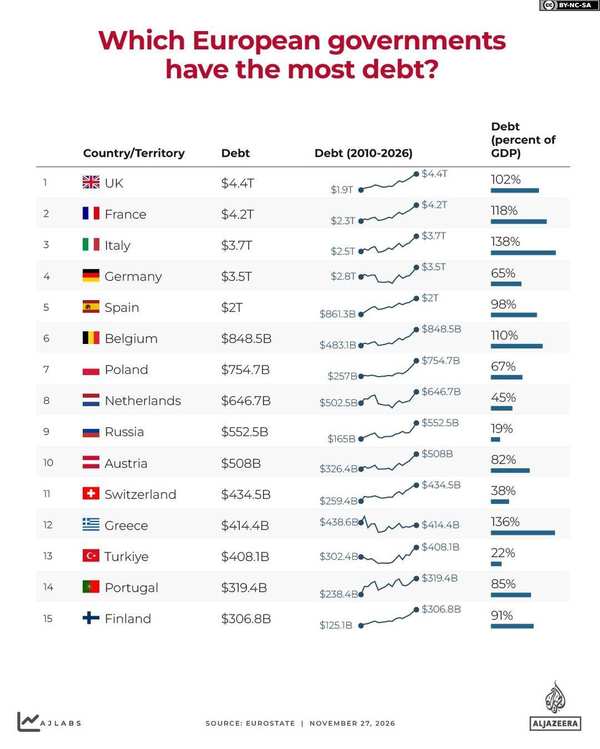
Britain and France owe the most in Europe: about $4.4 trillion and $4.2 trillion, ahead of Italy at $3.7 trillion and Germany at $3.5 trillion. Italy and Greece still carry the highest ratios to GDP, but France is the one whose ratio is still climbing without a plan to stop it. Source: Eurostat, Al Jazeera.
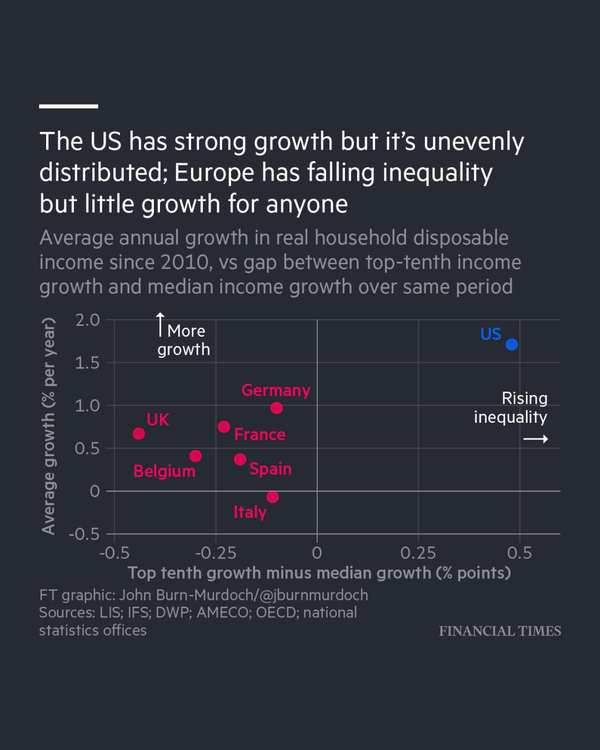
America has strong growth unevenly shared, Europe has equality and little growth: the US sits alone in the top right, with average real household income growth near 1.7% a year since 2010 and rising inequality, while Britain, France, Germany, Spain and Italy have falling inequality and growth near zero. The FT's John Burn-Murdoch shows the two sides of the Atlantic have opposite problems. Source: LIS, IFS, DWP, AMECO, OECD, Financial Times.
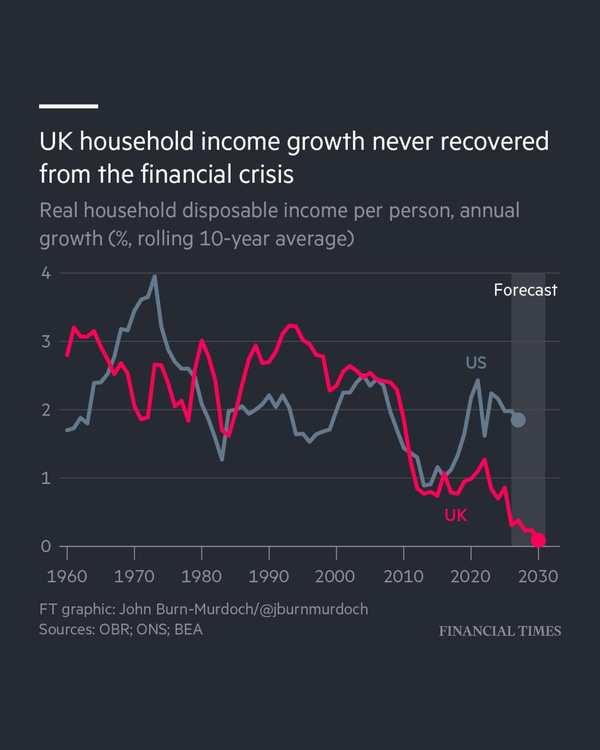
British household incomes never recovered from the financial crisis: real disposable income per person grew about 1% a year in the 2010s and is forecast to grow about 0.1% a year through 2030. Many blamed gains captured at the top, as in America; the data say the opposite. Source: OBR, ONS, BEA, Financial Times.
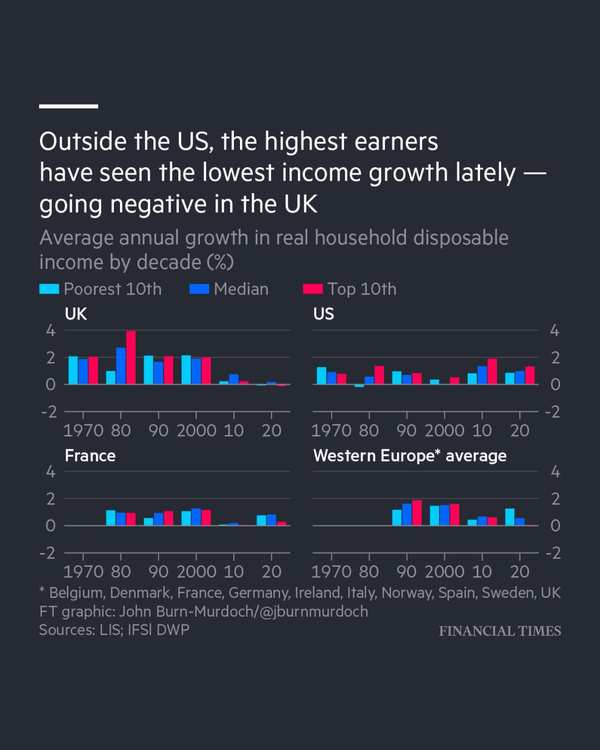
Outside the US, the highest earners have seen the slowest growth: in Britain the top tenth's real income growth has turned negative, and in France and across Western Europe the top has grown no faster than the middle. Europe's problem is not who gets the pie; it is that the pie has stopped growing. Taxing the top harder will not fix that. Source: LIS, IFS, DWP, Financial Times.
Crypto: the discount and the laundromat
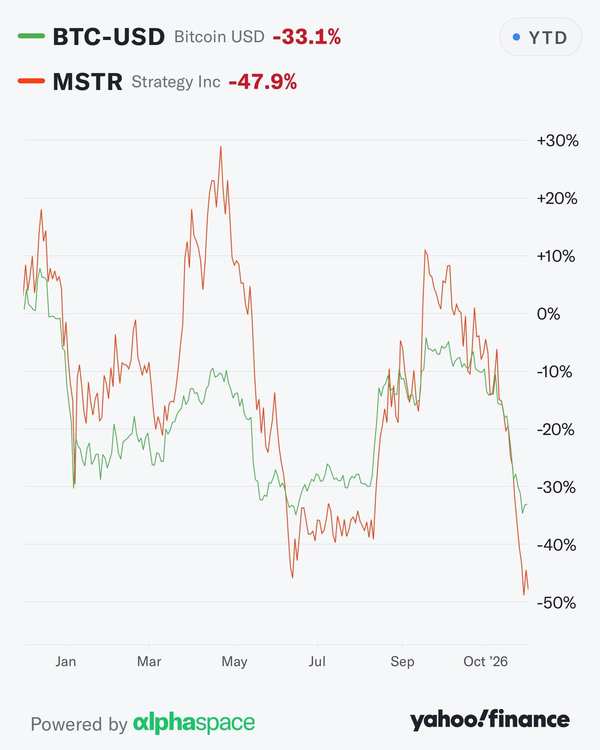
Strategy now trades for less than its bitcoin: for years investors paid a premium for Michael Saylor's company over the coins it holds. This year bitcoin is down 33.1% and Strategy 47.9%, and the premium is gone. A company worth less than its assets can sell coins to buy back stock, and if it does, the biggest buyer of the cycle becomes a seller. Source: AlphaSpace, Yahoo Finance.
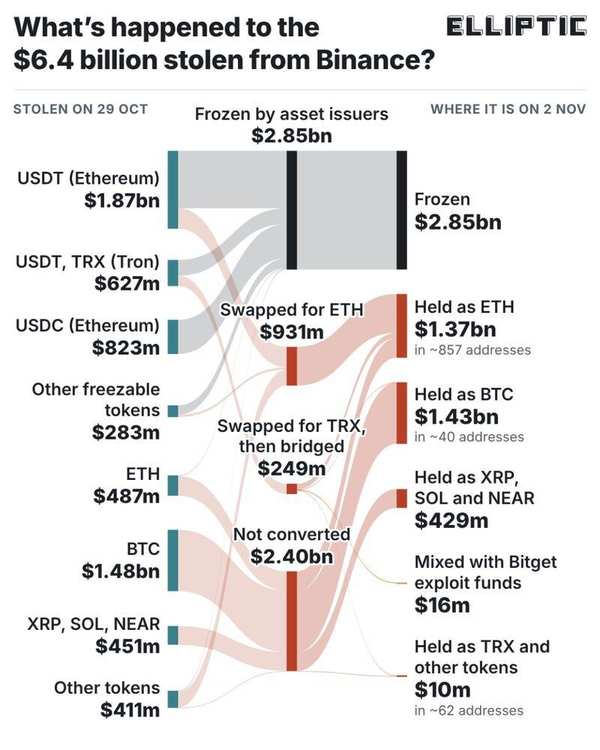
Where the $6.4 billion stolen from Binance went: the funds moved through about 12,000 wallets on 11 blockchains in four days, one transaction every eight seconds, and $2.85 billion, nearly 45%, was frozen by the issuers of USDT and USDC. Elliptic traces the rest to North Korea's launderers. Stablecoin issuers can freeze nearly half of a theft; that is a power over money that regulators will want too. Source: Elliptic.
Credit: private equity goes Nordic
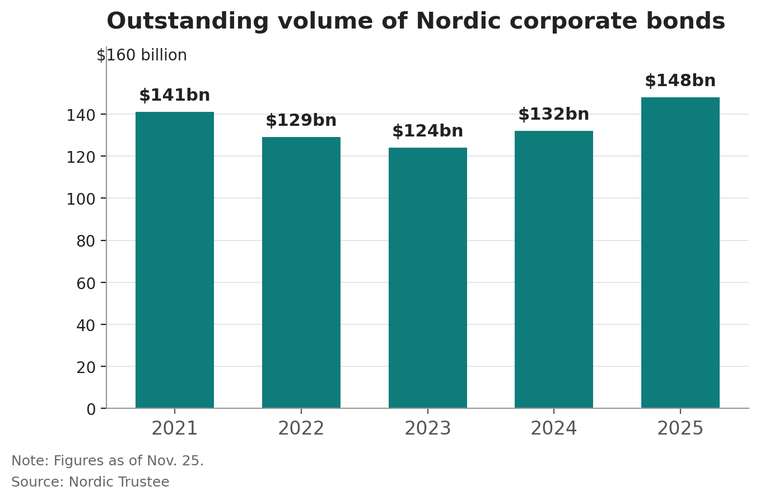
The Nordic bond market grew 12% to nearly $150 billion: private-equity firms have found it suits loans of $200-600 million, with fixed rates and deals that close in about a week, often unrated. Liberty Hall refinanced Accurus Aerospace there and Mubadala raised $400 million for Canada Cartage, though Hibu withdrew a deal this week. The Wall Street Journal has the story. When borrowers go looking for small, fast, unrated markets, it says the big ones have become harder to tap. Source: Nordic Trustee, The Wall Street Journal.
Visual Capitalist: The State of Global Housing
This week's special dispatch looks at the biggest purchase most people ever make. Global house prices hit a record this year, yet after inflation they sit about 5% below their 2022 peak. Hong Kong is still the priciest prime market at $3,750 a square foot, and Singapore, at 90% homeownership, is the exception among rich countries.
Infographic 1 - Record Highs, but Not After Inflation
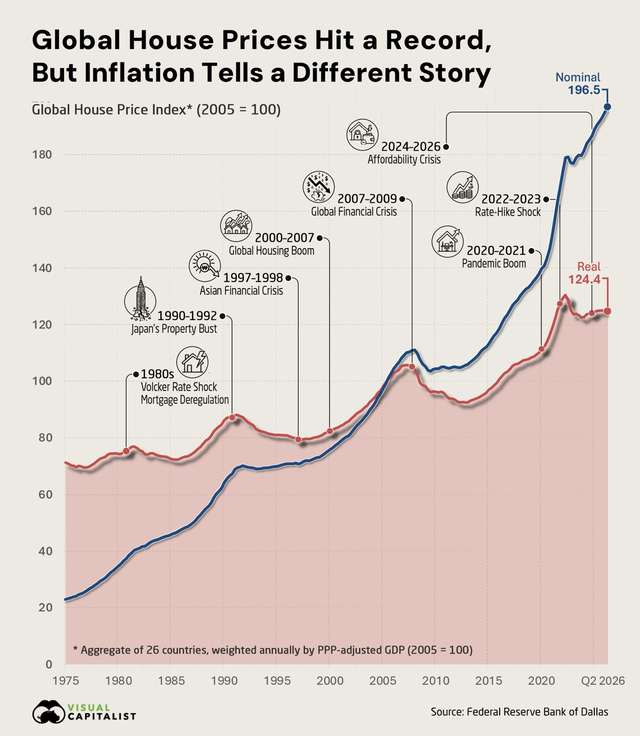
Global house prices are at a record, but only in nominal terms: the Dallas Fed's 26-country index reached a high in the second quarter, nearly double its 2005 level, while real prices sit about 5% below their mid-2022 peak. Every real boom since 1975 has ended in a slide; after 2007, real prices fell more than 12% and took a decade to recover. Full-size chart. Source: Visual Capitalist.

Infographic 2 - When House Prices Outran the Money Supply
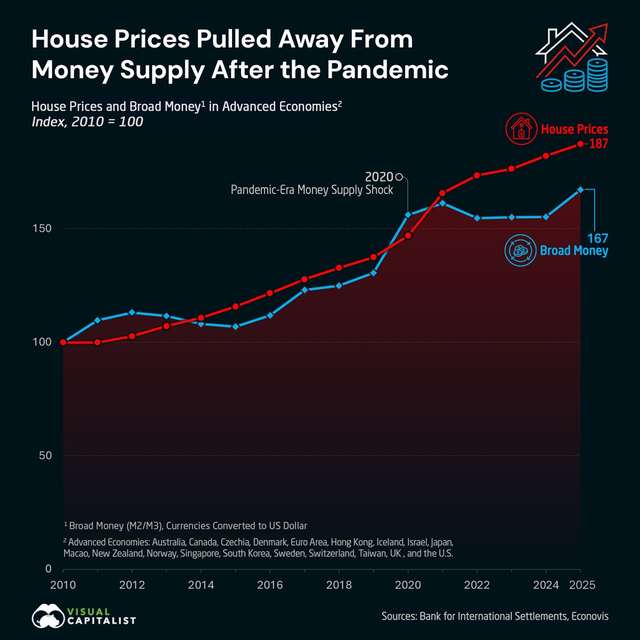
House prices kept rising after the money stopped growing: broad money in advanced economies jumped about 20% in 2020 and then went flat from 2022, while house prices rose another 5%, as owners locked into cheap mortgages would not sell. By 2025 prices were 87% above their 2010 level, against 67% for money. Full-size chart. Source: Visual Capitalist.

Infographic 3 - The Biggest Housing Booms Since 2010
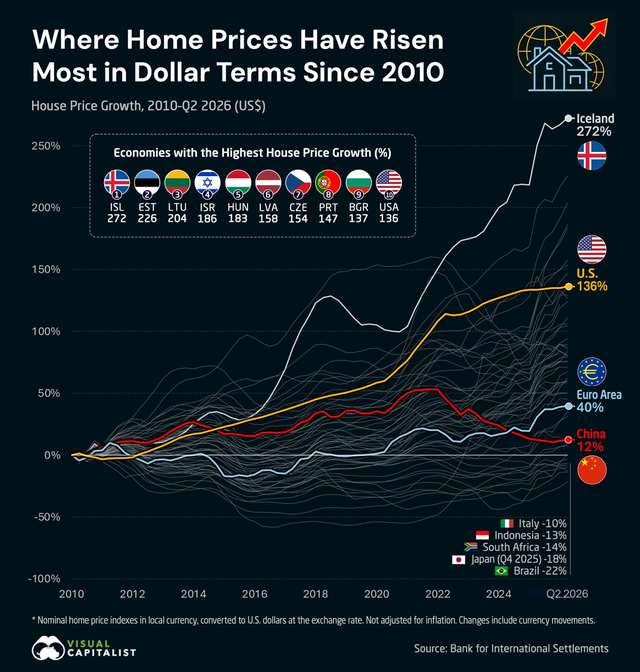
Measured in dollars, Iceland gained 272% and Brazil lost 22%: the US, at 136%, is the only top-ten country where the number reflects house prices alone rather than currency. Japanese homes cost more in yen than in 2010 but 18% less in dollars, and China's 12% gain is down from more than 50% at its peak, because its prices are falling. Full-size chart. Source: Visual Capitalist.

Infographic 4 - This Year's Fastest-Rising Markets
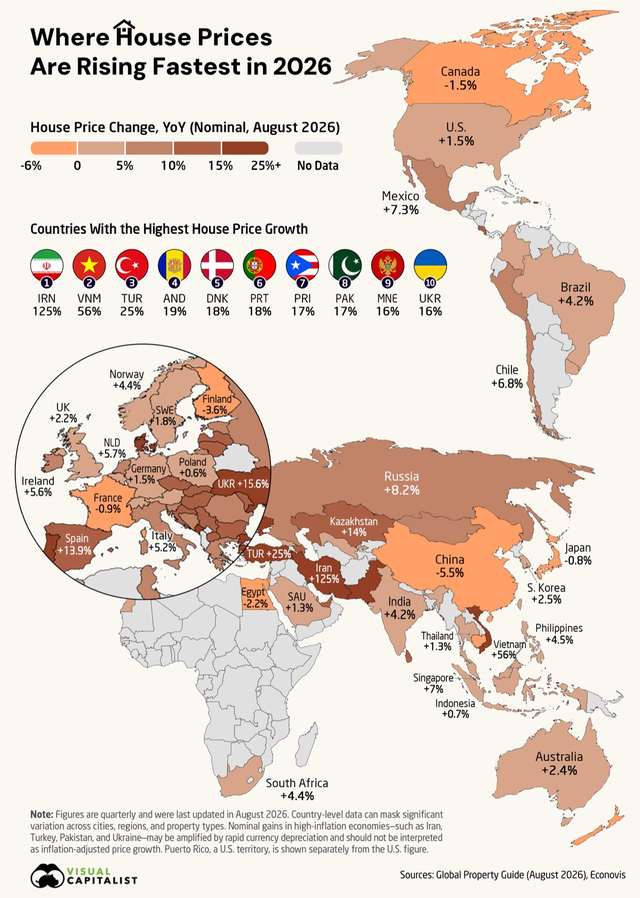
Iran's house prices rose 125% this year, mostly because the rial collapsed: with official inflation near 70%, homes did not gain value, money lost it. Vietnam rose 56% and Türkiye 25%, below its inflation. US prices rose 1.5%, less than half the rate of inflation, and prices fell outright in Canada, France and Japan. Full-size chart. Source: Visual Capitalist.

Infographic 5 - The World's Priciest Cities
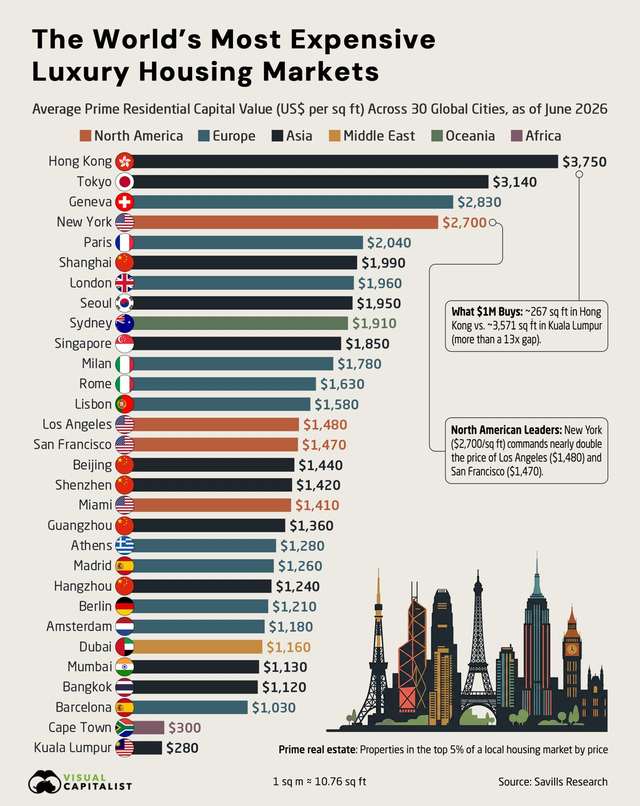
Hong Kong's prime homes cost 13 times Kuala Lumpur's: $3,750 a square foot against $280, with only about 7% of Hong Kong's land used for housing. Tokyo is closing the gap, its prime values up 20% in the year to June, the most of any city on the list. Singapore's prime homes sit near $1,850. Full-size chart. Source: Visual Capitalist.

Infographic 6 - Europe's Most Stretched Households
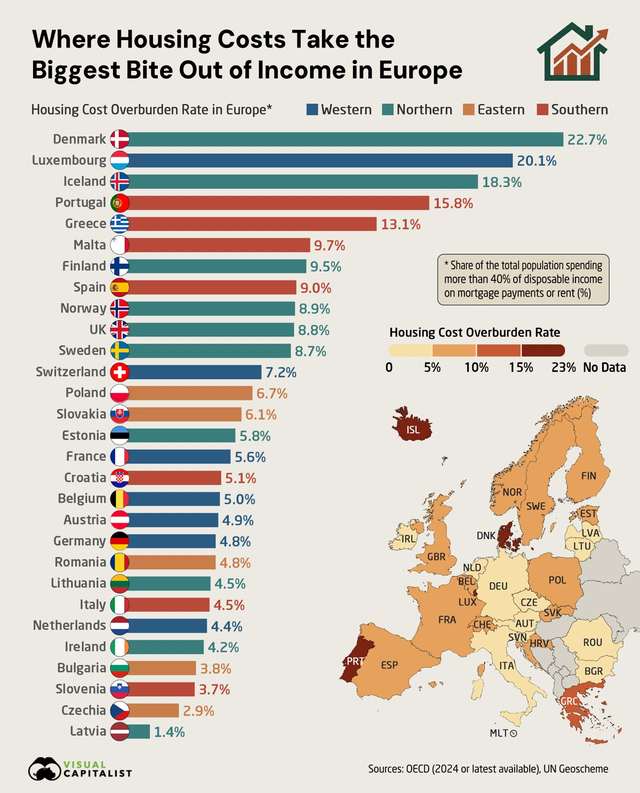
Denmark has the most households spending over 40% of income on housing: 22.7%, partly because many young Danes live alone on student grants, against 1.4% in Latvia. Portugal and Greece face the familiar squeeze of prices and rents outrunning wages, while most of Eastern Europe owns outright after state flats were sold to their tenants. Full-size chart. Source: Visual Capitalist.

Infographic 7 - Where Nearly Everyone Owns a Home
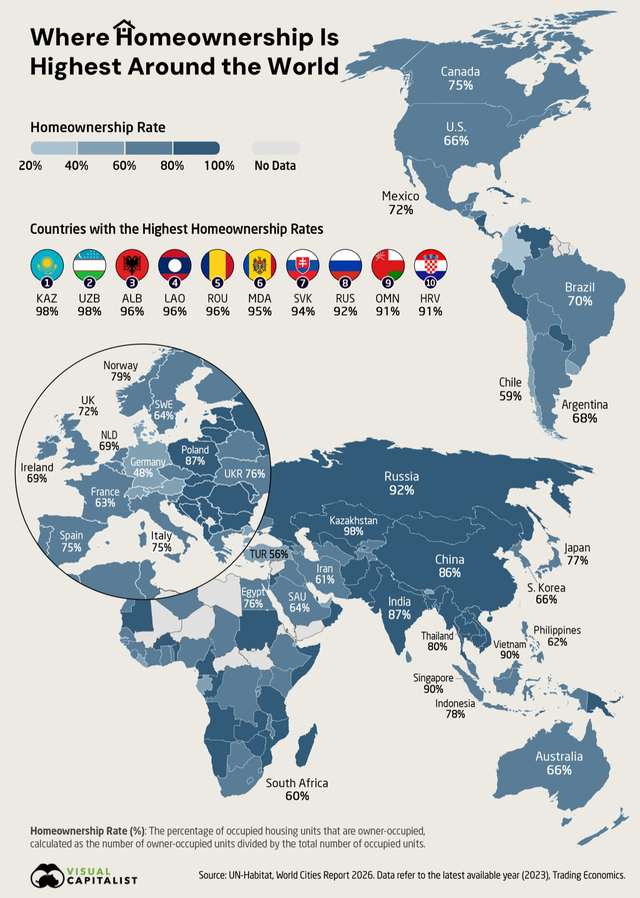
Singapore owns its homes like a former communist country: Kazakhstan and Uzbekistan lead at 98%, and eight of the top ten are former communist states. Germany rents, at 48%, and the US sits at 66%. Singapore is the rich-world exception at 90%, with about three quarters of residents in public flats owned on 99-year leases. Full-size chart. Source: Visual Capitalist.

The Good Wrap
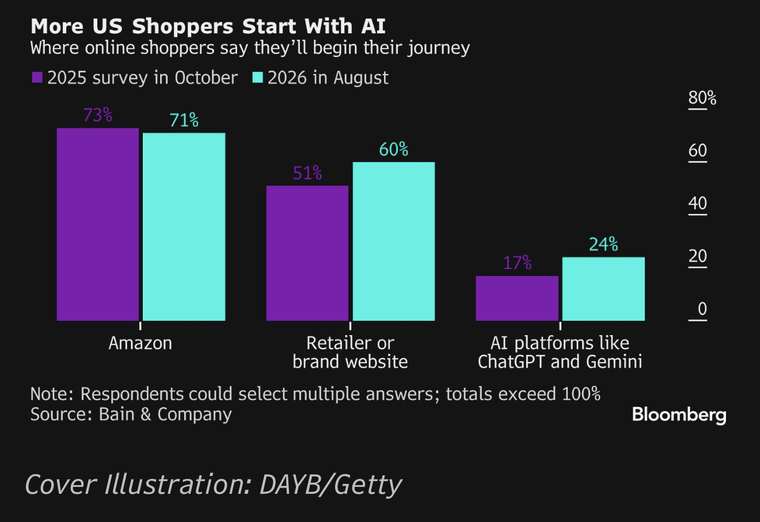
One shopper in four now starts with an AI chatbot: 24% of online shoppers say they begin with platforms like ChatGPT and Gemini, up from 17% a year earlier, while Amazon still leads at 71% and retailers' own sites rose to 60%. For the bots to win the shopping list, they need to get better at knowing what people actually want. Source: Bain & Company, Bloomberg.
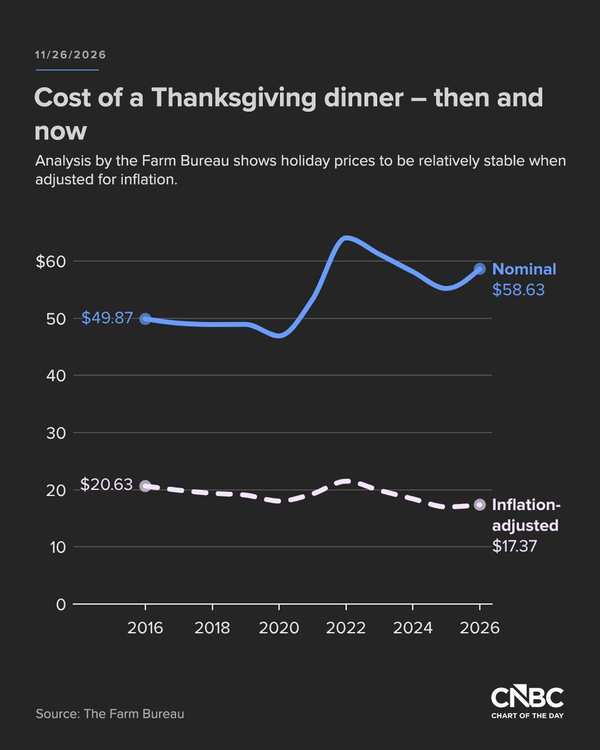
The Thanksgiving dinner is cheaper than it looks: a classic dinner for ten cost $58.63 this year, up 6% on labour and transport, yet adjusted for inflation it costs less than a decade ago, $17.37 against $20.63 in 2016 money. The Farm Bureau's survey has the detail. The table looked like November's markets: the sides got cheaper, and the big bird in the middle, like the dollar, held its price. Source: American Farm Bureau Federation, CNBC.
Best,
Hoelon
WITPTW is a personal publication. Everything here is personal opinion and market commentary, written in a personal capacity. It is not investment advice and not a recommendation to buy or sell any security. It is not associated with, endorsed by, or representative of any employer, fund or company. Charts and images are reproduced from their original publishers, credited to their sources for commentary and discussion; all rights remain with the respective copyright holders.